

Some friendships are built around shared history. Others survive because two people have seen the parts of each other that the rest of the world is never allowed to witness. In Black Doves, Helen Webb and Sam Young belong to the second category. Their bond is not a conventional romance, and it is not an uncomplicated story of loyalty. It is a fierce, sometimes damaging friendship between two people who understand the violence, secrecy and loneliness that shape the other's life.
That is why the idea behind this story — what Helen and Sam would truly die for — reaches beyond a dramatic question about sacrifice. The series repeatedly tests how far each will go for the other, but it also asks whether devotion can become its own danger. Helen and Sam know each other's worst instincts. They offer each other a rare kind of honesty, yet they can also help one another continue down paths that might be better left behind.
A friendship that the show treats as its emotional center
Creator Joe Barton has said that friendship was always the story's guiding idea. In Netflix's behind-the-scenes conversation, he describes being interested in platonic love: the relationships that can last longer and prove stronger than the romantic connections television often treats as the ultimate destination. That creative choice gives Helen and Sam a different emotional weight from the usual spy-drama partnership.
Keira Knightley has described Sam as the person who knows Helen most fully. In her account, they can reveal the sides of themselves that other people only see in fragments — the admirable and the monstrous, the tender and the frightening. It is a striking description because it does not make their friendship sound safe. It makes it sound honest.
For Helen, Sam is not simply the person she calls when a mission goes wrong. He is a witness to the person beneath the roles she performs as a politician's wife, mother and covert operative. For Sam, Helen is someone who understands the contradictions of a life built around violence and concealment. They do not have to explain every scar or every compromise to each other. That shorthand is a form of intimacy.
Why Helen and Sam understand each other so well
Helen's life is structured around compartmentalization. She can move from family routines to intelligence work, from political events to dangerous confrontations, while trying to keep each identity from contaminating the others. Sam has his own version of that split. He is a professional killer who has tried to imagine a quieter existence, but the work and its consequences keep pulling him back.
Neither can offer the other a fantasy of innocence. Sam knows Helen is capable of calculated violence. Helen knows that Sam's conscience does not erase the people he has killed. Their friendship works because neither needs the other to pretend to be harmless. They can acknowledge what the other is and still care.
That recognition is not the same as approval. The series is careful to show how loyalty can become tangled with enabling behaviour. Helen can ask Sam for help because she trusts him, but that trust can draw him into danger. Sam can protect Helen because he loves her as a friend, but each rescue can make it harder for either of them to step away from the life that keeps putting them in peril.
The sacrifices that shaped their bond
Their connection has been tested by choices that carry real moral weight. In the first season, Sam makes a devastating personal sacrifice connected to Helen's safety. The consequences are not erased simply because the act is rooted in friendship. Instead, the series lets that decision become part of the burden both characters carry.
Joe Barton has described the story's interest in what the characters would do for one another and in the consequences of those actions. That is a useful way to understand the relationship: sacrifice is not presented as a clean, heroic gesture. It changes the people who make it. It creates obligations, guilt and new vulnerabilities.
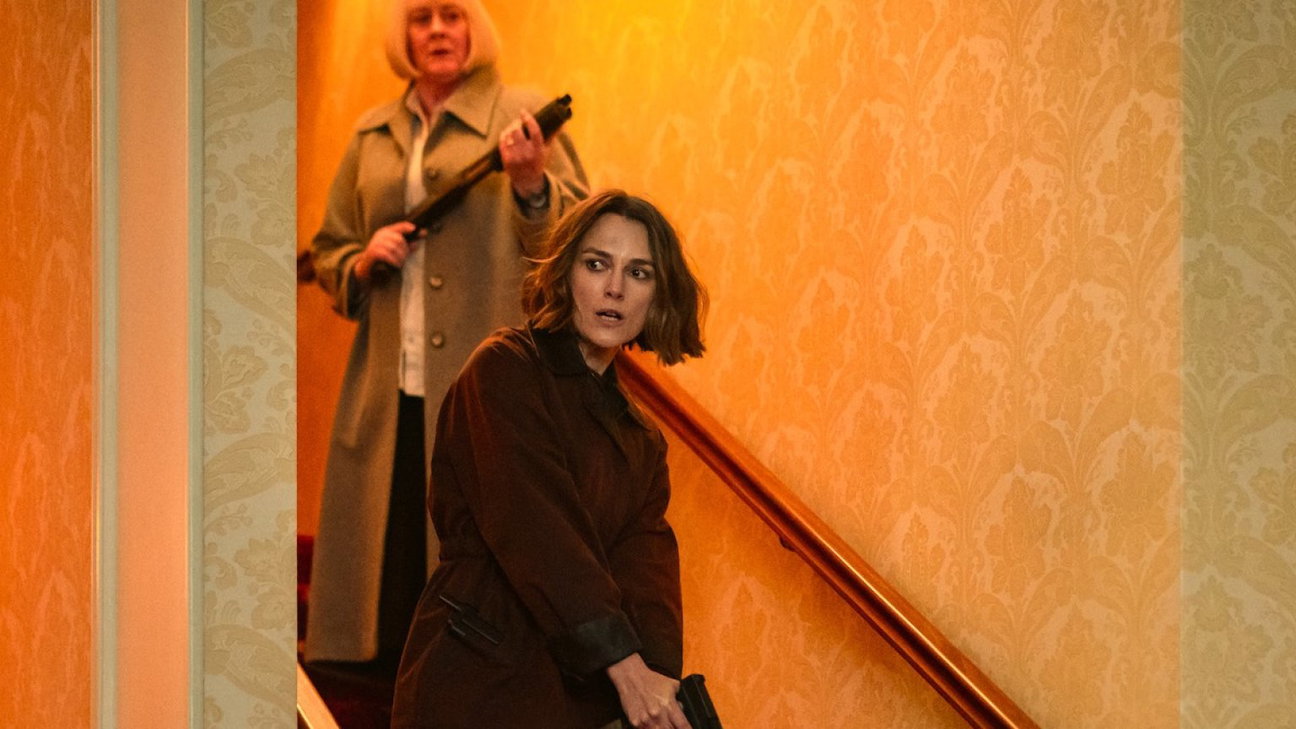
That is what makes the title question more complicated than asking whether Helen would die for Sam or Sam would die for Helen. The show has already established that both are willing to risk themselves. The harder question is whether they can recognize when another sacrifice would only keep the cycle going.
Season 2 makes their loyalty more painful
In the second season, Sam is pulled into a dangerous arrangement involving Patrick and the Black Doves. His past is used as leverage, and his attempts to settle the debt take him back into the orbit of people and institutions he would rather escape. Meanwhile, Helen is trying to protect her family and navigate a crisis that exposes how vulnerable the organization has become.
The season's official Netflix synopsis frames the story around Helen and Sam's reunion, with loyalties weaponized and trust shattered as they try to protect the people they love. That phrasing matters. Their friendship is a source of strength, but in this world, affection can be turned into leverage. The people who know what someone loves also know where to apply pressure.
Sam spends much of the season believing that other people may be safer if he removes himself from their lives. It is a familiar instinct for someone who has made a living bringing danger to other people's doors. But leaving is not emotionally simple. He and Helen have become part of each other's understanding of home, even if the life they share is anything but peaceful.

The Trafalgar Square farewell is not a simple goodbye
Their final meeting in Season 2 takes place at Trafalgar Square, in a scene Netflix's location guide identifies as one of the season's most poignant moments. The setting is public and unmistakably London, yet the exchange feels private. After everything that has happened, Helen and Sam have to consider what staying close actually costs.
Knightley has described their connection as loving but toxic. That description captures the show's refusal to make the friendship sentimental. They are able to be more fully themselves together, but that closeness does not automatically make their decisions healthier. They can understand one another and still bring out the most dangerous parts of each other.
Sam's choice to return to the Italian village where he once glimpsed another life is therefore more than an escape route. Showrunner Barton says the place represents the possibility of freedom and happiness for Sam, while leaving open whether he can actually achieve that life. The uncertainty is important: the series does not promise that one journey away from London can undo years of violence.
Nor does the goodbye erase the bond. Sam tells Helen she can call if she needs him. That small opening leaves the relationship unresolved in a way that feels honest. They may be separated geographically, but neither has become a stranger to the other.

What would they really die for?
Helen and Sam would clearly take extraordinary risks for each other. But the more revealing answer is that they would risk the versions of themselves they have spent years constructing. Helen allows Sam to see beyond the polished identity she presents to Wallace and the political world. Sam allows Helen to see the lonely, morally compromised man behind the assassin's professional surface.
That kind of recognition can be worth more than rescue. It is also fragile. When two people become each other's only place of complete honesty, the relationship can carry too much weight. It can become an excuse not to change, because the other person already understands why change is difficult.
The series does not tell viewers that Helen and Sam should abandon one another. It asks whether their loyalty can survive without requiring another act of self-destruction. That is a more interesting emotional question than whether one would take a bullet for the other. They have already shown they can put themselves in danger. Can they let the other person live differently?
Why their friendship matters more than a conventional spy partnership
Spy stories often rely on romantic tension, professional rivalry or a mentor-and-protégé relationship to create emotional stakes. Black Doves chooses something less familiar: a friendship that is intimate without being romantic, deeply loyal without being morally pure, and funny even when the surrounding circumstances are grim.
That choice also makes the action more meaningful. When Helen and Sam enter danger together, the audience is not only watching two skilled operatives coordinate. It is watching two people who know what the other has lost, what they fear and what they might do next. A glance or a dry remark can carry the history of years.
Their bond also broadens the show's idea of family. They are not related, and they do not fit the standard couple narrative, but they have become essential to each other's lives. Barton's interest in found family helps explain why their connection feels central even when the plot expands to include new agents, political conspiracies and rival organizations.
The friendship's future remains deliberately open
By the end of Season 2, Sam has chosen distance, while Helen is left facing the consequences of a secret life that is no longer entirely secret. The finale does not offer a neat promise that they will reunite or that their friendship will become uncomplicated. It leaves the door open, much as Sam does when he tells Helen she can call.
That uncertainty suits the characters. A peaceful future would require more than surviving the next threat. Sam would have to find a way to live without returning to violence whenever someone he loves is in danger. Helen would have to decide what kind of life she wants now that the old divisions between family, politics and espionage are breaking down. Neither challenge can be solved by friendship alone.
But friendship may be what gives them a reason to try. The most moving thing about Helen and Sam is not that they are willing to die for one another. It is that, even after everything, each remains one of the few people who can see the other clearly. In a world built on false identities, that kind of truth is rare — and worth protecting.
Frequently asked questions
Are Helen and Sam in love in Black Doves?
Their relationship is presented as a profound platonic bond rather than a conventional romance. Keira Knightley has described their connection as loving and complicated, while creator Joe Barton has said friendship was the story's central idea.
Why is Sam so important to Helen?
Sam is one of the few people who knows Helen beyond her public roles and covert identities. Their shared history allows her to be more honest with him than she can be with most people in her life.
Why does Sam leave Helen at the end of Season 2?
After the attack on the Black Doves and the events surrounding Patrick, Sam returns to an Italian village where he once imagined a quieter life. The showrunner describes the place as a symbol of possible freedom, though the series leaves his future uncertain.
Does Sam promise to help Helen again?
Yes. Their farewell leaves the door open: Sam tells Helen she can call if she needs him. That does not guarantee what he will do next, but it shows their bond has not simply ended.
What does Joe Barton say is the central theme of Black Doves?
In a Netflix behind-the-scenes interview, Barton says the story was always about friendship and the importance of platonic love — connections that can be as lasting and powerful as romantic or family relationships.
Sources and further reading
- Netflix Tudum: Beyond the Thrills — The Unexpected Bond in Black Doves
- Netflix Tudum: Black Doves Season 2 ending explained
- Netflix Tudum: Black Doves Season 2 locations, including Trafalgar Square
- Netflix Tudum: Black Doves Season 2 overview, cast and story
- Netflix: Black Doves official series page


