

Beth Holloway’s message of hope, love, and faith is often discussed alongside the search for her daughter, Natalee. But the message is larger than one family’s experience. Across public appearances, school talks, interviews, and work connected to missing-persons families, Holloway has described how hope helped her keep moving, how love gave her purpose, and how faith helped her carry a burden she could not control.
In a 2026 interview with Netflix’s Tudum, Holloway summarized the three ideas in a memorable line: she was “driven by hope, determined by love, and acting on faith.” She described those values as the force that carried her through a long pursuit of answers. Her story does not suggest that faith guarantees a particular outcome or that positive thinking can erase grief. It shows how a person can keep choosing purposeful action while living through uncertainty.
Quick answer: Beth Holloway’s motivational message has three connected parts: hold on to hope when answers are uncertain, let love shape what you do next, and put faith into action through practical work. In her case, that work included seeking answers about Natalee, speaking to young people about personal safety, and helping other families facing the disappearance of a loved one.
Hope: keep moving without pretending the pain is gone
Hope is not the same as certainty. During the years when Natalee’s disappearance remained unresolved, Beth Holloway did not know what had happened to her daughter. The absence of answers left room for rumors, false leads, and repeated disappointment. In the Netflix interview, she explained that not knowing was itself a relentless burden. Her message is not that a person should ignore that pain; it is that uncertainty does not have to end every effort to find truth or help someone else.
Holloway’s public talks have repeatedly connected her experience to the needs of other people. Saint Mary-of-the-Woods College described a 2011 appearance in which she was scheduled to speak about hope, faith, and personal safety to students and adults. The college reported that she had already shared her message with tens of thousands of students and parents at schools, colleges, churches, professional associations, and other venues. That history matters because it shows the message was not created only for a new documentary audience.
For people facing a crisis, a practical version of hope can be modest: make the next phone call, ask for reliable help, write down the next step, or get through the day without demanding that every question be answered at once. Hope is not a promise that everything will turn out as planned. It is a reason to keep looking for the next constructive action.

Love: turn remembrance into service
Love in Holloway’s message is not presented as a slogan. It is visible in the choices she made after Natalee disappeared. She pursued answers, kept Natalee’s story in public view, and later used what she had learned to support safer travel and other families dealing with missing-person cases.
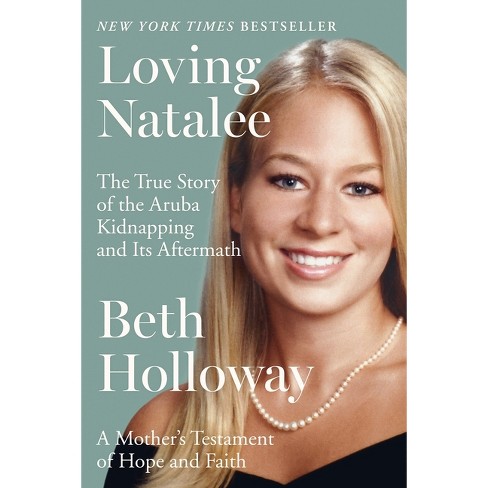
Her memoir, Loving Natalee, carries the subtitle A Mother’s Testament of Hope and Faith. The book is a personal account, not a universal formula for grief. Its title points to the relationship that shaped her search and the way she chose to speak about it. In later interviews, Holloway has also described helping other families by sharing what she learned and, at times, helping them communicate with law enforcement or identify search-and-rescue resources.
That is a useful distinction: love does not require a person to stay frozen in the moment of loss. It can also become a commitment to protect, teach, advocate, or stand beside someone who is facing a difficult process. For Holloway, service became one way to carry Natalee’s memory into work that could help others.
Faith: a source of strength, followed by action
Holloway has spoken about a spiritual turning point during the early search in Aruba. In an account published by the Christian Broadcasting Network, she described asking a taxi driver to take her to a church after days of searching, following leads, and feeling overwhelmed. The driver took her to a hillside marked by the Stations of the Cross. Holloway said that after praying there, she felt a deep sense of peace and understood that she needed to continue the work in front of her.
She has also been careful to describe faith as something that helped her carry the burden, not as a substitute for action. In her account, the spiritual experience was followed by a decision to return to the search and continue pursuing answers. That connection between inner strength and outward effort is the practical heart of the message.
Faith can mean different things to different readers. Holloway’s account is specifically rooted in her Christian beliefs. Readers do not have to share those beliefs to understand the broader point she makes: when a situation is beyond one person’s control, a source of meaning can help that person decide what can still be done responsibly.

What her message looks like in real life
1. Speaking to young people about personal safety
Holloway’s advocacy has included a clear public-safety message. Saint Mary-of-the-Woods College noted her work with the International Safe Travels Foundation, which was created to educate people about safer international travel. A 2006 announcement from Samford University also described a planned talk about her spiritual journey and travel-safety tips. These appearances show how she connected a personal tragedy with practical information for students and families.
Personal-safety education should not be confused with blaming victims. A safety talk can give young travelers tools—such as sharing itineraries, staying connected to trusted companions, and knowing how to contact local help—without suggesting that a victim is responsible for another person’s crime. That distinction is essential when discussing Natalee’s story.
2. Supporting families who are still searching
In her November 2026 interview with Netflix, Holloway said she also works with families of missing people. She described helping facilitate communication with law enforcement and, where needed, pointing families toward search-and-rescue resources, personnel, or guidance. The work draws on experience, but it does not mean every family will receive the same outcome. It means practical support can matter even when a case is unresolved.
3. Returning to ordinary responsibilities
Holloway also told Netflix that she had returned to public-school speech pathology after stepping away from the profession for years while searching for Natalee. She described staying busy and continuing to help others. The detail is significant because her public message is not limited to speeches or headlines. It includes the everyday work of teaching, serving, and maintaining a life beyond the case.

What viewers can take from the message without simplifying her story
It is tempting to turn a painful real-life story into a neat motivational formula. That would miss the complexity of what Holloway has described. Hope did not make the search easy. Love did not prevent loss. Faith did not remove the need for evidence, persistence, legal work, or support from other people.
A more honest reading is that the three values helped her decide how to respond. Hope kept the search moving when the answers were missing. Love gave the work a personal purpose. Faith helped her bear what she could not control, while action gave that strength a direction. The message is strongest when those ideas stay connected rather than being treated as interchangeable inspirational words.
There is also an important limit: no one should be expected to respond to grief in the same way. People process trauma differently, and seeking help from friends, family, counselors, faith leaders, or professionals can be part of moving forward. Holloway’s experience is hers; it can offer perspective without becoming a standard that other grieving families must meet.
Listen: Beth Holloway discusses faith, resilience, and safety
In a November 9, 2026 episode of On Purpose with Jay Shetty, Holloway discussed the role faith played during the search, how she turned anger into outreach, and why personal-safety awareness remains part of the story. The episode includes a section on finding strength through faith and another on speaking to high-school students about safety.
Readers can also watch the official Netflix page for Taken: Natalee Holloway and read the Netflix Media Center synopsis.
Frequently asked questions
What is Beth Holloway’s motivational message?
Holloway has described the values that carried her through the search as hope, love, and faith. In her words to Netflix, she was driven by hope, determined by love, and acting on faith. She connects those values to persistence, service, and practical action.
How did faith help Beth Holloway?
Holloway has described a spiritual experience at the Stations of the Cross in Aruba during the early search. She said the experience brought a sense of peace and helped her return to the work of seeking answers. Her account is rooted in her Christian faith.
Did Beth Holloway use her experience to help other people?
Yes. She has spoken publicly about personal safety, founded the International Safe Travels Foundation, and told Netflix that she assists families of missing people by sharing lessons and sometimes helping them communicate with law enforcement or find search-and-rescue guidance.
Does hope mean believing that everything will turn out well?
Not in the way Holloway describes it. Her story involved years of uncertainty and painful setbacks. Her message is better understood as continuing to take constructive steps without pretending that the outcome is guaranteed.
Where can I hear Beth Holloway discuss her message directly?
She discusses faith, resilience, and personal safety in the November 9, 2026 episode of On Purpose with Jay Shetty. The episode is embedded above through Apple Podcasts.
Sources and further reading
- Netflix Tudum: Beth Holloway ‘Isn’t Done Yet’ — her recent comments about hope, love, faith, returning to work, and helping other families.
- Saint Mary-of-the-Woods College: Beth Holloway — Teacher, Mother and Advocate — a 2011 account of her public message and educational outreach.
- Samford University: Beth Holloway Twitty to Speak About Spiritual Journey — a 2006 campus event announcement.
- Christian Broadcasting Network: Beth Holloway — Natalee is With God — her account of the Stations of the Cross experience in Aruba.
- Child Rescue Coalition: Beth Holloway to Inspire at Tech with Heart Gala — her keynote role and public advocacy.
- On Purpose with Jay Shetty: Beth Holloway interview — a 2026 conversation about faith, resilience, and personal safety.
- Premiere Speakers: Beth Holloway Seeks Justice for Her Daughter — a 2013 account of her public remarks on hope and service.
Editorial note: This article distinguishes Holloway’s own descriptions of faith and resilience from general reflections about grief. It does not suggest that faith or optimism can guarantee a particular result, and it does not place responsibility for Natalee’s murder on Natalee or her family.
Author: Shivam Das