
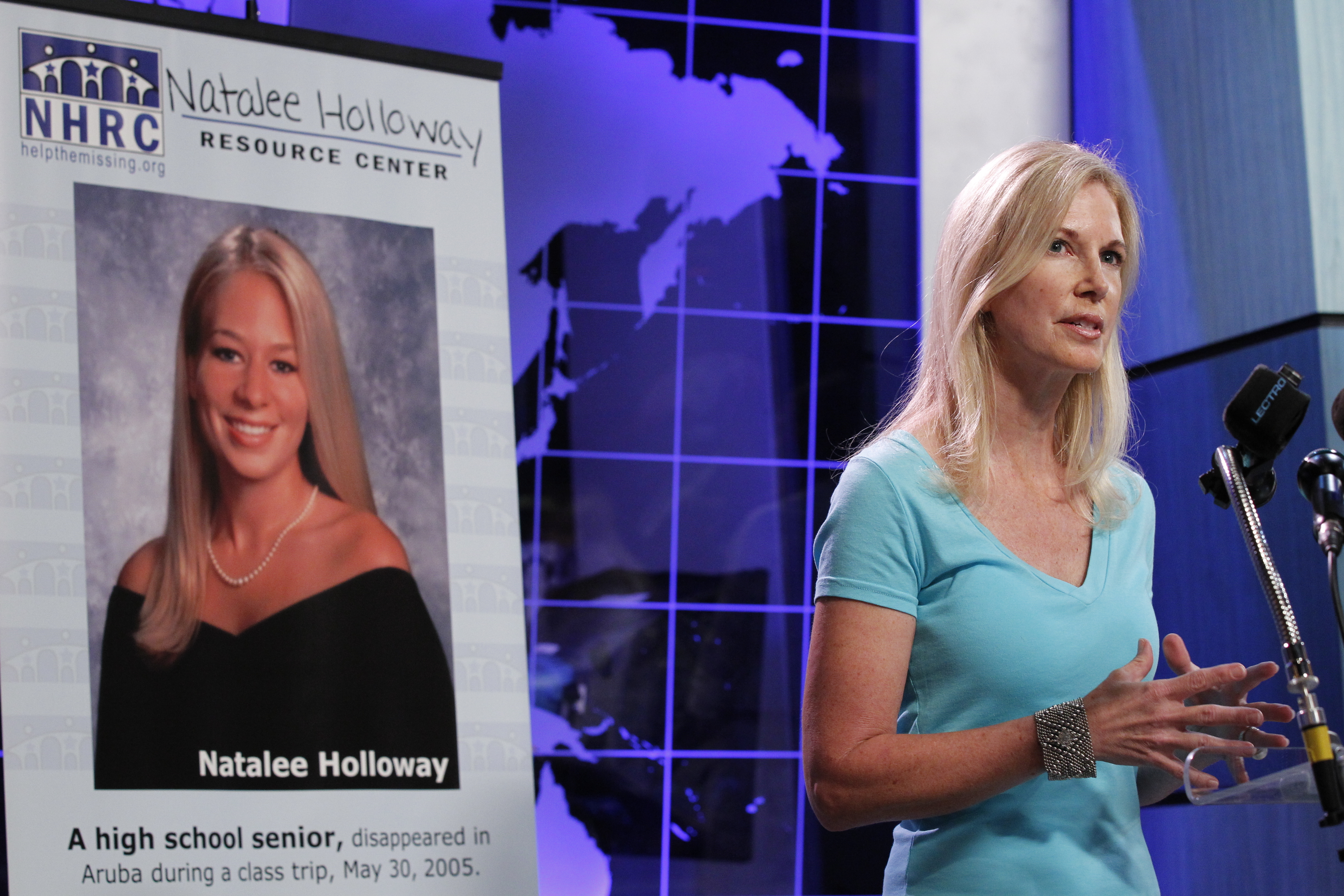
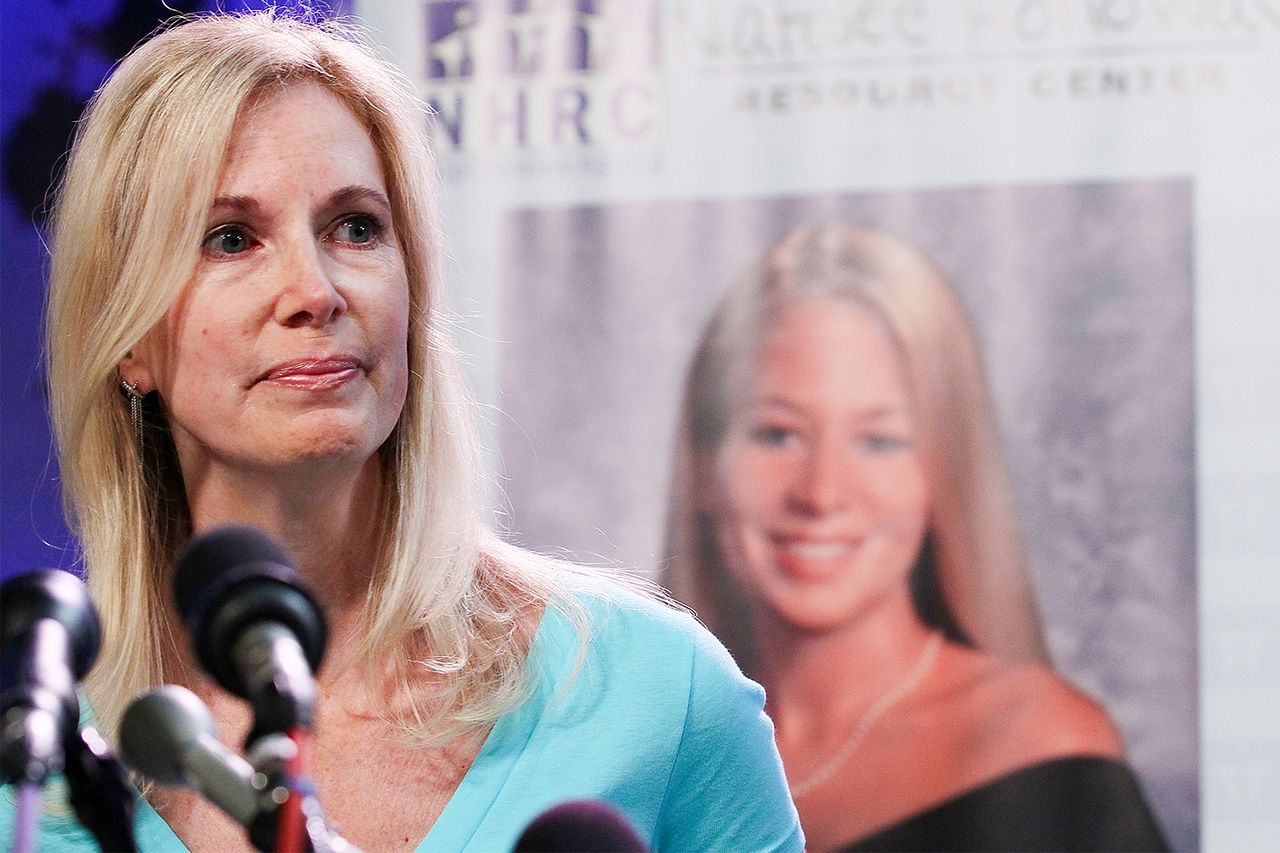
For years, Beth Holloway’s search for her daughter Natalee was accompanied by a second, less visible ordeal: a stream of purported leads, strangers claiming to possess answers, and the emotional strain of never knowing whether the next call might finally reveal what happened. In Netflix’s 2026 three-part documentary Taken: Natalee Holloway, Beth describes the uncertainty itself as a relentless nightmare—and says it was compounded by scammers, circulating theories, and what she calls the killer’s endless taunting.
Her account matters because it shows how a missing-person investigation can continue to harm a family long after the initial search has faded from headlines. The Holloways were not simply waiting for information. They had to assess claims, respond to media attention, work with investigators, and protect their hope from people who might exploit it. The 2010 extortion attempt became one of the clearest documented examples of that exploitation.

What Beth means by the years of uncertainty
Natalee Holloway, an 18-year-old from Mountain Brook, Alabama, disappeared during a high-school graduation trip to Aruba in May 2005. She was last seen leaving a nightclub with Joran van der Sloot and two other young men. Despite searches involving Aruban, U.S. and Dutch authorities, her remains were never recovered. The absence of a body left the family without the most basic answers about what had happened.
In a November 2026 interview with Netflix’s Tudum, Beth described the years before the 2023 confession as a period in which the unknown never stopped generating new claims. She said the not-knowing was the “never-ending nightmare,” made worse by endless scammers and theories that kept circulating because the family could not say the case was over. Her point was not that every lead was fraudulent; it was that a family in that position has no easy way to distinguish a genuine development from someone trying to profit from its desperation.
That distinction is important. A tip can be sincere and still be wrong. A rumor can spread widely without becoming evidence. And a person who claims to know where a missing loved one is may be asking a family to take an enormous emotional and financial risk before anything is verified.
The 2010 offer that turned uncertainty into an extortion investigation
One of the most consequential episodes began in March 2010, when van der Sloot contacted Beth’s attorney, John Q. Kelly, and offered information about Natalee’s remains and death in exchange for $250,000. The proposed arrangement called for an initial payment and a much larger payment after the remains were positively identified. The FBI’s contemporaneous public statement confirms that the offer prompted a federal investigation into alleged extortion and wire fraud.
The FBI said the investigation began in April 2010 with the U.S. Attorney’s Office in Birmingham and was conducted alongside Aruban authorities. It also clarified a detail that was misreported in some accounts: the money involved in the operation was private money, not FBI funds. On June 3, 2010, a federal criminal complaint charged van der Sloot with extortion and wire fraud. The FBI explained that the case was complex because the alleged conduct took place outside the United States.
According to the federal account later described in court records and reporting, Kelly met van der Sloot in Aruba as part of the FBI-supported operation. The meeting was recorded. The promised information did not produce Natalee’s remains, and van der Sloot later left Aruba for Peru. The operation ultimately supplied evidence for the U.S. case, but it did not give Beth the answer she had been seeking.
Why the promised answer was so cruel
The emotional force of the 2010 episode lies in the leverage behind the offer. The person believed to know what happened to Natalee was presenting information about her possible resting place as something that could be purchased. For a parent, that is not an ordinary financial decision. It is a decision made under the pressure of imagining that a payment might finally bring a child home—or might instead reward another deception.
ABC News reported in 2010 that Beth publicly described the offer as a chance to learn the truth and locate Natalee’s remains. Later reporting on the investigation detailed how the account van der Sloot supplied changed and how the supposed location information failed to lead to the remains. These details help explain why Beth’s description of years of scammers is not merely a figure of speech: the case included a documented attempt to obtain money by dangling information that the family desperately wanted.

Taunting, rumors and the burden of keeping the case alive
In the 2026 Netflix interview, Beth connected the end of the uncertainty with the end of the endless scams and taunting. She said that before she had answers, theories and claims kept returning because there was no definitive account that could close the door on them. The documentary revisits the long period in which van der Sloot’s changing accounts, public statements and the family’s repeated efforts to obtain reliable information kept the case in public view.
It is important to separate Beth’s description of the emotional experience from a claim that every rumor or contact came directly from van der Sloot. The record supports a specific 2010 extortion attempt, while the broader phrase “endless scammers” describes the wider environment she says surrounded the family. Responsible reporting should not turn every unverified tip into a proven act by one person, nor should it repeat sensational claims as established fact.
The media attention created another difficult balance. Public coverage could keep Natalee’s disappearance visible and encourage people with information to come forward. But repeated speculation could also revive false hope, expose the family to intrusive questions, and give unverified stories a life of their own. Beth’s decision to keep speaking publicly was therefore both a way to maintain pressure and a personal cost she had to carry.
What changed after the 2023 confession
In October 2023, van der Sloot pleaded guilty in Alabama to federal extortion and wire-fraud charges connected to the 2010 scheme. During the plea proceedings, he admitted to killing Natalee in Aruba in 2005 and described the attack. The legal distinction matters: the U.S. conviction was for extortion and wire fraud, not a separate conviction for Natalee’s murder. Her remains have still not been recovered.
That admission gave Beth information she had spent years seeking, but it did not erase the earlier years or resolve every legal question. Netflix’s November 2026 interview reports that Beth has since been working with Dutch attorneys Royce de Vries and Annemiek van Spanje on a murder complaint to Dutch authorities. She told Tudum that the work is ongoing and that prosecutors are obtaining case files. Any possible Dutch prosecution remains a separate legal process, not a completed outcome.
Why this part of Beth’s story matters to other missing-person families
The Holloway case illustrates a practical danger for families of missing people: urgent hope can make them vulnerable to people who promise certainty in exchange for money, access or attention. Families may receive calls, messages, anonymous tips and media inquiries while also trying to coordinate with law enforcement. A claim that sounds specific is not automatically reliable. Independent verification, documentation and communication through investigators or legal counsel can help prevent a second layer of harm.
Beth has also told Netflix that she now helps other families navigate contact with law enforcement and search resources. That work turns some of the experience she gained during Natalee’s disappearance toward people facing their own crises. It does not make the years of uncertainty acceptable or interchangeable, but it gives her a way to use what she learned to support others.
Frequently Asked Questions
What scam was connected to the Natalee Holloway case?
In 2010, Joran van der Sloot offered to provide information about Natalee Holloway’s remains and death in exchange for $250,000. The FBI investigated the offer, and van der Sloot was later charged federally with extortion and wire fraud. The promised information did not lead investigators to Natalee’s remains.
Did Beth Holloway pay the money requested?
The 2010 operation involved an initial transfer of money during a recorded meeting arranged with her attorney and the FBI. The FBI publicly clarified that the funds were private, not FBI money. The full proposed $250,000 was not paid as a completed exchange for verified information.
Did van der Sloot confess to killing Natalee?
Yes. During his October 2023 federal plea proceedings for extortion and wire fraud, van der Sloot admitted to killing Natalee in Aruba in 2005. The federal conviction in that case was for extortion and wire fraud; it was not a separate murder conviction for Natalee’s death.
Were Natalee Holloway’s remains ever found?
No. Her remains have not been recovered. The 2023 admission provided Beth with an account of what happened, but it did not result in the recovery of Natalee’s body.
What does Beth Holloway say about the years of uncertainty now?
In a November 2026 interview with Netflix Tudum, Beth said the not-knowing had been a never-ending nightmare, made worse by scammers, theories and taunting. She says learning what happened ended that particular uncertainty, even as she continues to pursue legal accountability.
Conclusion
Beth Holloway’s account of scam calls and taunting is a reminder that a missing-person case can inflict harm through more than the original disappearance. For years, the family had to live with unanswered questions while navigating false leads, public speculation and a documented attempt to sell information about Natalee’s remains. The 2010 FBI investigation exposed one particularly stark example of that exploitation, while the 2023 plea proceedings finally brought an admission from van der Sloot about Natalee’s death.
But answers and full justice are not identical. Natalee’s remains have not been found, and the federal case did not produce a murder conviction for her death. Beth’s continuing work with Dutch attorneys reflects that unresolved legal dimension. Her story also offers a caution to other families: treat claims carefully, preserve evidence, and seek independent verification before trusting anyone who says they can sell the truth.
By Shivam Das
Sources and Further Reading
- Netflix Tudum: Beth Holloway on the years of uncertainty and her next legal steps (Nov. 4, 2026)
- Netflix Tudum: Background and reporting on Taken: Natalee Holloway (Nov. 5, 2026)
- FBI: Joint statement on the 2010 van der Sloot investigation (June 9, 2010)
- ABC News: Beth Holloway’s account of the 2010 offer and FBI operation
- Associated Press: 2023 guilty plea and confession