
By Shivam Das
For years, Beth Holloway’s public identity was tied to one urgent question: what happened to her daughter, Natalee? The Alabama teenager disappeared during a high-school graduation trip to Aruba in May 2005, and the search that followed reshaped Beth’s life. But her work did not remain confined to her own family’s case. In the years after Natalee vanished, Beth increasingly used what she had learned to speak about personal safety and to help other families confronting the disappearance of someone they love.
That wider role was visible when Beth appeared as a featured speaker at AdvocacyCon in 2025. The conference brings together families of missing and murdered people, advocates, nonprofit organizations, and subject-matter experts. Her appearance connected a highly publicized case with the quieter, practical work that families often need after a loved one goes missing: communicating with authorities, understanding available resources, and finding people who can help them navigate an unfamiliar system.
The distinction matters. Beth’s advocacy is not simply a continuation of media attention around Natalee’s disappearance. It is also a response to the people who supported her during the search. She has described wanting to share what she learned because so many people reached out to help her. Her current work, as she explained in a November 2026 interview with Netflix Tudum, can include facilitating communication with law enforcement and helping families identify search-and-rescue resources, personnel, and guidance.
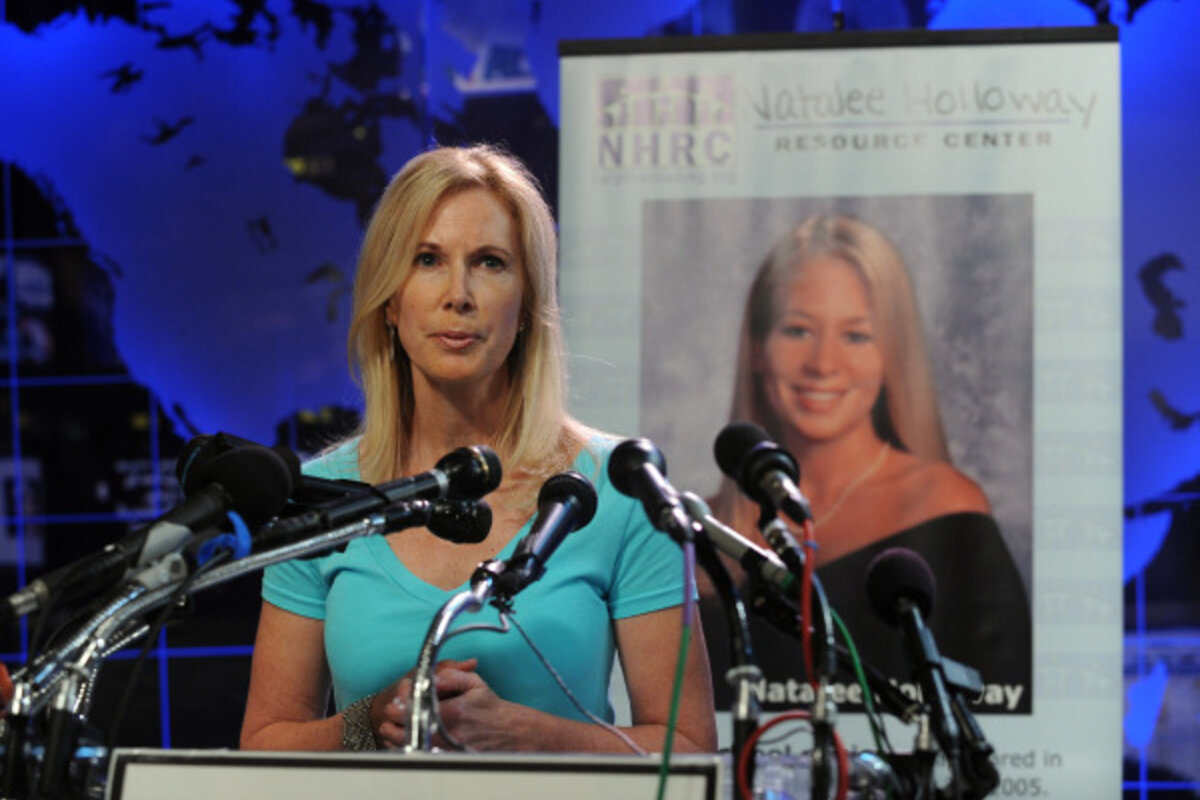
Why Beth Holloway’s AdvocacyCon appearance mattered
AdvocacyCon is designed as a working conference rather than a true-crime entertainment event. Its stated purpose is to bring families affected by missing-person and homicide cases into contact with experts, nonprofits, and advocates who can share knowledge and practical support. The organizers describe the gathering as a place for education, connection, and collaboration.
That environment gives Beth’s appearance a different meaning from a television interview. In a broadcast interview, a family member is often asked to recount the most painful moments of a case for a general audience. At an advocacy conference, the same experience can be shared with people who are facing similar challenges or who work directly with affected families. The emphasis can shift from retelling a tragedy to exchanging information that may help someone take the next step.
Reports about the 2025 conference identify Beth as a featured speaker. A contemporaneous account of her message said she described Natalee’s 2005 disappearance as the event that changed her family’s life and explained that she had made it her mission to share a message of hope and personal safety across the United States. The central point was not that every family’s circumstances are identical. It was that lessons learned through one painful experience may help another family prepare, ask questions, and seek assistance.
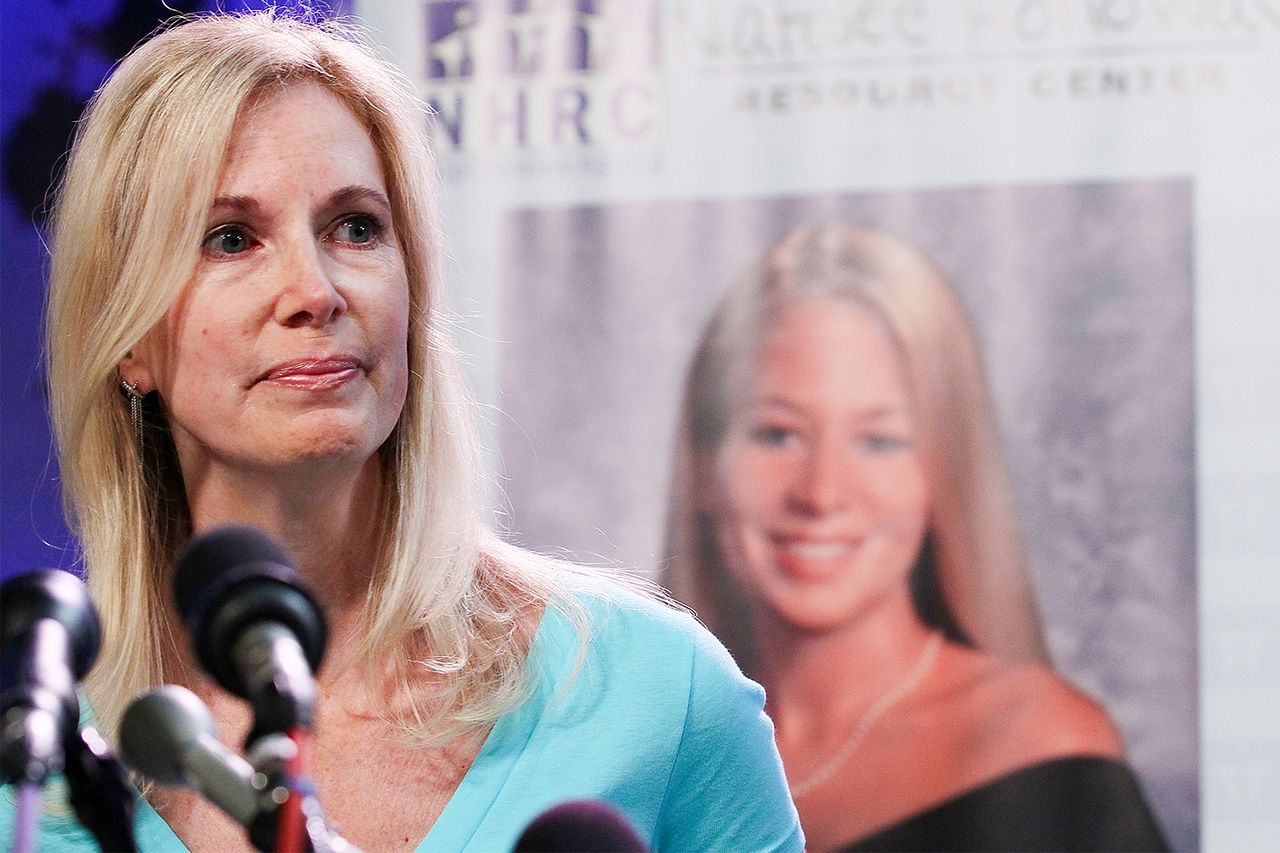
What Beth says she does for families of missing people
In her November 4, 2026 interview with Netflix Tudum, Beth described the practical ways she tries to help other families. Sometimes, she said, she helps facilitate communication with law enforcement. In other situations, a family may need help finding search-and-rescue resources, personnel, or guidance. Her description is specific and modest: she does not claim to solve every case or replace investigators. She helps families connect with information and people who may be able to assist.
That distinction is important because missing-person investigations are different from one another. The relevant agencies, legal procedures, geography, available evidence, and urgency can vary widely. A family may need help understanding whom to contact, how to communicate a concern clearly, or what kinds of resources might be available. Someone who has spent years dealing with investigators and public agencies can sometimes help a family formulate questions or avoid feeling entirely alone in the process.
Beth’s own experience also illustrates the limits of what any advocate can promise. Natalee’s disappearance prompted an international search, intense media attention, and years of uncertainty. Even with substantial public attention, answers did not come quickly. Beth’s support for other families is therefore best understood as guidance and connection—not a guarantee of a particular investigative result.

From Natalee’s disappearance to a broader safety message
After Natalee disappeared in Aruba on May 30, 2005, Beth became a prominent public voice on the safety of young people traveling away from home. She founded the International Safe Travels Foundation in 2006, with a stated focus on educating people about safer international travel. The family’s experience also informed the creation of the Natalee Holloway Resource Center in Washington, D.C., in 2010. The center was intended to provide support and resources to families of missing people and to promote safety education.
These efforts developed from different needs. Travel-safety education is intended to help people think ahead about risks before a trip. Missing-person support addresses the difficult period after someone cannot be located. Both reflect Beth’s effort to turn lessons from her own experience into information that might be useful to others.
It would be misleading to suggest that a safety checklist can prevent every disappearance or that families can control every circumstance. The value of prevention guidance is more practical: planning, communication, awareness of surroundings, and knowing whom to contact can improve preparedness. Likewise, support after a disappearance cannot replace an official investigation, but it may help families find their footing while they work with authorities.
Her experience with other families is not limited to conferences
Public speaking is only one part of Beth’s work. Her comments to Netflix Tudum indicate that some of her assistance happens behind the scenes, through conversations with families who reach out. That kind of support is less visible than a conference appearance, but it can be more directly connected to the immediate needs of a family trying to understand what to do next.
Her connection with the family of Stephany Flores Ramírez is another reminder that the effects of a violent crime can extend across families and countries. Stephany, a 21-year-old Peruvian student, was murdered in Lima in 2010. Joran van der Sloot was convicted in Peru for her murder. In the Netflix documentary, Beth discusses communicating with Stephany’s mother and recognizes the painful parallel between the two families’ experiences. The cases are not identical, and each family has its own history and needs, but both women lost daughters to the same man.
That contact should not be turned into a claim that Beth represents Stephany’s family or speaks on its behalf. The more careful point is that Beth has acknowledged the difficulty of imagining another mother’s grief while recognizing the connection created by the same perpetrator. It is an example of how families affected by violent crime may find understanding across borders without having to pretend that their experiences are interchangeable.
AdvocacyCon’s role: community, information, and collaboration
AdvocacyCon describes itself as a conference for families of the missing and murdered, experts, nonprofit organizations, and people committed to justice advocacy. Its stated focus includes education and collaboration. Its public materials also describe opportunities for families to connect with experts and organizations, and for advocates and content creators to amplify the voices of affected families.
That structure matters because families often encounter a fragmented support landscape. Law enforcement handles investigations; nonprofits may focus on a particular population or type of case; legal professionals address specific legal questions; search-and-rescue teams have their own operational requirements. A conference can create opportunities for people in those different roles to meet, share experience, and learn where their work may overlap.
Beth’s participation in 2025 fits that mission. Her public experience gave her a platform, but the more useful contribution may be the practical knowledge she can share about persistence, communication, and the emotional strain of a prolonged search. The conference does not erase the differences between cases. It can, however, give families a place to begin building relationships with people who understand the work involved.

What changed after the 2023 admission—and what did not
In October 2023, van der Sloot pleaded guilty in a U.S. federal case involving extortion and wire fraud connected to his attempt to obtain money from Beth in exchange for information about Natalee. During the proceedings, he admitted to killing Natalee in Aruba in 2005. The admission gave Beth information she had sought for 18 years, but it did not mean that every legal issue was resolved or that Natalee’s remains were recovered.
The legal distinction remains essential. The U.S. federal conviction was for extortion and wire fraud, not a separate U.S. murder conviction for Natalee’s death. In her November 2026 interview with Netflix Tudum, Beth said she had been working with Dutch attorneys on a murder complaint against van der Sloot in the Netherlands and hoped the process would lead to murder charges. As of that interview, he had not been charged there in connection with Natalee’s death.
For Beth, the end of the uncertainty and the pursuit of further accountability can exist at the same time. She has described the end of not knowing as a major change in her life. She has also said she is not finished with the legal effort. Her work with other families is another part of that continuing public role, but it should not be confused with the specific Dutch legal process involving Natalee’s case.
Why her return to teaching is part of the same story
Netflix Tudum reported that Beth has returned to the classroom as a public-school speech pathologist after stepping away from the profession for nearly a decade while searching for Natalee. She told the publication that staying active and busy is important to her. The return to teaching offers a glimpse of a life that includes professional work alongside advocacy and the ongoing effort to seek accountability.
Her work as a speech pathologist and her support for missing-person families are not the same job. But both can involve communication, listening, and helping people navigate difficult situations. Beth has not suggested that her professional role makes her an investigator or a legal expert. Rather, she has described sharing what she learned and helping families reach the people and resources they need.
What Beth Holloway’s advocacy can—and cannot—offer
There is a risk in turning any public figure’s experience into a universal formula. Every missing-person case is different, and no conference, advocate, or personal story can guarantee that a family will receive answers. Beth’s experience is especially unusual because Natalee’s disappearance became an international case and remained in the public eye for years.
What her advocacy can offer is more grounded: a reminder that families deserve clear communication, that practical resources matter, and that people who have navigated a crisis may be able to help others find their next step. It can also make room for the emotional reality of a long search, including the exhaustion that comes from uncertainty and the importance of support beyond the immediate investigation.
Her AdvocacyCon appearance in 2025 placed those lessons in a community setting. Her more recent comments suggest that the work continues through individual conversations and practical assistance. The public may know Beth primarily through Natalee’s story, but the work she describes now reaches beyond the boundaries of that one case.
Frequently asked questions
Did Beth Holloway speak at AdvocacyCon?
Yes. Published coverage identifies Beth Holloway as a featured speaker at AdvocacyCon 2025. The event brought together families of missing and murdered people, experts, nonprofits, and advocates.
What did Beth Holloway discuss at AdvocacyCon?
Coverage of her 2025 appearance describes a message shaped by Natalee’s disappearance, hope, and personal safety. Her public advocacy has focused on sharing lessons from her experience and helping other families.
Does Beth Holloway help families of missing people?
Yes. In a November 2026 interview with Netflix Tudum, Beth said she sometimes helps families communicate with law enforcement and identify search-and-rescue resources, personnel, and guidance.
What is AdvocacyCon?
AdvocacyCon is a conference that brings together families of missing and murdered people, experts, nonprofit organizations, and advocates to encourage education, connection, and collaboration.
Did Beth Holloway found a resource center?
The Natalee Holloway Resource Center opened in Washington, D.C., in 2010. It was created to support families of missing people and provide safety-related resources and education.
Does Beth Holloway still work on Natalee’s case?
Yes. In November 2026, she told Netflix Tudum that she had been working with attorneys in the Netherlands on a murder complaint against Joran van der Sloot. As of that interview, he had not been charged there in connection with Natalee’s death.
Has Joran van der Sloot been convicted of Natalee Holloway’s murder in the United States?
No separate U.S. murder conviction resulted from the 2023 federal case. He pleaded guilty to extortion and wire fraud, and admitted to killing Natalee during the proceedings.
Why does Beth Holloway’s work with other families matter?
Her experience gives her practical knowledge of the challenges families may face during a missing-person investigation. She says she uses that experience to help with communication and access to resources, while recognizing that every case is different.
Sources and further reading
- Netflix Tudum: Beth Holloway on her current advocacy, support for other families, and legal efforts
- AdvocacyCon: What the conference is designed to do and who it brings together
- AdvocacyCon 2025: Event listing and organizer information
- Yahoo News: Beth Holloway’s 2025 AdvocacyCon appearance and personal-safety message
- AdvocacyCon: Official conference mission and current information
- CBS News / Associated Press: Opening of the Natalee Holloway Resource Center
- Fox News: Beth Holloway’s comments on the search for Sudiksha Konanki
Editorial note: This article distinguishes Beth Holloway’s documented 2025 AdvocacyCon appearance from the conference’s later editions. It does not claim she spoke at AdvocacyCon 2026. Her comments about helping other families and the Dutch legal complaint are attributed to her November 2026 Netflix Tudum interview. Image credits identify the publishers associated with the photographs; attribution alone does not establish a license to reuse third-party images.