

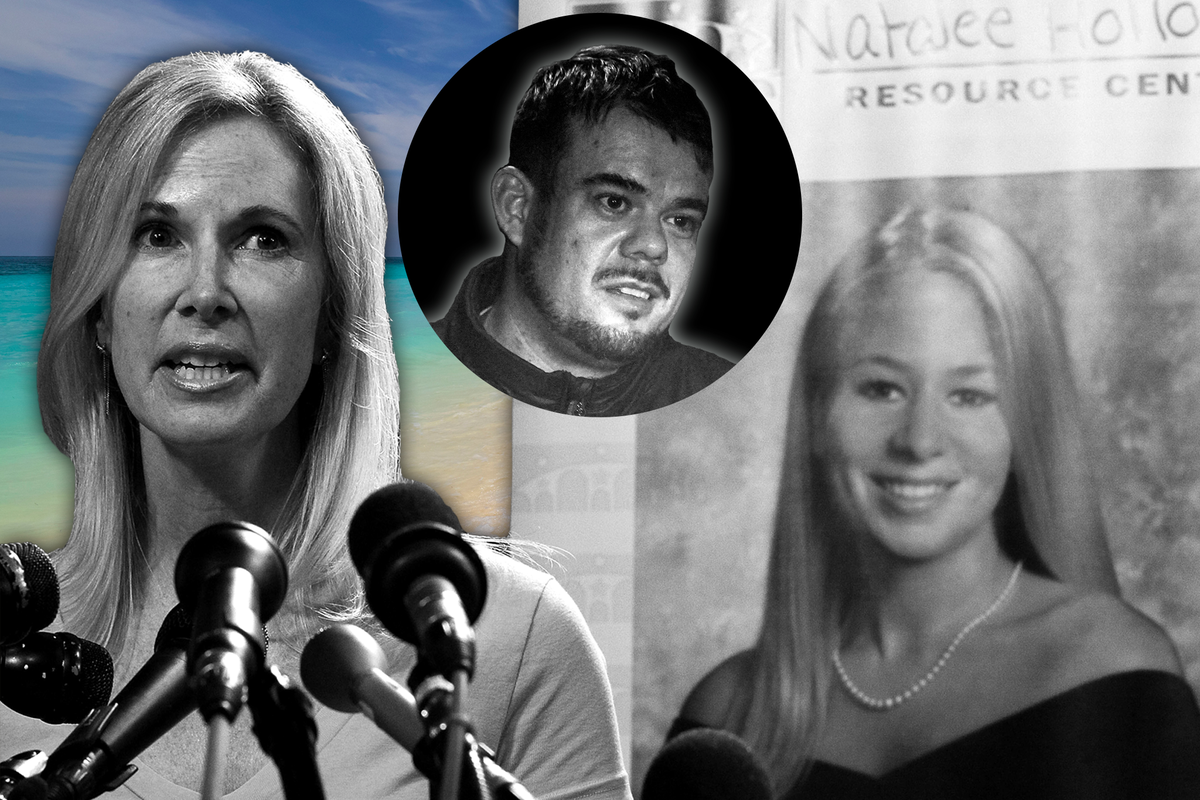
For 18 years, Joran van der Sloot denied knowing what happened to Natalee Holloway after the Alabama teenager disappeared during a graduation trip to Aruba in May 2005. The account he gave federal investigators on October 3, 2023, was different. In a recorded proffer interview made public through the federal case, van der Sloot described a beach encounter, an assault after Natalee resisted his sexual advances, a cinder block, and his account of pushing her body into the sea.
The statement became public on October 18, 2023, when van der Sloot pleaded guilty in Alabama to federal extortion and wire-fraud charges tied to an attempt to obtain money from Natalee’s mother, Beth Holloway. The confession was not a separate murder conviction. It was information he was required to provide under the agreement that resolved the U.S. financial-crime case.

Why the October 2023 proffer happened
The proffer was part of a plea agreement in a federal case arising from a 2010 scheme to sell Beth Holloway information about her daughter’s remains. According to the U.S. Department of Justice, van der Sloot had sought $250,000, promising to reveal where Natalee’s remains could be found and explain how she died. Beth’s attorney paid an initial $25,100; van der Sloot later described the information he supplied as worthless.
Years later, after van der Sloot was temporarily extradited from Peru to the United States, the agreement required him to provide full, complete, accurate, and truthful information about Natalee’s disappearance. It also allowed Natalee’s parents to hear his account in real time. That condition mattered to the family: the objective was not simply another public statement, but an account delivered under questioning, with investigators able to test details against the long-running case file.
The FBI interview took place at the Shelby County Jail in Alabama on October 3, 2023. According to reporting by the Associated Press, van der Sloot was questioned first by his own attorney and then by FBI agents. The session lasted about three hours. A portion of the recorded interview was later filed in federal court, and the transcript cautioned that the recording itself would control if any discrepancy arose.

What van der Sloot said happened on the beach
In the account reproduced in the court filing, van der Sloot said he and Natalee were dropped off near the Marriott area, close to the Fisherman’s Huts, after leaving a bar. He said Natalee had asked to return to her hotel, but he wanted to be dropped farther away so they would have to walk and he might have another opportunity to be with her.
He described the two walking along the beach and kissing. He then acknowledged that Natalee told him to stop when he tried to touch her sexually. He said she kneed him in the groin. His account was that he got up, kicked her hard in the face, and saw that she was unconscious or possibly already dead.
Van der Sloot then described finding a cinder block nearby and striking her head with it. He said he was frightened and did not know what to do. He described partly pulling and partly carrying her into the water, walking in until the sea reached around his knees, and pushing her body away from him into the sea.
Why the cinder-block detail became central
The cinder block was one of the most specific and disturbing elements in the account. It gave investigators and the public a concrete description of the violence van der Sloot said he committed, rather than another vague claim about a fall, an accident, or a disappearance. But the detail must be described accurately: it is what van der Sloot said in the proffer. It is not a forensic finding from Natalee’s recovered remains, because her remains have never been found.
The statement also described the location and sequence of events in a way investigators could compare with earlier statements, known movements, and the geography of the beach. That does not mean every detail could be independently verified. The transcript is evidence of what he told investigators; it is not a substitute for physical evidence that was unavailable because Natalee’s body was never recovered.

The polygraph and the family’s reaction
The plea agreement also required van der Sloot to take a polygraph examination. The Associated Press reported that the Holloway family’s attorney said the results gave them a high level of confidence that van der Sloot was telling the truth. A polygraph is not a definitive scientific determination of truth, however, and it should not be presented as proof on its own. The family’s response reflected the totality of the process: the recorded account, the questioning, the information investigators had gathered, and the test required by the agreement.
Natalee’s parents watched the interview remotely from a nearby room. Beth Holloway later described the experience as painful but necessary after years of uncertainty. Her attorney said the family had agreed to the process because they wanted answers and wanted to hear van der Sloot’s account directly rather than receive another second-hand version.
The plea was for extortion and wire fraud, not Natalee’s murder
On October 18, 2023, van der Sloot pleaded guilty in the U.S. District Court for the Northern District of Alabama to extortion and wire fraud. The Department of Justice said he was sentenced to 20 years in prison. The sentence was ordered to run concurrently with the 28-year sentence he was already serving in Peru for the 2010 murder of Stephany Flores Ramírez.
The legal distinction is essential. The Alabama prosecution concerned the attempt to obtain money from Beth Holloway by offering information about Natalee. U.S. authorities did not prosecute van der Sloot for Natalee’s killing in Aruba. The confession was part of the agreement in the federal financial-crime case; it did not amount to a U.S. murder conviction for Natalee’s death.
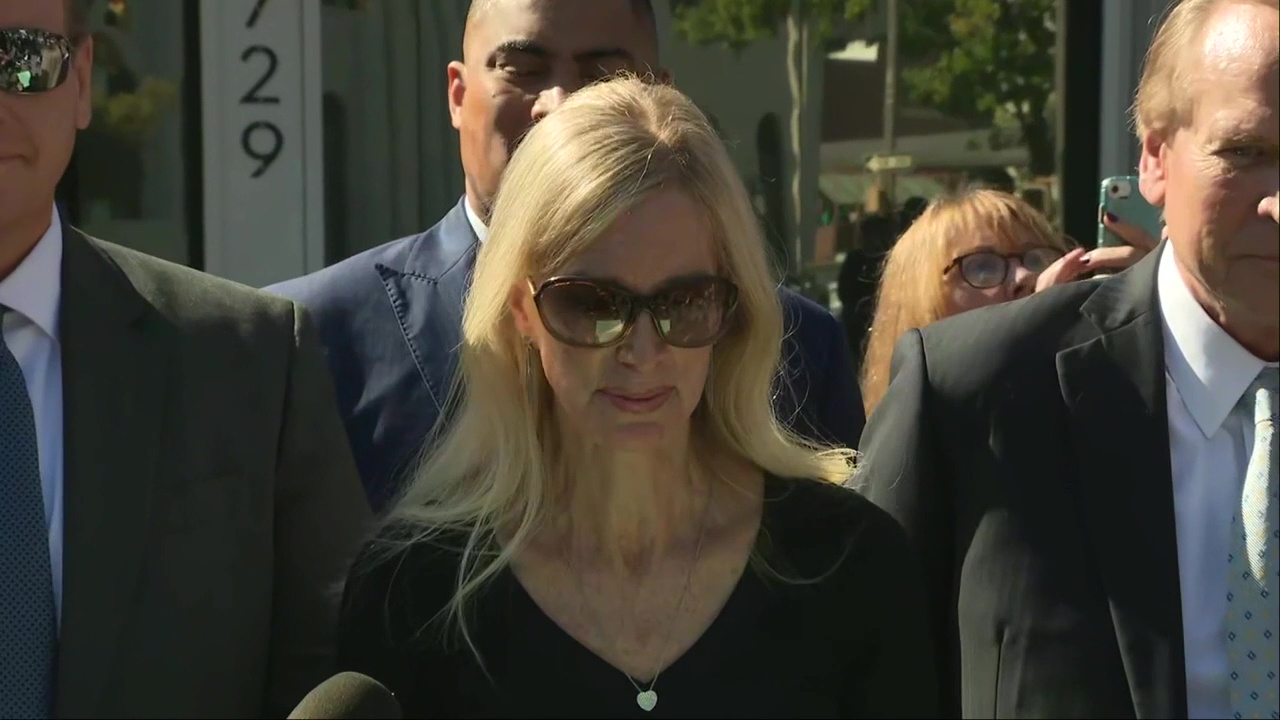
After the hearing, Beth said she no longer regarded van der Sloot as merely a suspect. Her words reflected the significance of hearing an admission after 18 years. Natalee’s father, Dave Holloway, also said he believed van der Sloot had killed his daughter, while raising a separate concern that other people might have helped conceal the crime or prevent the family from recovering her remains.
What the confession did — and did not — resolve
The proffer supplied a detailed account of how van der Sloot said Natalee died and what he said he did afterward. It did not lead investigators to her remains. It did not answer every question about whether anyone else helped conceal what happened. And it did not create a murder conviction in the jurisdiction where the killing occurred.
Those limits do not erase the significance of the admission. For Beth and Dave Holloway, the account ended a long period in which they had been forced to live with competing stories and no reliable explanation. For the public record, the October 3 interview is a documented statement made under the terms of a federal plea agreement, later presented in court. It should be read as such: a confession by van der Sloot, supported by the record of the plea proceedings, but distinct from a separate trial and verdict for Natalee’s murder.
For more context, read our coverage of why Natalee Holloway’s remains were never found, the status of the Dutch murder complaint, and where van der Sloot is serving his sentence.
Frequently asked questions
What did Joran van der Sloot admit in the proffer?
He said he assaulted Natalee Holloway on an Aruba beach after she resisted his sexual advances, kicked her in the face, struck her head with a cinder block, and pushed her body into the sea.
When did van der Sloot give the confession?
The recorded proffer interview took place on October 3, 2023, at the Shelby County Jail in Alabama. A portion of the transcript was filed in federal court and became public on October 18, 2023.
Why was the confession part of an extortion case?
Van der Sloot pleaded guilty to federal extortion and wire-fraud charges arising from an attempt to obtain money from Beth Holloway in exchange for information about Natalee’s remains. The plea agreement required him to provide information about Natalee’s disappearance.
Did the polygraph prove that his confession was true?
No polygraph can conclusively prove truth. The plea agreement required a test, and the family’s attorney said the result increased their confidence. The test should be understood as one part of the process, not standalone proof.
Was van der Sloot convicted of murdering Natalee Holloway?
No. He pleaded guilty in Alabama to extortion and wire fraud and received a 20-year sentence. The confession was included in that case, but he was not convicted in the United States of Natalee’s murder.
Were Natalee Holloway’s remains recovered?
No. Her remains have never been found, which is one reason important parts of the case could not be independently confirmed through forensic examination of her body.
Sources and documents
- U.S. Department of Justice: Plea and sentence for extortion and wire fraud, October 18, 2023
- Federal court filing: October 3, 2023 proffer transcript excerpt
- Associated Press via Alabama Public Radio: How the family heard the proffer
- CBS News: Details of van der Sloot’s confession and the 2010 extortion scheme
- Associated Press via Los Angeles Times: Aruba’s request for the U.S. case documents
Editorial note: This report distinguishes van der Sloot’s recorded account from independently established facts and from the charges to which he pleaded guilty. Graphic details are included only to explain the substance of the public court record.