

For two decades, the legal question surrounding Natalee Holloway’s 2005 death seemed to have reached a dead end: Aruba’s limitation period had run out for manslaughter, while the evidence available to Aruban prosecutors was not enough, in their assessment, to support a murder or qualified-manslaughter charge. In 2026, a new route emerged. Beth Holloway filed a criminal complaint in the Netherlands, and Aruba’s Public Prosecutor’s Office made the case file available to prosecutors in Amsterdam.
The phrase “legal loophole” makes a dramatic headline, but it needs a careful explanation. Dutch citizenship does not automatically erase Aruba’s limitation rules, guarantee Dutch jurisdiction, or force prosecutors to file charges. The legal issue is narrower: Aruba’s prosecutor said that prosecution for manslaughter was time-barred under Aruban law, while the Dutch limitation period had not expired; because the suspect is a Dutch national, prosecution in the Netherlands was, in principle, possible. Dutch prosecutors must still assess the complaint and the evidence.
Quick answer: Beth Holloway’s Netherlands strategy is based on a possible exercise of Dutch criminal jurisdiction over a Dutch suspect for an alleged killing in Aruba. It is not a guaranteed loophole. On April 2, 2026, Aruba’s Public Prosecutor’s Office confirmed that it would transfer the full case file to the Amsterdam Public Prosecutor’s Office so that it could assess Beth’s complaint. That transfer was a procedural step, not a charging decision.
What changed in 2026: Beth filed a complaint in the Netherlands
On March 16, 2026, Beth Holloway filed a complaint with the Dutch Public Prosecution Service against Joran van der Sloot over Natalee’s death. Her lawyers, Annemiek van Spanje and Royce de Vries, asked Dutch authorities to consider prosecution. The complaint followed years of efforts to obtain and assess the evidence surrounding van der Sloot’s 2023 proffer statement in the separate U.S. extortion and wire-fraud case.
The next major development came on April 2, 2026. The Public Prosecutor’s Office of Aruba announced that it had offered the entire Aruban case file to the Amsterdam Public Prosecutor’s Office. Aruba said the documents it received from U.S. authorities in January 2026 had not, at that stage, provided sufficient evidence for murder or qualified-manslaughter charges under its assessment. It also said that the limitation period for manslaughter had expired in Aruba, while the Dutch limitation period had not expired.
Aruba’s statement was important because it set out the legal reasoning in the official record. The Aruban prosecutor said that, because the suspect is Dutch, prosecution in the Netherlands was possible in principle. The file was being sent to Amsterdam so Dutch prosecutors could assess the complaint. The statement did not say that the Netherlands had accepted the case for prosecution, that charges had been filed, or that a trial was certain.

Why Dutch citizenship matters — and what it does not mean
Van der Sloot is a Dutch national. That fact matters because Aruba’s prosecutor specifically cited his Dutch nationality when explaining why prosecution in the Netherlands could be possible in principle. The U.S. federal indictment filed in 2010 also described him as a citizen of the Netherlands who was residing in Aruba at the time relevant to the case.
But nationality is not a magic switch. It does not mean that every crime committed by a Dutch citizen anywhere in the world is automatically tried in the Netherlands. A Dutch prosecutor must identify a valid basis for jurisdiction under Dutch law, examine the relevant offense and limitation rules, assess whether the available evidence is legally usable, and decide whether prosecution is appropriate. The suspect’s nationality is one part of the jurisdictional analysis, not the whole answer.
There is another important distinction: Aruba is not simply a Dutch municipality. Aruba is one of the four constituent countries of the Kingdom of the Netherlands, alongside the Netherlands, Curaçao and Sint Maarten. Aruba has its own government and is responsible for its own judicial system in many areas. The Kingdom shares certain responsibilities, including Dutch nationality law and foreign policy, but that constitutional relationship does not erase the separate criminal-law systems.

Aruba’s limitation period and the Dutch limitation period are different questions
A statute of limitations sets a legal time limit for bringing certain criminal proceedings. The exact rules depend on the jurisdiction, the offense, the date of the alleged conduct, and any statutory exceptions or changes. It is therefore misleading to speak of “the” limitation period as if Aruba and the Netherlands share one clock.
In its April 2 statement, the Aruban Public Prosecutor’s Office said that prosecution for manslaughter was no longer possible in Aruba because the offense had become time-barred there. The same statement said that the limitation period in the Netherlands had not yet expired. That difference is central to the potential Dutch route.
It is also essential not to overstate what the Aruban prosecutor said about murder. The office said that its further review had not, at that point, produced sufficient evidence for murder or qualified manslaughter. That is an assessment of the evidence then available to the Aruban office. It is not a judicial finding that a Dutch prosecution is impossible, nor does the transfer itself establish that Dutch prosecutors agree with the assessment or disagree with it.
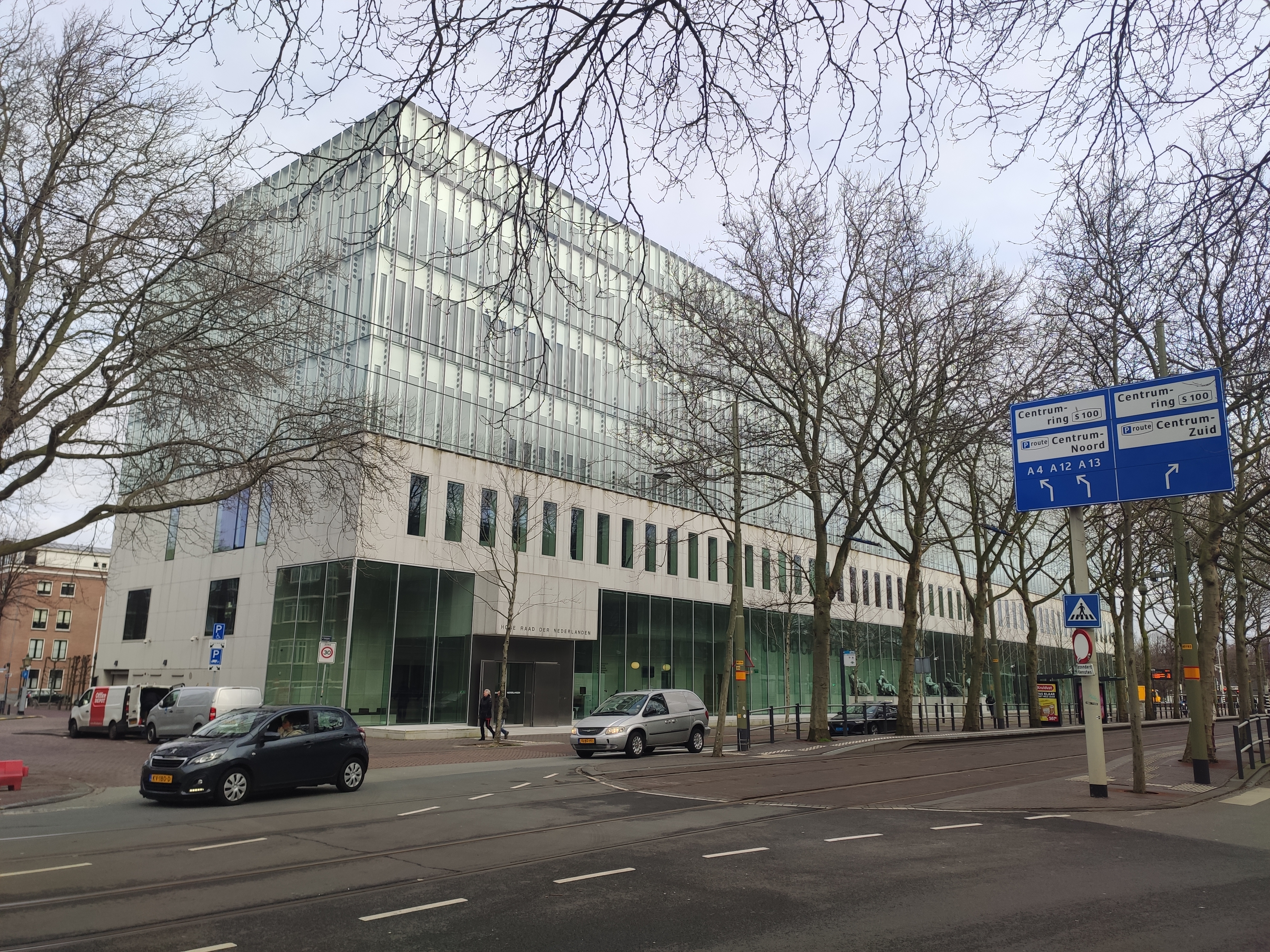
Why Aruba and the Netherlands are not interchangeable jurisdictions
The Kingdom of the Netherlands has four countries: the Netherlands, Aruba, Curaçao and Sint Maarten. Government.nl explains that Aruba, Curaçao and Sint Maarten are responsible for matters including their own judicial systems. The Netherlands has Kingdom-wide responsibilities in areas such as foreign policy and Dutch nationality law. This arrangement helps explain why a crime committed in Aruba is not automatically treated as a crime committed in the European Netherlands.
The distinction also explains why the 2026 file transfer matters. Aruban prosecutors conducted their own review and set out their view of the Aruban limitation period. Dutch prosecutors now have to assess the complaint under the law and evidence relevant to a possible Dutch case. Cooperation between authorities can make evidence available across jurisdictions, but it does not predetermine the outcome.

What evidence would Dutch prosecutors need to assess?
The 2023 statement by van der Sloot was made in connection with his U.S. federal case involving extortion and wire fraud against Beth Holloway. It was not a Dutch murder trial, and the plea proceeding did not itself produce a Dutch conviction for Natalee’s death. A prosecutor considering a new case must evaluate the actual statement, its circumstances, corroborating material, the chain of custody for records, witness evidence, forensic material, and the rules governing admissibility.
Aruba’s April 2026 announcement said that the United States had provided a large number of requested documents in January 2026 after Aruba sought assistance in 2023. The Aruban office reviewed those materials before making its assessment and offering the file to Amsterdam. That record is important, but the public announcement does not disclose every item in the file or allow outside observers to independently evaluate the full evidence.
Dutch prosecutors will also need to consider whether the evidence supports the specific offense that could legally be charged. The distinction between murder, manslaughter and qualified manslaughter is not just a matter of wording. Each offense has its own legal elements. A public statement that evidence is insufficient for one charge should not be converted into a claim that all possible legal theories have been ruled out.
What Beth Holloway’s lawyers have said
When Beth filed her complaint in March 2026, lawyer Annemiek van Spanje said the family was asking Dutch authorities to consider prosecution. In an interview with WNL, she described the file and van der Sloot’s statement as material she believed Dutch authorities should examine. WNL’s March 17 report also made clear that, at that stage, there had not been a public charging decision.
Netflix’s November 4, 2026 interview with Beth described her continuing effort with Dutch lawyers Royce de Vries and Annemiek van Spanje. Beth said the new legal effort was a further step after the answers she received in 2023. Her own description of the process should be understood as her perspective; the official status of the case is determined by the Dutch Public Prosecution Service.
Watch the WNL interview about the Dutch prosecution request
WNL interviewed lawyer Annemiek van Spanje on March 17, 2026, about Beth Holloway’s request that Dutch authorities consider prosecuting van der Sloot. The video provides the lawyer’s public explanation at the time; it is not an official decision by prosecutors.
What happens next in the Netherlands?
The Amsterdam Public Prosecutor’s Office must assess Beth’s complaint and the transferred case file. That assessment can involve reviewing the evidence, determining the applicable Dutch jurisdictional provisions, checking limitation rules, considering whether the evidence can be used in Dutch proceedings, and deciding whether the legal threshold for prosecution is met.
There is no public basis to promise that charges will be filed or that a trial will take place. A file transfer is not the same as a prosecution decision. Nor does a complainant’s request compel prosecutors to bring a case. The next meaningful update would be an official statement from the Dutch Public Prosecution Service or a formal procedural development.
Van der Sloot remains imprisoned in Peru, where he is serving a 28-year sentence for the 2010 murder of Peruvian student Stephany Flores. His separate U.S. sentence for extortion and wire fraud was ordered to run concurrently with the Peruvian sentence. Those convictions are distinct from any possible Dutch prosecution concerning Natalee Holloway’s death.
Why the word “loophole” can mislead readers
Calling the Dutch route a loophole suggests that lawyers have found a trick to bypass the law. The official explanation is more specific: Aruba’s prosecutor identified a difference between the limitation periods in the two jurisdictions and said Dutch prosecution was possible in principle because the suspect is Dutch. Whether Dutch law actually permits a charge on the evidence available is for Dutch prosecutors to decide.
The distinction matters for Beth Holloway and for public understanding. A legal option is not the same as a guaranteed outcome. It is reasonable to describe the Netherlands route as a possible jurisdictional path that remains under assessment. It is not accurate to describe it as a loophole that guarantees a murder trial.
Frequently asked questions
Is Joran van der Sloot a Dutch citizen?
Yes. The 2010 U.S. federal indictment described van der Sloot as a citizen of the Netherlands who was residing in Aruba. Aruba’s Public Prosecutor’s Office also cited his Dutch nationality when it said prosecution in the Netherlands was possible in principle.
Why can’t Aruba prosecute him for manslaughter now?
In its April 2, 2026 statement, the Aruban Public Prosecutor’s Office said the limitation period for manslaughter had expired in Aruba. The same statement said the Dutch limitation period had not expired. This is the key legal difference behind the possible Netherlands route.
Has the Netherlands charged Joran van der Sloot with Natalee Holloway’s murder?
No public charging decision was identified in the official materials reviewed for this article. Aruba transferred its case file to the Amsterdam Public Prosecutor’s Office so that the Dutch office could assess Beth’s complaint. That is not the same as filing charges.
Does Dutch citizenship automatically give the Netherlands jurisdiction?
No. Nationality is relevant to the possible jurisdictional basis described by Aruba’s prosecutor, but Dutch prosecutors must still assess the law, the offense, limitation rules and the evidence. The official statement says prosecution is possible in principle, not automatic.
Is Aruba part of the Netherlands?
Aruba is a constituent country of the Kingdom of the Netherlands. It has its own government and is responsible for its own judicial system in many areas. The Netherlands and Aruba share the Kingdom’s constitutional framework, but they are not the same criminal-law jurisdiction.
What did Aruba’s prosecutor say about the evidence?
The April 2, 2026 statement said that the documents received from U.S. authorities had not, at that stage, provided sufficient evidence for murder or qualified manslaughter under the Aruban office’s assessment. It also said manslaughter was time-barred in Aruba and that the file would be made available to Amsterdam.
What is the next step?
The Amsterdam Public Prosecutor’s Office must review the complaint and the transferred file. It will determine whether Dutch law provides a basis for prosecution and whether the evidence supports a charge. Until an official decision is announced, the outcome remains uncertain.
Sources and further reading
- Public Prosecutor’s Office of Aruba: Case file offered to Amsterdam (April 2, 2026) — primary source for the evidence review, limitation-period explanation and transfer.
- NOS: Beth Holloway files a complaint in the Netherlands (March 16, 2026) — report on the complaint and lawyer’s announcement.
- WNL: Lawyer hopes the Netherlands will prosecute van der Sloot (March 17, 2026) — interview with lawyer Annemiek van Spanje.
- Government of the Netherlands: Responsibilities of the Netherlands, Aruba, Curaçao and St Maarten — explains the Kingdom’s division of responsibilities.
- Government of the Netherlands: Governance of Aruba, Curaçao and St Maarten — outlines the countries’ governments and governance.
- Netflix Media Center: Taken: Natalee Holloway — official series information.
- Netflix Tudum: Beth Holloway’s continuing legal effort — November 4, 2026 interview.
- U.S. Department of Justice: 2010 federal indictment — contemporaneous court document identifying van der Sloot as a Dutch citizen residing in Aruba.
Editorial note: This article distinguishes official prosecutorial statements from statements by Beth Holloway and her lawyers. It does not claim that Dutch charges have been filed or that prosecution is guaranteed. Image credits and license links are provided with the photographs.
Author: Shivam Das