
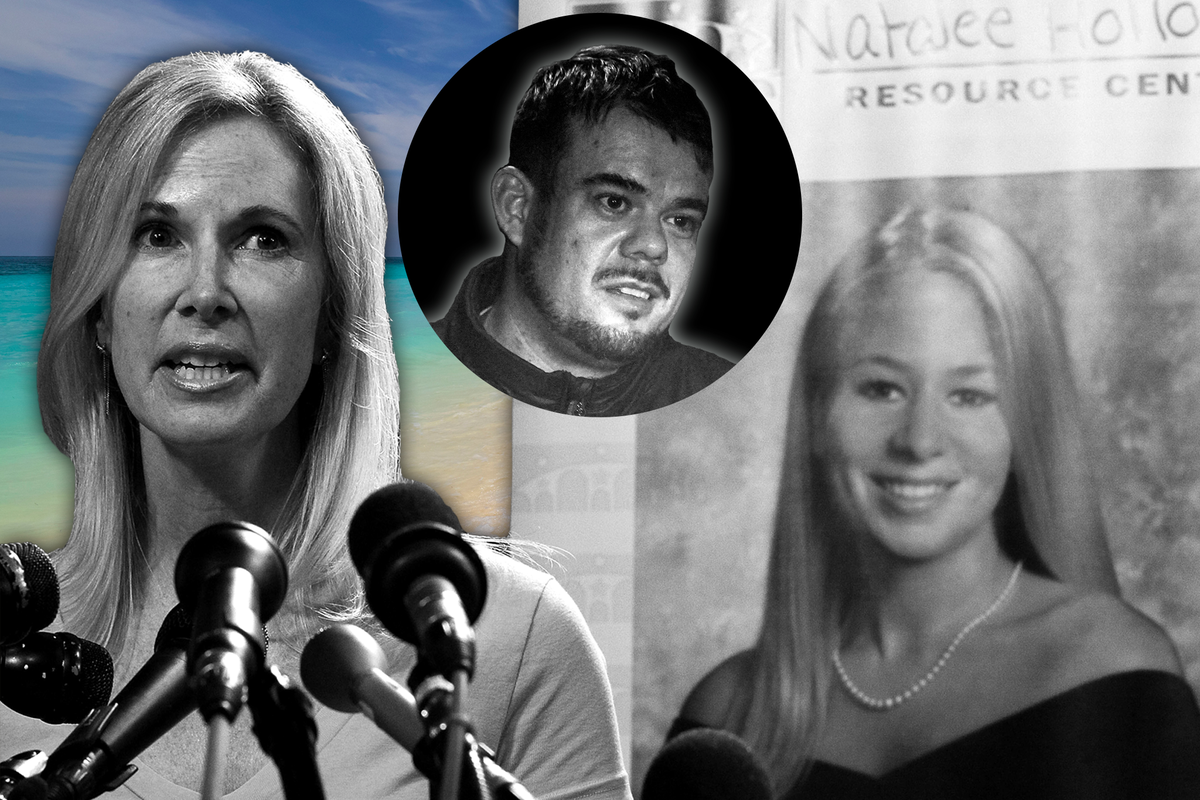
Netflix’s Taken: Natalee Holloway belongs in the same conversation as Amy Bradley Is Missing, Kidnapped: Elizabeth Smart, and Cold Case: Who Killed JonBenét Ramsey—but it follows a different path. Its three episodes trace a two-decade search led by Natalee’s mother, Beth Holloway, and reach a rare turning point: Joran van der Sloot’s 2023 admission that he killed Natalee. That gives the series a different destination from documentaries built around an unresolved disappearance or an unsolved murder.
The most useful comparison is not simply which documentary is “better.” Each approaches a missing-person or true-crime case from a different angle: a family’s pursuit of answers, an investigation still shadowed by uncertainty, a survivor’s own account, or a re-examination of a case shaped by intense public scrutiny. Those differences explain what Taken does especially well—and what viewers should not expect it to settle.

What makes Taken: Natalee Holloway different?
Netflix describes Taken: Natalee Holloway as a three-part documentary from Story Syndicate, directed by Dani Sloane and Matthew Galkin. It revisits Natalee’s disappearance during a 2005 high-school graduation trip to Aruba through the perspectives of Beth, Natalee’s friends, investigators, journalists, and others connected to the case. Netflix says the series includes exclusive access and previously unseen footage, including material from a 2010 FBI operation.
Its structure is chronological and family-centred. The episodes move from Natalee’s disappearance and the frantic search, through the investigation and years of public scrutiny, to van der Sloot’s 2023 proffer agreement. Netflix’s episode descriptions—“Natalee is Missing,” “Tangle with the Devil,” and “I Knew He Would Kill Again”—signal that progression.
The ending requires careful wording. Van der Sloot admitted to killing Natalee in a 2023 proffer agreement, as Netflix’s post-series reporting explains. But Netflix also says he has not been charged in connection with Natalee’s death. The admission is a major answer for Beth; it is not the same as a murder conviction in the Natalee case.
Compared with Amy Bradley Is Missing: a family search, but a different ending
Amy Bradley Is Missing is one of the closest comparisons because it also centres a family’s long effort to find answers after a young woman disappears while travelling. Netflix’s Tudum guide includes it among missing-person documentaries. The series examines the 1998 disappearance of 23-year-old Amy Bradley from a cruise ship, along with reported sightings and leads that have kept her family searching.
The central difference is the status of the mystery. Amy Bradley Is Missing follows a disappearance that remains unresolved in the documentary’s public framing. Taken: Natalee Holloway can build toward van der Sloot’s later admission and Beth’s account of finally hearing what happened. One story is structured around continuing uncertainty; the other around a long road to an admission and the limits of its legal consequences.
Both show how families can become advocates and public-facing voices for years. But the viewer’s experience differs: Amy’s story leaves open the question of what happened after she disappeared, while Natalee’s includes a stated confession but still carries unresolved legal and practical questions. Natalee’s remains have not been recovered.

Compared with Kidnapped: Elizabeth Smart: the perspective changes everything
Kidnapped: Elizabeth Smart is relevant, but it is not a like-for-like case. Smart survived her abduction and can speak from direct experience. That changes the documentary’s available perspective: the person at the centre of the crime can describe what happened and its aftermath in her own words.
Taken: Natalee Holloway cannot offer first-person testimony from Natalee. Its emotional centre is Beth and the people who knew Natalee, alongside investigators and others connected to the case. One documentary can draw on a survivor’s voice; the other must reconstruct a young woman’s final known hours and the investigation through testimony, records, footage, and memories.
That distinction also shapes the ethical responsibility of each production. A survivor-led account must handle the survivor’s recollections and privacy. A case about someone who never returned requires care not to let speculation fill gaps in the record or reduce the missing person to a mystery. Netflix’s description of Taken emphasises Natalee’s life, her friends, and her mother’s search—not only the man who admitted killing her.
Compared with Cold Case: Who Killed JonBenét Ramsey: media scrutiny and investigative failure
The strongest comparison in terms of media scrutiny is Cold Case: Who Killed JonBenét Ramsey. Netflix describes that three-part series as an examination of the mishandling of the JonBenét case by law enforcement and the media, and says the murder remains unsolved. It explores how early investigative decisions and public attention shaped a case that continues to attract theories.
Taken: Natalee Holloway also revisits the relationship between an investigation and the media storm surrounding it. Netflix characterises the series as an account of Beth’s pursuit of answers amid intense attention. It includes perspectives from Natalee’s friends and people involved in the investigation, rather than treating the story only as a puzzle.
The cases stand at different points. The JonBenét Ramsey murder remains unsolved; Natalee’s case includes van der Sloot’s 2023 admission, although he has not been charged with her murder. The two series therefore ask different questions: Cold Case examines why an investigation has not produced a definitive resolution, while Taken explores what a confession can resolve for a family—and what it cannot settle by itself.
Where Gone Girls: The Long Island Serial Killer fits
Gone Girls: The Long Island Serial Killer offers a different comparison. It shifts attention from one disappearance to multiple murders and the institutional response to victims whose cases were not always treated with equal urgency. Netflix’s Tudum guide describes it as a series examining murders in a beach town.
Taken: Natalee Holloway is much more tightly focused on one young woman and one family’s long search. That focus gives it room to trace the personal cost of the case across two decades. Gone Girls, by its subject, distributes attention across multiple victims and a wider investigation. Neither format is inherently more complete; they are answering different questions.
At a glance: how the documentaries compare
| Documentary | Main perspective | Central question | Publicly described status |
|---|---|---|---|
| Taken: Natalee Holloway | Beth, friends, investigators, journalists | What happened to Natalee, and what did the search uncover? | Van der Sloot admitted killing Natalee in 2023; Netflix says he has not been charged in connection with her death. |
| Amy Bradley Is Missing | Amy’s family and people connected to the disappearance | What happened after Amy disappeared from a cruise ship? | Unresolved in the series’ public framing. |
| Kidnapped: Elizabeth Smart | Elizabeth Smart’s own account | How did Smart survive, and what followed? | Smart survived and has spoken publicly. |
| Cold Case: Who Killed JonBenét Ramsey | Investigation, law enforcement, media scrutiny | Why has the murder investigation remained unresolved? | Netflix describes the murder as unsolved. |
| Gone Girls: The Long Island Serial Killer | Multiple victims and the wider investigation | How did the murders and institutional response unfold? | A multi-victim investigation, not one missing-person search. |
What Taken does particularly well
- It keeps the family at the centre. Beth’s long search gives the series an emotional spine, while interviews with Natalee’s friends restore a sense of who she was before the case became a headline.
- It has a clear timeline. The three-episode structure follows the disappearance, investigation, and later admission without suggesting every question has been answered.
- It draws on people close to the case. Netflix lists friends, Beth’s attorney, journalists, former investigators, and retired FBI agents among the participants.
- It shows the limits of closure. A confession can answer a family’s central question while leaving legal and practical matters unresolved.
What viewers may still want to know
The series is not a substitute for every court record or independent account produced during the case. Netflix reports that van der Sloot remains in prison in Peru for the murder of Stephany Flores Ramírez and has not been charged in connection with Natalee’s death. The confession is central to the documentary’s conclusion, but it should not be described as a conviction for Natalee’s murder.
Each documentary has a different evidentiary record, access to participants, and editorial endpoint. A compelling film can make a case understandable; it cannot turn every unresolved detail into an established fact.

Which documentary should you watch next?
If the part of Taken that stays with you is the family’s long search, Amy Bradley Is Missing is the closest thematic follow-up. If you want to hear a survivor describe her own abduction, choose Kidnapped: Elizabeth Smart. If you are interested in how police decisions and media coverage can shape a notorious case, Cold Case: Who Killed JonBenét Ramsey is the more direct comparison. For a wider examination of victims and institutional response across multiple murders, Gone Girls: The Long Island Serial Killer takes a broader approach.
Taken: Natalee Holloway stands apart because it is at once a missing-person story, a mother’s two-decade search, and a documentary about the limits of a late confession. It shows how an answer can arrive long after the loss—and why legal closure, personal closure, and a complete public record are not necessarily the same thing.
Sources and further reading
- Netflix Tudum: Taken: Natalee Holloway—series background, participants, and format.
- Netflix Tudum: Beth Holloway’s update and van der Sloot’s legal status.
- Netflix Tudum: Missing-person true-crime documentaries, including Amy Bradley Is Missing.
- Netflix Media Center: Cold Case: Who Killed JonBenét Ramsey.
- Netflix: Crime documentaries catalogue.
- Decider: Review of Taken: Natalee Holloway.
- The National: Review of the series.
Editorial note: Comparisons are based on publicly described subjects, formats, and case status—not a claim that the productions use identical evidence or investigative methods. Streaming availability varies by country and time.