
By Shivam Das
Joran van der Sloot’s 2026 request to leave Peru’s Challapalca prison was built around a stark allegation: that threats from other inmates, prolonged isolation and fear for his family were putting his physical safety and mental health at risk. The request became public in August, when Peruvian broadcasters reported on a handwritten habeas corpus filing. A later development changed the practical question: in November, Dutch media reported that van der Sloot had been moved from Challapalca to Cochamarca.
Those two events should not be collapsed into one. The August filing was a legal request based on claims made by van der Sloot. The November relocation was reported separately, with coverage linking it to renovation work at Challapalca and the movement of other prisoners. The reporting reviewed for this article does not establish that a judge granted the habeas corpus petition or that the move was ordered as a direct result of it.

What van der Sloot said in the August 2026 petition
Peruvian broadcaster América Noticias, working with Canal N, reported on August 20 that it had obtained a handwritten document submitted by van der Sloot. The filing was dated August 5 and sought a transfer from Challapalca to another prison. Infobae separately reported that the petition was presented as a habeas corpus action before the Superior Court of Justice of Puno.
In the document, van der Sloot alleged that fellow prisoners had threatened to kill him and had also threatened his family. He wrote that he had been isolated for months in the prison’s medical area, which he called the “tópico,” and claimed that he was experiencing psychological torture almost daily. He said the situation was affecting his mental health and argued that his life and physical integrity were at risk.
These statements are allegations made by the prisoner in a legal filing. They are not, by themselves, proof that the threats occurred as described, that prison officials verified every claim, or that a court accepted his account. The distinction matters in a case where the public record contains both official statements and competing accounts from the prisoner.
Why he said the transfer was urgent
The petition described a prison environment that van der Sloot said had become unsafe. In reporting on the handwritten document, Canal N and América Noticias quoted his claim that three inmates had been killed at Challapalca during the year and that he was being threatened “almost daily.” The outlets also reported that he said the prison’s technical council had approved a proposal for his transfer, but that the competent authorities still needed to act.
That detail should be treated carefully. It is accurate to say that van der Sloot claimed a transfer proposal had received internal approval. It is not the same as a publicly available INPE order, a court ruling, or an independently confirmed decision to relocate him. The sources reviewed for this article did not provide a published judicial decision resolving the habeas corpus request.
The Associated Press also reported in August that van der Sloot’s lawyer, Máximo Altez, said his client had asked the Seventh Constitutional Court for a move to another maximum-security facility. The AP account described Challapalca as being about 4,600 metres above sea level and quoted the prisoner’s concerns about threats to himself and his family. The difference in how outlets described the court route is another reason not to overstate the precise procedural status without the court file itself.

The December 2025 incident is part of the context, but not a settled explanation
The August filing referred to a wider period of concern about van der Sloot’s condition in custody. Peru’s Ministry of Justice and Human Rights said that on December 13, 2025, prison staff noticed a situation that compromised his physical integrity, activated emergency protocols and stabilized his condition. The ministry said he remained under medical evaluation and monitoring.
Some media reports described that 2025 episode as an apparent suicide attempt. In November 2026, however, Dutch coverage reported a different account allegedly given by van der Sloot in a letter: he claimed that fellow prisoners had attacked him and that the incident was not self-harm. That later allegation has not been independently established in the material reviewed here. It should not be used to rewrite the official statement, which confirmed an emergency and medical monitoring but did not publicly establish the cause in the detail later alleged.
Van der Sloot’s references to mental health in the August petition therefore sit within a documented history of a serious medical incident, but the public record does not support a clinical diagnosis or a definitive account of every event inside the prison. This article reports his claims as claims and relies on the Peruvian ministry’s statement for what officials publicly confirmed.
November reports say he was moved to Cochamarca
On November 7, Dutch media reported that van der Sloot had contacted relatives and De Telegraaf by telephone to say he was being transferred from Challapalca to the Cochamarca penitentiary. The reports described the move as having taken place while he was being transported. Later coverage, including a November 9 report citing Dutch crime journalist John van den Heuvel and RTL Boulevard, linked the relocation to renovation work at Challapalca and said other prisoners were also being moved.
This is an important update to the August story, but it does not answer every legal question. The reports reviewed here do not establish that a judge granted the August habeas corpus petition. Nor did we locate a public INPE statement independently confirming the individual transfer to Cochamarca. The responsible wording is that Dutch media reported the move, based on van der Sloot’s reported telephone communication and subsequent coverage.
It is also not possible to conclude from the available reporting that the transfer was a direct response to the threats he described. If Challapalca was being renovated and other prisoners were being relocated, that could explain the timing without resolving the factual allegations in his petition. A transfer of location and a judicial finding about prison safety are two different things.

What Challapalca’s conditions can—and cannot—tell us
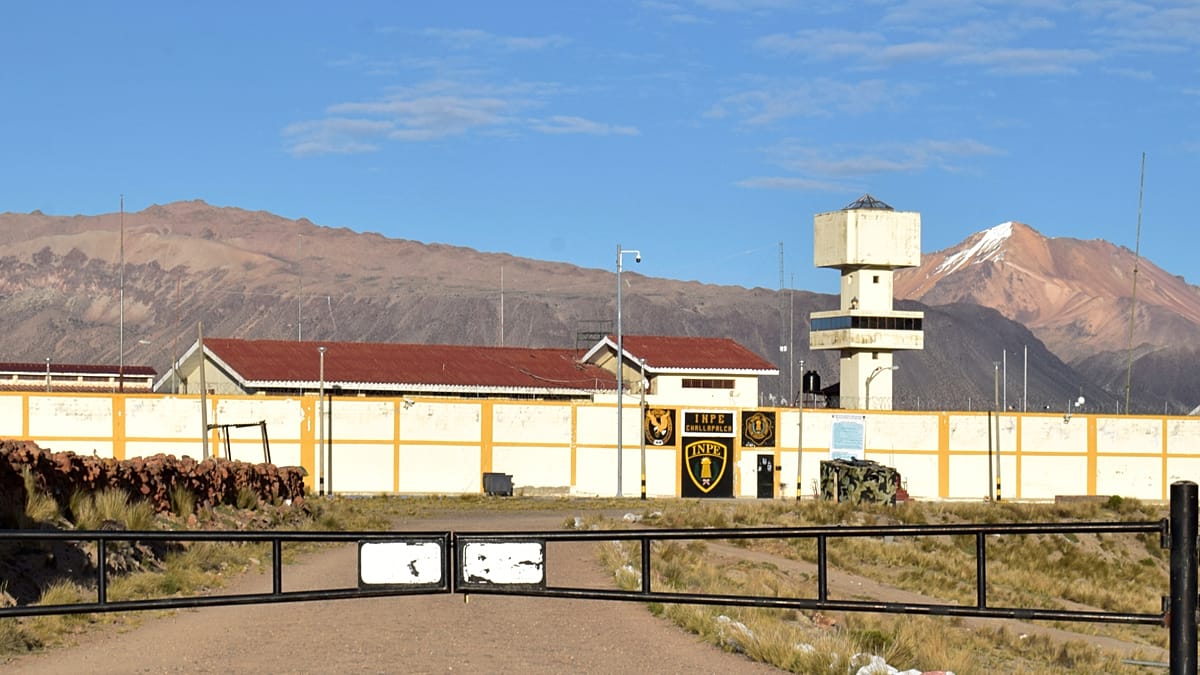
Challapalca is a high-security prison in Peru’s Tacna region, in a remote part of the Andes. Peru’s prison authority lists the facility on the Tarata–Challapalca road, while government and news-agency descriptions place it at roughly 5,000 metres above sea level. Its altitude, isolation and difficult access are relevant context when assessing why a prisoner might seek a transfer, but they do not independently prove that a specific inmate was threatened or mistreated.
Peru’s National Penitentiary Institute (INPE) has also publicly described security operations at Challapalca. In March 2026, INPE said a joint operation involved prison staff, police and special operations personnel inspecting cells and common areas. The agency reported that two mobile phones and handwritten notes were found. That official account illustrates the security environment at the facility, but it does not verify the specific threats alleged by van der Sloot.
His prison-transfer request is separate from the Natalee Holloway case
The transfer dispute concerns the conditions of van der Sloot’s imprisonment in Peru. His Peruvian sentence is for the 2010 murder of Stephany Flores Ramírez. His separate U.S. federal sentence followed his 2023 guilty plea to extortion and wire fraud involving Beth Holloway, Natalee’s mother. The U.S. Department of Justice said he received a 20-year sentence for those federal crimes, to run concurrently with his Peruvian sentence.
During the U.S. proceedings, van der Sloot admitted to killing Natalee. But the federal case was not a murder prosecution for her death: he was convicted of extortion and wire fraud. The distinction is essential when reporting on his legal status. The prison-transfer petition does not decide whether he will face any additional charge related to Natalee, and the reported move to Cochamarca does not change the convictions for which he is serving time.
What is confirmed, alleged and still unresolved?
- Confirmed reporting: Peruvian media reported that van der Sloot filed a handwritten habeas corpus petition dated August 5, 2026, seeking a move from Challapalca.
- His allegations: He claimed he faced death threats, threats against his family, prolonged isolation and harm to his mental health. Those claims should remain attributed to him unless independently established.
- Officially confirmed about the 2025 incident: Peru’s Ministry of Justice said prison staff activated emergency protocols after an incident affecting his physical integrity and that his condition was stabilized.
- Later reported development: Dutch media reported on November 7 that he had been transferred to Cochamarca after contacting relatives and De Telegraaf.
- Still unresolved in the public material reviewed: No published court ruling granting the August petition or public INPE confirmation of the individual November transfer was located.
Frequently asked questions
Why did Joran van der Sloot request a prison transfer in 2026?
In a handwritten petition dated August 5, 2026, he alleged that other inmates threatened to kill him and his family, that he had been isolated for months in the prison’s medical area, and that the situation was damaging his mental health. These were allegations in his filing, not findings established by a court in the sources reviewed.
Did van der Sloot file a habeas corpus petition?
Yes. Peruvian media reported that he filed a habeas corpus petition seeking a transfer from Challapalca. Infobae said the filing was presented before the Superior Court of Justice of Puno.
Was his transfer request approved by a judge?
The public reports reviewed for this article do not establish that a judge granted the August petition. Van der Sloot said a prison technical council had approved a transfer proposal, but that claim is not the same as a published court order.
Was Joran van der Sloot moved to another prison?
Dutch media reported on November 7, 2026, that he had been moved from Challapalca to Cochamarca. The reports attributed the information to a telephone communication from van der Sloot. We did not locate a public INPE statement independently confirming the individual transfer.
Did the November move happen because of the threats?
That has not been established. Later Dutch coverage linked the move to renovation work at Challapalca and the relocation of other prisoners. The available reports do not show that the move was a direct result of the habeas corpus petition or a judicial finding about the threats.
What happened to van der Sloot in prison in December 2025?
Peru’s Ministry of Justice said an incident compromised his physical integrity on December 13, 2025, and that emergency protocols stabilized his condition. Some media called it an apparent suicide attempt; in a later reported letter, van der Sloot alleged an assault. The competing explanations have not been independently resolved in the sources reviewed.
Was he convicted of murdering Natalee Holloway?
No separate murder conviction for Natalee’s death resulted from the 2023 U.S. federal case. Van der Sloot pleaded guilty to extortion and wire fraud involving Beth Holloway and admitted to killing Natalee during the plea process. His 28-year Peruvian sentence is for the murder of Stephany Flores Ramírez.
Sources and reporting notes
- América Noticias / Canal N, August 20, 2026: handwritten petition and allegations of threats
- Infobae, August 20, 2026: habeas corpus filing and mental-health claims
- The Associated Press, August 20, 2026: lawyer’s account of the transfer request
- ANDINA, December 15, 2025: Peru’s Justice Ministry statement about the prison medical emergency
- NieuwsIndex summary of De Telegraaf’s November 7, 2026 report about Cochamarca
- Panorama, November 9, 2026: later allegation about the December 2025 incident and transfer coverage
- U.S. Department of Justice, October 18, 2023: federal guilty plea and sentence
- INPE, March 31, 2026: security operation at Challapalca
Editorial note: This report distinguishes the prisoner’s allegations, official statements, court-related reporting and later media accounts. It does not treat an allegation as a judicial finding or an unconfirmed report as an official prison-authority announcement. Photographs are credited to their original publishers; image availability does not itself grant republication rights.