

Updated November 11, 2026
The central legal distinction in the Natalee Holloway case is easy to miss: the United States prosecuted Joran van der Sloot for crimes connected to his attempt to obtain money from Natalee’s mother, Beth Holloway. It did not prosecute him for killing Natalee in Aruba. Those are separate offenses, tied to different places, laws, evidence and jurisdiction.
That distinction explains why an account given during a U.S. federal case did not automatically become a U.S. murder prosecution. It also explains why the legal story did not end when van der Sloot received his 20-year federal sentence in October 2023. In 2026, the focus shifted to the Netherlands, where Beth Holloway filed a complaint and Dutch prosecutors began assessing the material made available by Aruba.

The U.S. case was about extortion and wire fraud
On June 9, 2023, the U.S. Attorney’s Office for the Northern District of Alabama said van der Sloot had been arraigned on one count of extortion and one count of wire fraud. The federal case concerned his solicitation of money from Beth Holloway in exchange for promises to reveal the location of Natalee’s remains and details about her 2005 death in Aruba. The Justice Department also explained that he had been brought from Peru to the United States under the U.S.–Peru extradition treaty for those charges, with a return to Peru expected after the case concluded.
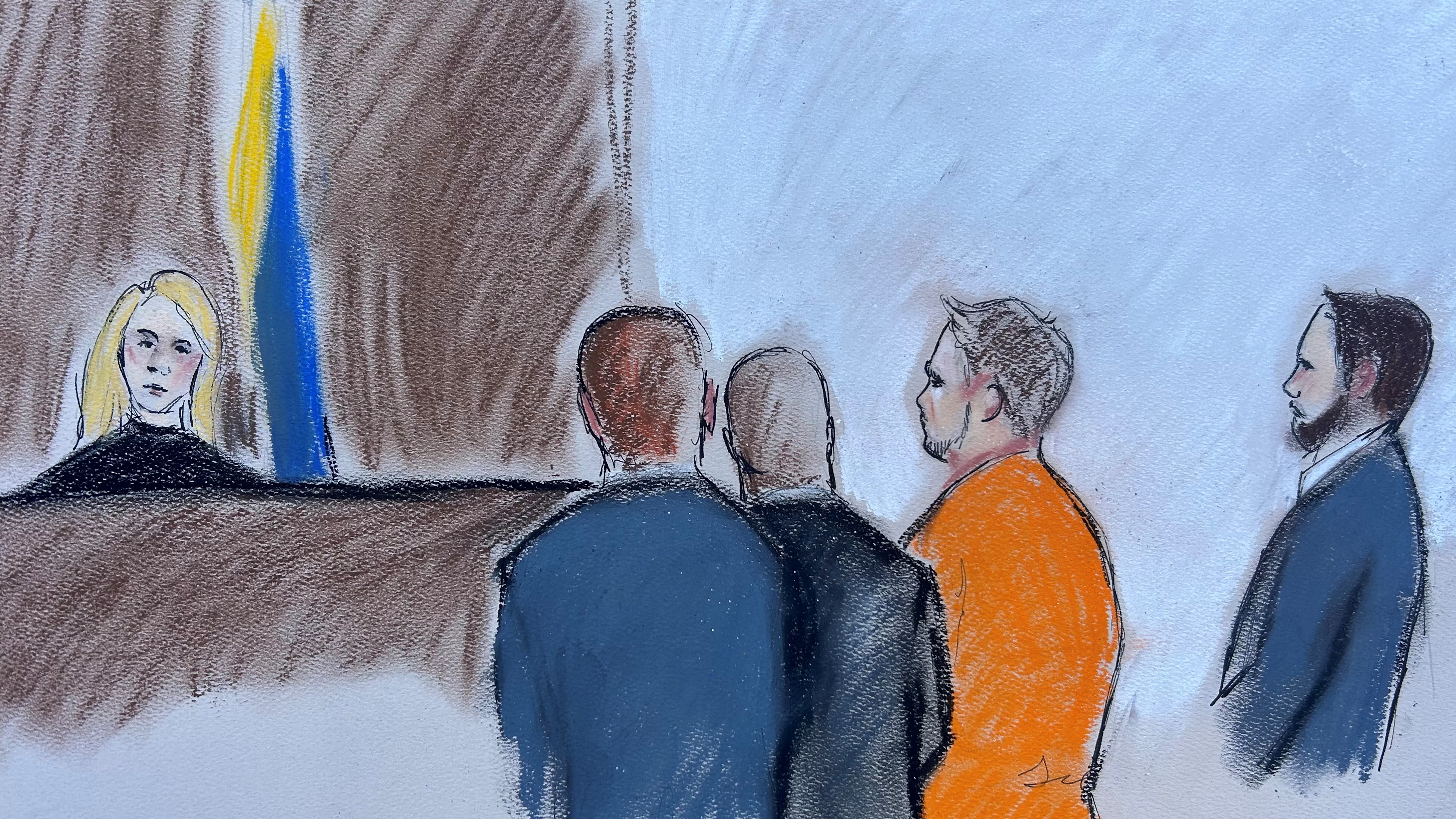
On October 18, 2023, he pleaded guilty to extortion and wire fraud and received a 20-year federal sentence. The Justice Department’s sentencing announcement described the scheme as an attempt to obtain $250,000 from Beth. It said he received a total of $25,100 before providing information he later described as worthless. The plea agreement also required him to provide information about Natalee’s disappearance.
Those official records identify what the U.S. court actually decided. The Alabama case was not prosecuted as a federal homicide case for a killing committed in Aruba. Its charges addressed a financial scheme directed at a U.S. victim and involving communications and money transfers with a U.S. connection.
The June 2023 Justice Department statement and the October 2023 sentencing announcement set out those charges directly.
Why the location of the killing mattered
Natalee Holloway disappeared in Aruba on May 30, 2005. The alleged killing therefore took place outside the United States. U.S. criminal jurisdiction is not a general worldwide authority to prosecute every homicide involving an American victim. Federal prosecutors need a statute that reaches the conduct and a legally sufficient jurisdictional basis. The fact that Natalee was from Alabama, and that her family lived in the United States, did not by itself make an alleged homicide in Aruba a U.S. federal murder case.
This does not mean U.S. law can never apply to conduct overseas. Congress has created specific federal offenses with extraterritorial reach, and some crimes can be prosecuted when statutory conditions are met. But that is different from saying a U.S. court can automatically try a person for any homicide abroad simply because the victim was American. The actual charges in van der Sloot’s Alabama case were extortion and wire fraud, not murder.

There is another important distinction: a statement made in a U.S. proceeding is not the same thing as a murder verdict. Van der Sloot gave an account of Natalee’s death as part of the federal plea process. That account was significant to the family and to investigators, but the federal court’s judgment in 2023 was for the financial crimes to which he pleaded guilty.
What the confession did — and did not — change
Van der Sloot’s 2023 account gave investigators and Natalee’s family information to assess. It did not erase the territorial and procedural questions surrounding a possible homicide prosecution. The case crossed several legal systems: the alleged killing occurred in Aruba; the extortion scheme had a U.S. connection; and van der Sloot was already serving a Peruvian sentence for the 2010 murder of Stephany Flores Ramírez.
The U.S. sentence was ordered to run concurrently with his Peruvian sentence. That arrangement helps explain why the federal conviction did not necessarily mean a separate, additional 20-year period in a U.S. prison after Peru. It also does not amount to a U.S. conviction for Natalee’s death.
Why Aruba’s legal position became complicated
Aruba’s Public Prosecutor’s Office sought U.S. records after learning of van der Sloot’s 2023 account. According to the Aruban prosecutor’s official April 2, 2026 statement, the United States supplied a large number of requested documents in January 2026. After reviewing those materials, the Aruban office said there was, at that stage, insufficient evidence for murder or qualified manslaughter. It also said prosecution for the separate offense of manslaughter was no longer possible in Aruba because the limitation period had expired.
That official statement is more precise than the shorthand often used in headlines. It did not say every possible legal avenue was closed. It distinguished between the evidence available for murder or qualified manslaughter and the time-barred offense of manslaughter. It also explained that the limitation period for manslaughter had not expired in the Netherlands and that, because van der Sloot is a Dutch national, prosecution there was in principle possible.

On April 2, 2026, Aruba’s prosecutor’s office said it would make the full Aruban case file available to the Public Prosecution Service in Amsterdam so Dutch authorities could assess Beth Holloway’s complaint. A transfer of a case file is not itself a charge, a finding of guilt or a promise that a trial will follow.
Read the official April 2, 2026 statement from the Public Prosecution Service of Aruba. It is the primary source for the transfer and for the Aruban office’s explanation of its evidentiary and limitation-period assessment.
What changed in 2026: the Netherlands became the next legal forum
In March 2026, Beth Holloway filed a complaint in the Netherlands alleging murder and/or manslaughter. Aruba then offered its full case file to the Amsterdam prosecutor’s office for assessment of that complaint. The question was no longer simply whether Aruba could pursue a charge under its own limitation rules, but whether Dutch authorities could assess a complaint involving a Dutch national and conduct alleged to have taken place abroad.
Netflix’s November 4, 2026 interview with Beth Holloway reported that Dutch prosecutors were obtaining documents and case files and that she was still pursuing the possibility of charges. The interview also stated that van der Sloot had not been charged in connection with Natalee’s death. As of this article’s November 11, 2026 update, the public information describes a complaint and review — not a Dutch indictment or a trial date.
Netflix Tudum’s November 4, 2026 update provides Beth’s account of the current effort. The official Aruban statement remains the clearest published explanation of why the file was offered to Amsterdam.
What a Dutch review would still need to establish
A complaint asks authorities to examine allegations; it does not prove them. Prosecutors would need to assess the evidence, applicable Dutch law, jurisdiction over the alleged conduct, admissibility of material gathered in other countries and any procedural obstacles. The fact that the suspect is Dutch and that a limitation period may allow a prosecution to be considered does not settle those separate questions.
Nor should the 2023 proffer be treated as if it automatically resolves every evidentiary issue. Investigators and prosecutors must evaluate the full record, including the circumstances in which statements were made and whether other evidence supports the account. The Aruban prosecutor’s 2026 statement is a reminder that, even after obtaining U.S. documents, authorities said the material then available was insufficient for certain charges under Aruban law.
For readers following the wider timeline, our related coverage explains the legal and public pressure after the Netflix release and how van der Sloot’s changing accounts compare with his 2023 statement.
Why the distinction matters to the Holloway family
For Beth Holloway, the 2023 statement answered a question that had shaped nearly two decades of her life. But an answer about what happened and a criminal judgment for the killing are not the same thing. The U.S. case held van der Sloot accountable for extortion and wire fraud. The Netherlands review is a separate attempt to determine whether a prosecution for Natalee’s death can proceed in a jurisdiction with a possible legal route.
That is why the phrase “he was sentenced in the United States” needs context whenever it appears in coverage of this case. He was sentenced in Alabama for the financial scheme involving Natalee’s mother. He was not sentenced there for Natalee’s killing. Whether another country can bring a homicide case depends on its own jurisdictional rules, evidence and prosecutorial decision — not on the existence of the U.S. extortion conviction alone.
Frequently asked questions
Was Joran van der Sloot charged with Natalee Holloway’s murder in the United States?
No. The U.S. federal charges were extortion and wire fraud connected to his attempt to obtain money from Beth Holloway. The Justice Department’s public statements identify those charges and the 20-year sentence.
Why could the United States prosecute him for extortion but not simply add a murder charge?
The financial scheme had a U.S. connection and was prosecuted under federal extortion and wire-fraud laws. The alleged killing took place in Aruba. U.S. nationality of the victim alone does not create automatic federal jurisdiction over a homicide committed abroad.
Did the 2023 confession count as a murder conviction?
No. It was an account provided during the federal plea process. The conviction and sentence in Alabama were for extortion and wire fraud, not murder.
Can Aruba still prosecute van der Sloot?
Aruba’s Public Prosecutor’s Office said in April 2026 that the manslaughter limitation period had expired and that the documents then available did not provide sufficient evidence for murder or qualified manslaughter. It offered the case file to Dutch prosecutors for their assessment.
Could the Netherlands bring a case?
Aruba’s prosecutor’s office said prosecution in the Netherlands was in principle possible because van der Sloot is Dutch and the relevant limitation period had not expired there. That does not mean Dutch prosecutors have filed charges. The complaint and case file still require assessment.
Has van der Sloot been charged in the Netherlands as of November 11, 2026?
The latest public updates located for this article describe a complaint and prosecutorial review, not a filed Dutch murder charge or a scheduled trial. This status should be checked again when Dutch authorities issue a new statement.
Sources and documents
- U.S. Department of Justice: June 9, 2023 federal arraignment statement.
- U.S. Department of Justice: October 18, 2023 guilty plea and sentence.
- Public Prosecution Service of Aruba: April 2, 2026 case-file transfer statement.
- Netflix Tudum: November 4, 2026 interview and case update.
Editorial note: This article explains publicly reported legal developments and is not legal advice. A complaint, an investigative statement and a criminal charge are distinct procedural events. The status above is limited to the public records and reporting cited here as of November 11, 2026.