

The Netflix series Taken: Natalee Holloway does more than revisit a famous disappearance. It gives viewers access to previously unreleased FBI surveillance footage from a 2010 operation, alongside interviews with investigators and people who spent years trying to establish what happened to Natalee Holloway. The material is important not because it magically solves every mystery, but because it lets the public examine a documented attempt to exploit a grieving family—and the complicated investigative work that followed.

What the new Netflix footage actually shows
Taken: Natalee Holloway, a three-part documentary that premiered on Netflix on November 4, 2026, includes footage of a May 2010 meeting in Aruba between Joran van der Sloot and John Q. Kelly, the attorney representing Natalee’s mother, Beth Holloway. The recording had remained in FBI custody and, according to the documentary’s on-screen notice and Netflix’s own coverage, had not previously been publicly released.
The meeting was part of an effort to document van der Sloot’s demand for money in exchange for information he claimed would lead to Natalee’s remains. He had approached Kelly offering information for $250,000. The proposed arrangement involved an initial payment of $25,000 and a further $225,000 after the remains were positively identified. In the recorded meeting, Kelly counts out $10,000 in cash; Beth was to wire another $15,000. The remaining $225,000 was never intended to be paid as a genuine reward for a verified discovery.
Netflix’s Tudum account identifies the footage as part of the documentary’s previously unseen material. People’s November 6 report also describes the exchange and the $225,000 balance discussed in the room. These are not simply dramatic reenactments: the series presents the recorded encounter as archival FBI material.

Why Beth Holloway agreed to the operation
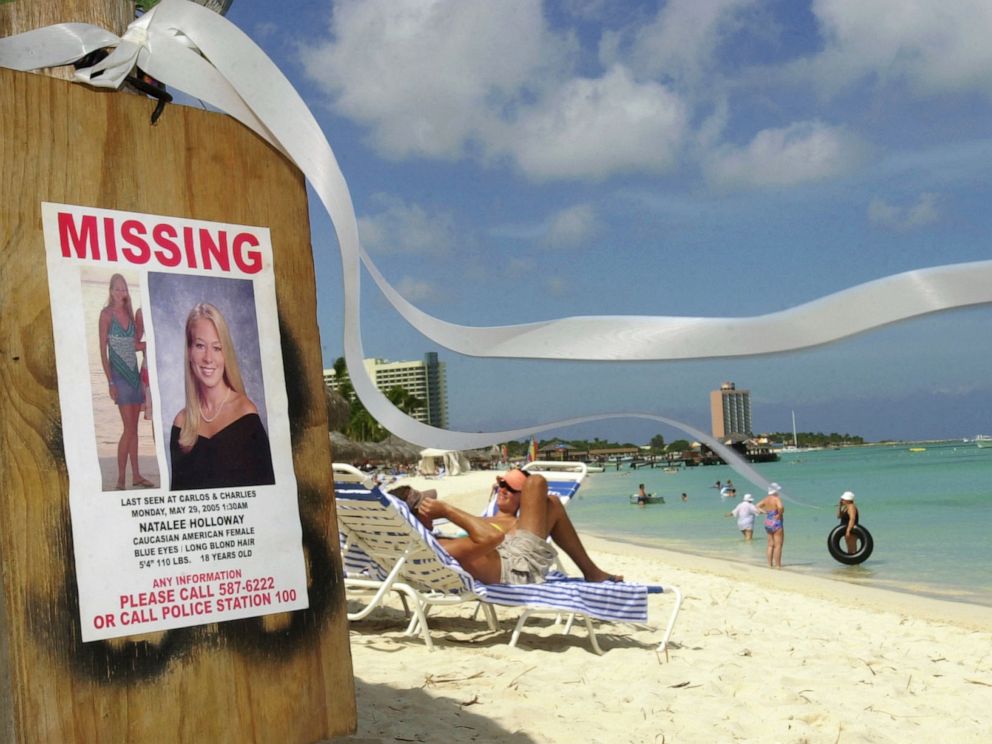
For Beth, the offer was not an ordinary financial negotiation. Her daughter had disappeared in Aruba on May 30, 2005, during a high-school graduation trip. Natalee was 18. Her remains had not been found, and the family had lived for years with uncertainty about what happened after she was last seen.
When van der Sloot contacted Kelly in 2010, the possibility—however disturbing—of learning where Natalee was buried was something Beth could not dismiss. ABC News reported in 2019 that Beth and Kelly believed the approach might also give investigators a way to build a case against him. The FBI became involved, and the operation was coordinated with Aruban authorities.
The FBI’s June 9, 2010 joint statement is an important corrective to some later shorthand accounts. The agency said the investigation was conducted with Aruban authorities and clarified that the money involved was private money, not FBI funds. It also explained that the investigation was not sufficiently developed to bring charges before van der Sloot left Aruba for Peru. That distinction matters when assessing the operation fairly.

The false lead that followed the hotel-room meeting
After the meeting, van der Sloot took Kelly to a nearby house and claimed Natalee’s remains had been placed in the property’s foundation while it was under construction. The story did not hold up. The FBI’s investigation and the contemporaneous federal case established that the location information was false; van der Sloot later acknowledged that the information he had supplied was worthless.
The U.S. indictment filed on June 30, 2010, set out the alleged scheme in detail. Prosecutors said van der Sloot sought $250,000 by exploiting Beth’s fear that she might never learn what happened to her daughter or locate her remains. The indictment described the initial $25,000 payment and the promised additional $225,000 after identification. It also stated that the information supplied about the supposed burial site was false.
It is worth keeping the legal sequence clear. The 2010 indictment contained charges, not a conviction at that point. Van der Sloot later pleaded guilty in the U.S. to extortion and wire fraud in October 2023. During the related proceedings, he admitted killing Natalee in Aruba in 2005. That admission was part of the U.S. case; it did not amount to a separate Dutch or Aruban murder conviction.
Investigator access gives the series a wider view
The newly released recording is only one part of the documentary’s reporting. Netflix says the series includes exclusive access to investigators and people who were close to Natalee when she disappeared. Its interview list includes former Aruban deputy police chief Gerold Dompig, who speaks about the case after a long period away from public interviews, as well as retired FBI agents Alexandra Montilla and Michael Leverock.
That range of voices matters because the investigation crossed jurisdictions. Aruban police led the local inquiry; U.S. authorities became involved in the 2010 extortion and wire-fraud investigation; and the Netherlands also had a role through its relationship with Aruba and later legal developments. No single interview or recording can represent every part of that process.
The documentary’s investigator access should also be distinguished from a claim that every investigative record has been made public. Netflix describes selected access and previously unseen footage. It does not say that the entire FBI file, every interview, or all underlying evidence has been released. Viewers should treat the series as a documentary account built from selected material, not as a complete public disclosure of government files.

What the FBI record says—and what it does not say
The FBI’s public statements from June 2010 provide essential context. The agency said it began investigating allegations that van der Sloot was seeking $250,000 in exchange for information about Natalee’s remains and death. The operation was conducted with Aruban authorities. The FBI also explicitly corrected reports that suggested federal agents supplied the money: the funds were private.
The agency addressed another difficult question: why van der Sloot was not arrested in Aruba before he left for Peru. The FBI said the case was complex because the relevant conduct occurred outside the United States and the investigation had not progressed far enough to bring charges before he departed. The statement said the delay was not due to a lack of effort by agents or prosecutors. That is the FBI’s explanation; readers can evaluate it alongside later oversight questions and the documentary’s interviews.
A 2024 letter from members of the U.S. House Judiciary Committee later asked the FBI about the 2010 operation and whether an opportunity to apprehend van der Sloot had been missed. That letter is an oversight inquiry, not a finding that misconduct occurred. The existence of the question is part of the public record, but it should not be presented as proof of a definitive answer.
Why the footage matters two decades later
The footage changes the way audiences can understand the 2010 episode. Before its public release, the meeting was known through court documents, official statements, and accounts from people involved. The recording adds a direct visual record of the exchange and lets viewers observe the conversation that sat at the center of the extortion investigation.
But the footage should not be mistaken for the moment Natalee’s fate was established. In 2010, van der Sloot offered a false location for her remains. The answers Beth sought came much later, in 2023, when he admitted killing Natalee as part of the U.S. plea process. Her remains have never been recovered. The documentary’s power lies in showing the long route from an alleged attempt to profit from a family’s desperation to the later admission—not in suggesting the 2010 operation solved the disappearance.
For families of missing people, the episode also illustrates a grim vulnerability: when someone offers information about a loved one’s remains, hope can be used as leverage. Beth’s decision to work with her attorney and investigators turned that offer into evidence of an alleged crime. The documentary’s archival footage makes the human stakes of that decision unusually visible.
What to watch for in Taken: Natalee Holloway
Viewers can pay attention to three separate strands in the series: the 2010 hotel-room recording, the testimony of investigators who describe the case from their professional roles, and Beth Holloway’s account of what it meant to keep searching. Those strands overlap, but they are not interchangeable. A recorded exchange can establish what was said in a room; an investigator can explain how evidence was handled; and a family member can describe the consequences of living through years of uncertainty.
The documentary is available on Netflix as a three-episode series. The official Netflix description and Tudum coverage provide the series overview, episode details, and interview context. The underlying FBI statement and federal indictment remain useful primary documents for readers who want to check the historical and legal record beyond the documentary.
Frequently asked questions
Does Netflix’s Natalee Holloway documentary include real FBI footage?
Yes. Netflix says Taken: Natalee Holloway includes footage from a 2010 FBI operation involving Joran van der Sloot and Beth Holloway’s attorney, John Q. Kelly. Netflix describes it as material that had not previously been publicly released.
What was the 2010 FBI operation about?
It documented van der Sloot’s attempt to obtain money in exchange for information he claimed would reveal the location of Natalee’s remains. The proposed total was $250,000, with an initial $25,000 payment and a further $225,000 after identification.
Did the FBI pay the money?
No. The FBI’s June 9, 2010 statement said the funds involved were private funds, not FBI money. Beth Holloway and her family were the source of the money described in the public record.
Who is John Q. Kelly?
John Q. Kelly is the attorney who represented Beth Holloway and acted as an intermediary with van der Sloot during the 2010 attempt to obtain information about Natalee.
Which investigators appear in the Netflix series?
Netflix lists former Aruban deputy police chief Gerold Dompig and retired FBI agents Alexandra Montilla and Michael Leverock among the people interviewed, alongside Beth Holloway, Natalee’s friends, and other people connected to the case.
Did the 2010 operation locate Natalee’s remains?
No. Van der Sloot gave Kelly a false account about a burial location at a house foundation. Natalee’s remains have never been recovered.
Was van der Sloot convicted of Natalee Holloway’s murder in the United States?
He pleaded guilty in 2023 to U.S. extortion and wire-fraud charges and admitted killing Natalee during the related proceedings. As of Netflix Tudum’s November 4, 2026 update, he had not been separately charged with Natalee’s death. He is also serving a Peruvian sentence for the 2010 murder of Stephany Flores Ramírez.
Sources and further reading
- Netflix Tudum: Series details, previously unseen footage, and interview list
- FBI: June 9, 2010 joint statement on the van der Sloot investigation
- U.S. Attorney’s Office / FBI: June 30, 2010 indictment announcement
- Netflix Tudum: Beth Holloway interview and post-2023 legal status update
- People: Reporting on the newly released 2010 FBI footage
- Greenwich Time: How John Q. Kelly and the FBI coordinated the 2010 operation
- U.S. House Judiciary Committee: 2024 oversight letter concerning the FBI’s handling of the case
Editorial note: This article separates what the FBI publicly stated, what the 2010 indictment alleged, what van der Sloot later admitted in the 2023 U.S. proceedings, and what Netflix says is included in its 2026 documentary. The photographs are credited to their originating publishers or archives; publication on a third-party website does not by itself establish a license for unrestricted reuse.