
Netflix’s three-part documentary Taken: Natalee Holloway revisits one of the most closely watched missing-person investigations in modern American news. Its value is not simply that it retells the 2005 disappearance of 18-year-old Natalee Holloway. The series also gives investigators and retired FBI agents room to revisit decisions, false leads, investigative pressure and evidence that the public did not see when the case was unfolding.
Some of the most revealing material comes from former Aruban deputy police chief Gerold Dompig, who discusses the investigation on camera after roughly two decades, and from the newly released footage of the FBI’s 2010 operation involving Joran van der Sloot. Other details show how the case was repeatedly complicated by changing accounts, a false promise about Natalee’s remains and a later tip that investigators determined was a scam.
There is an important distinction between a detail being newly visible in a documentary and being newly established as fact. This article separates what investigators say in the series from what official records independently confirm. It does not treat an allegation, recollection or unverified theory as a proven finding.
1. Gerold Dompig describes an interrogation shaped by repeated changes in the suspect’s account
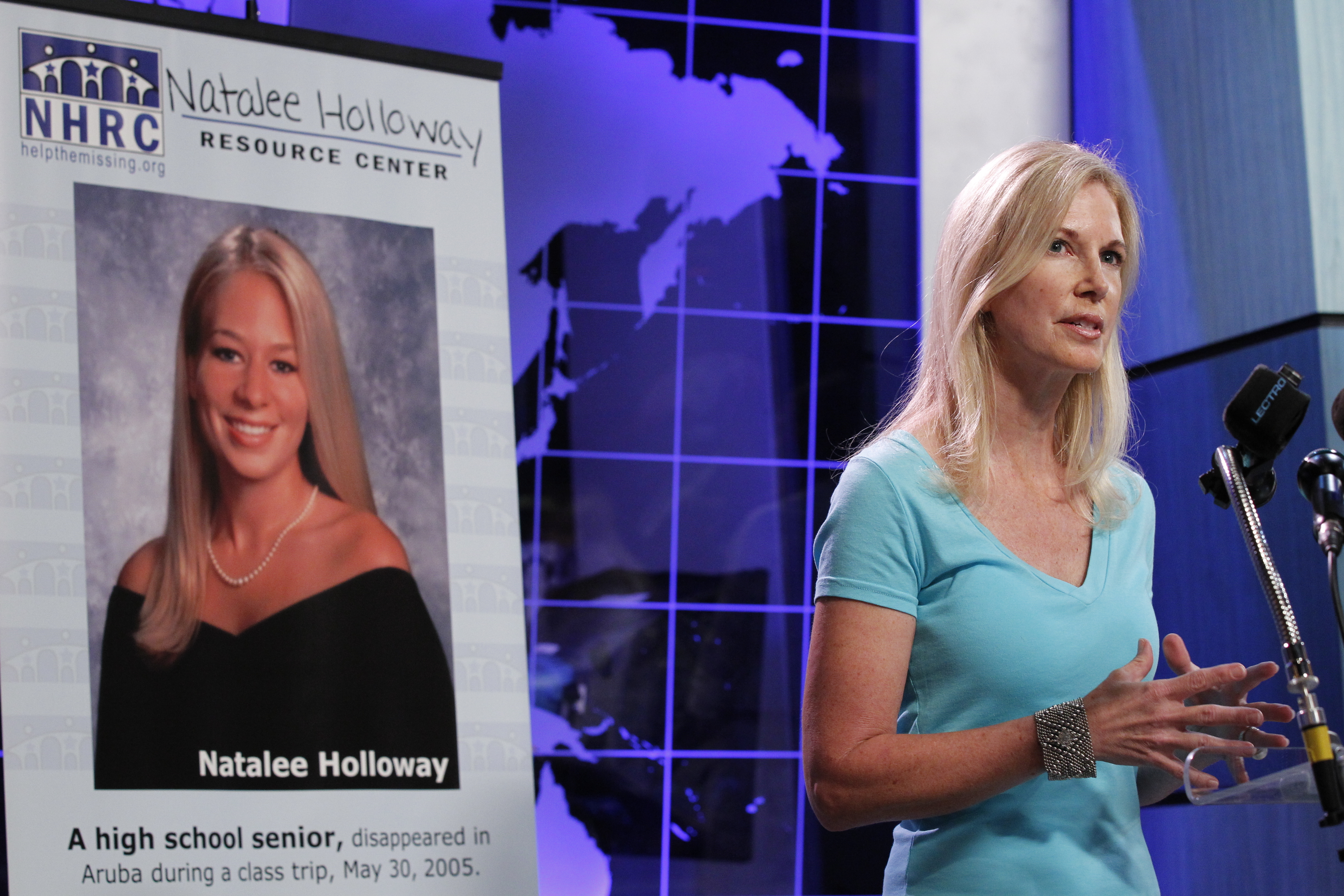
One of the most consequential investigator perspectives in Taken: Natalee Holloway comes from Gerold Dompig, the former deputy police chief who helped lead the Aruban investigation. Netflix says he speaks about the case for the first time in twenty years. His appearance gives viewers a chance to hear how a senior investigator remembers the early questioning and the difficulties police faced.
In reporting about the series, Dompig is quoted as saying van der Sloot changed his story roughly 40 times during the initial police questioning. That is Dompig’s characterization of the interrogation, not a count independently established in a public transcript. Still, the claim illustrates the problem investigators faced: accounts of the last hours Natalee was seen alive shifted, making it difficult to establish a consistent sequence of events.
Dompig also describes van der Sloot as difficult to interrogate. The significance is not that a changing account by itself proves guilt; it does not. Rather, investigators had to test each version against witness accounts, timelines, physical evidence and the statements of other people who were with Natalee that night. A suspect’s inconsistency can direct investigative attention, but it cannot replace corroboration.
That distinction is important when revisiting a case that attracted enormous public speculation. The documentary gives viewers access to an investigator’s assessment, while the underlying evidentiary record must still be judged on its own terms.
2. The investigation consumed an extraordinary share of Aruba’s police resources
Netflix’s account says Aruban authorities devoted about $3 million to the investigation, an amount the series describes as roughly 40 percent of the island’s annual police budget. The scale helps explain why Natalee’s disappearance became more than a missing-person search: it became a major law-enforcement operation involving local police, American authorities, Dutch personnel, volunteers and outside specialists.
According to the documentary’s timeline, the operation changed character as the weeks passed. What began as a search and rescue effort had become a search and recovery operation by early July 2005, about five weeks after Natalee disappeared. That shift reflected the lack of a confirmed sighting and the growing concern that she had been killed.
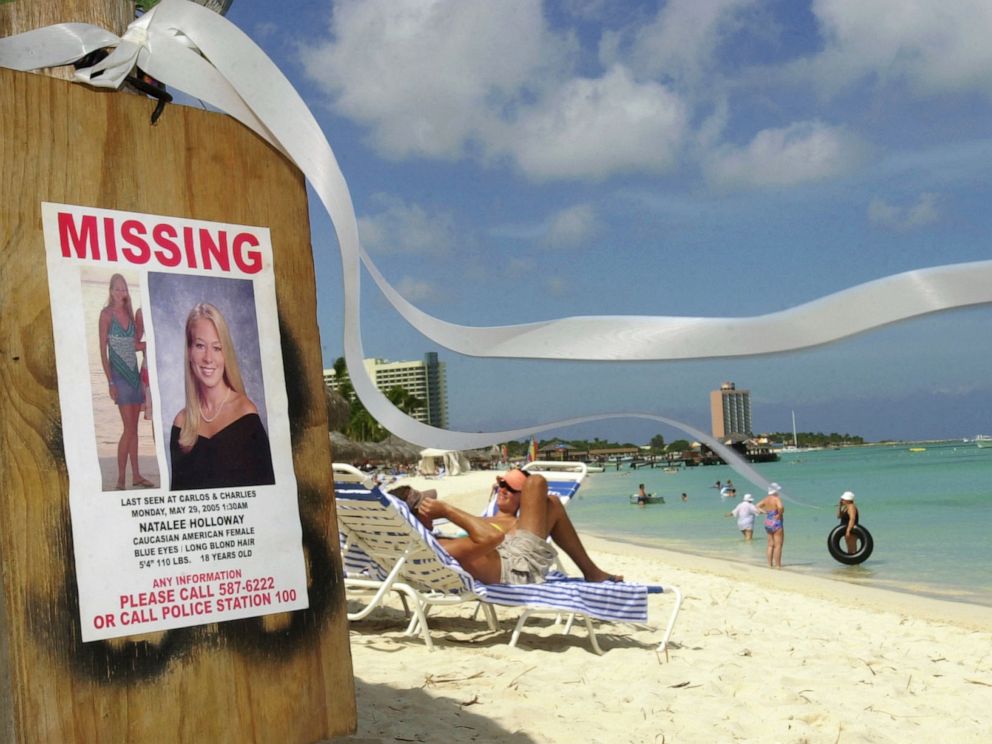
The budget figure is more than a dramatic statistic. It puts the investigation’s scale in context and underscores the number of leads authorities had to process. Netflix describes weeks of tips and reported sightings that raised hopes but ultimately did not locate Natalee. A large operation can generate more information, but it also creates a demanding task: separating reliable evidence from rumor, mistaken identification and deliberate deception.
3. The documentary’s newly released FBI footage shows how the 2010 money-for-information scheme was investigated
One of the most significant pieces of material in the series is footage from the FBI operation in 2010. Netflix says the recordings had never been publicly released before the documentary. They show the effort to document van der Sloot’s attempt to obtain money by claiming he could provide information about Natalee’s remains.
The official federal record provides an essential check on the documentary’s account. In a June 9, 2010 joint statement, the U.S. Attorney’s Office for the Northern District of Alabama and the FBI said van der Sloot had offered information about the location of Natalee’s remains and the circumstances of her death in exchange for $250,000. The agencies said the investigation began in April 2010 and was conducted with Aruban authorities.
The subsequent federal indictment described a staged payment arrangement. Van der Sloot agreed to lead a representative of Beth Holloway’s family to a location for an initial $25,000, with a much larger payment promised after the remains were identified. The indictment said he received the money and identified a location that he knew was false. The FBI and prosecutors charged him with extortion and wire fraud.

The official record also corrects a detail that was often confused in early coverage: the Justice Department said the money involved in the operation was private money, not a $25,000 payment supplied by the FBI. The documentary’s footage makes the encounter vivid, but the government’s contemporaneous statement and indictment establish the legal framework and the charges that followed.
For investigators, the operation was about more than recording a disturbing negotiation. It was about preserving evidence of what was being promised, what money changed hands, and whether the claims could be tested. The location van der Sloot identified was false. The case therefore became a federal prosecution for the alleged scheme, not a recovery operation that found Natalee.
4. The 2021 blouse tip shows how a grieving family could be targeted by another false lead
Another troubling detail discussed in coverage of the documentary concerns a blouse sent to journalist Greta Van Susteren after an anonymous source claimed to know what happened to Natalee. Beth recalled believing the garment might be her daughter’s. The hope attached to an object like that is easy to understand after years without answers.
Reports about the series say FBI analysis found no DNA or pattern evidence linking the blouse to Natalee, and investigators determined the anonymous source was a scammer. The distinction matters: the blouse was not established as an item Natalee wore, and the tip did not provide a reliable account of her final hours.
False leads are not just frustrating distractions in a long investigation. They can reopen trauma, consume investigators’ time and expose families to people seeking money or attention. The blouse episode illustrates why investigators need verifiable provenance, forensic testing and corroboration before treating a purported personal item as evidence.
5. Investigators had to separate claims about family influence from evidence of police conduct
The documentary also revisits questions about whether van der Sloot’s father, Paulus, had influence during the early investigation. Dompig discusses the complications he believed arose because Paulus was a lawyer and was on a path toward judicial work. The series includes claims about advice allegedly given to his son, including the often-repeated phrase that without a body there could be no crime.
Those claims need careful handling. They are presented as recollections and allegations in the documentary, not as a judicial finding that Paulus directed police decisions or obstructed the investigation. Reporting about the series also notes Dompig’s account that Paulus was not connected to the police investigative team. The public should not collapse a claim about possible family influence into proof of official interference.
The broader investigative issue is still important. When a suspect has access to legal advice and family support, police must document interviews, preserve evidence and follow procedure in a way that can withstand scrutiny. The documentary’s discussion raises questions about the pressures around the early investigation, but it does not make every disputed claim a proven fact.
6. The FBI and Aruban investigators were working across jurisdictions—and under different legal constraints
The case was never confined to one police department. Natalee was an American teenager who disappeared in Aruba, a constituent country within the Kingdom of the Netherlands. The investigation involved Aruban authorities, U.S. investigators, Dutch personnel and, later, a separate criminal case in Peru after van der Sloot murdered Stephany Flores Ramírez in 2010.
The FBI’s 2010 investigation illustrates how U.S. authorities could act when the alleged conduct involved an attempt to extort money from a family in Alabama. The Justice Department said the investigation was conducted in conjunction with Aruban authorities. It also explained that the case involved complex procedures because the events connected to the disappearance occurred outside the United States.
That jurisdictional detail helps explain why the 2010 operation resulted in federal extortion and wire-fraud charges rather than a U.S. murder prosecution for the 2005 killing. In October 2023, van der Sloot pleaded guilty to those federal offenses and gave an account of killing Natalee. His plea did not amount to a murder conviction in Natalee’s case, and her remains have never been recovered.
What the investigators’ accounts add—and what they do not prove
The strongest contribution of Taken: Natalee Holloway is the opportunity to hear investigators and retired FBI agents discuss parts of the case that were previously less visible to the public. Dompig’s recollections, the FBI recordings and the discussion of the blouse tip help explain how the investigation evolved and why certain leads mattered.
But a documentary is not a substitute for court findings or a complete investigative file. An investigator’s recollection should be attributed to that investigator. An allegation about a family member should not be repeated as a proven act. A suspect’s account must be compared with corroborating evidence. And the fact that van der Sloot admitted to killing Natalee in the 2023 federal proceedings does not change the legal nature of the charges to which he pleaded guilty.
Natalee disappeared on May 30, 2005, at age 18. Her remains have not been found. The 2023 admission gave her mother, Beth Holloway, an answer about what happened, but it did not resolve every question or erase the need for accurate reporting. The investigators’ accounts are most useful when they illuminate the work, uncertainty and mistakes without turning unresolved details into certainty.
Frequently asked questions
Which investigator speaks about the case in Taken: Natalee Holloway?
Former Aruban deputy police chief Gerold Dompig appears in the series and discusses the investigation. Netflix says he is speaking about the case publicly for the first time in twenty years.
What did Gerold Dompig say about Joran van der Sloot’s police statements?
Reporting about the documentary quotes Dompig as saying van der Sloot changed his story roughly 40 times during early questioning. That figure is Dompig’s recollection and characterization, not a publicly verified transcript count.
What new FBI material does the documentary show?
The series includes footage from the FBI’s 2010 operation documenting a meeting connected to van der Sloot’s attempt to obtain money in exchange for information about Natalee’s remains. Netflix describes the footage as previously unreleased.
How much money did van der Sloot seek from the Holloway family?
The Justice Department said he offered information for $250,000. The federal indictment described an initial $25,000 payment in exchange for a purported location, with the balance contingent on identification of the remains.
Did investigators confirm that a blouse sent to Greta Van Susteren belonged to Natalee?
No. Reports about the documentary say FBI analysis found no DNA or pattern evidence linking the blouse to Natalee and that investigators determined the anonymous source was a scammer.
Did the 2023 guilty plea convict van der Sloot of Natalee’s murder?
No. He pleaded guilty in the United States to extortion and wire fraud related to the 2010 scheme. During the proceedings he gave an account of killing Natalee, but those federal convictions were not a murder conviction in her case.
Have Natalee Holloway’s remains been found?
No. Her remains have never been recovered.
Where can viewers watch Taken: Natalee Holloway?
The three-part documentary premiered on Netflix on November 4, 2026. Viewers can find it on the official Netflix title page.
Sources and further reading
- Netflix Tudum: The investigators, previously unseen footage and people featured in Taken: Natalee Holloway
- The Independent: Five revelations from the documentary, including Dompig’s account
- U.S. Department of Justice: FBI and U.S. Attorney joint statement, June 9, 2010
- U.S. Department of Justice: Federal indictment for extortion and wire fraud, June 30, 2010
- CBS News / Associated Press: Details from the 2010 FBI affidavit
- Netflix Tudum: Beth Holloway on the 2023 admission and what comes next
By Shivam Das