

More than two decades after 18-year-old Natalee Holloway disappeared during a graduation trip to Aruba, the central physical question remains unanswered: her remains have never been recovered. Joran van der Sloot’s 2023 admission gave Beth Holloway and investigators a detailed account of how he said he killed Natalee and disposed of her body. It did not provide a verified recovery location, and it did not lead to the discovery of her remains.
The distinction is crucial. Van der Sloot said he pushed Natalee’s body into the sea from an Aruban beach after attacking her. That is his account, not a location independently confirmed by the recovery of physical evidence. The passage of time, the open-water environment, the absence of a precise verified location and the limits of forensic searching help explain why the confession did not produce a recovery. They do not prove exactly where her remains went.

What Van der Sloot said happened on the beach
In October 2023, while pleading guilty in federal court in Alabama to extortion and wire fraud, van der Sloot gave a proffer statement describing Natalee’s death. He said that after leaving a nightclub area with Natalee and two other young men, he and Natalee walked along the beach. He described her rejecting his sexual advances, then said he kicked her and struck her with a cinder block. He told investigators that he dragged her into the water and pushed her out to sea.
The account was part of the U.S. case arising from his effort to obtain money from Beth Holloway in exchange for information about Natalee’s remains. It was not a separate murder trial in Aruba. Van der Sloot pleaded guilty to the U.S. financial crimes; the confession did not result in a murder conviction for Natalee’s death.
That legal context matters when describing the confession. It is a detailed admission made in a federal proceeding, but the public record does not contain a recovered body or a forensic examination that independently verifies every detail of the disposal account. The fact that he confessed should not be stretched into a claim that investigators know the exact final location of Natalee’s remains.

The ocean creates a very different search problem
Searching a coastline or a patch of land is not the same as searching open water. In a 2026 A&E Crime + Investigation report, forensic scientist Paola Magni of Murdoch University explained that currents, waves and tides can move human remains through a large area. She also described how decomposition can cause a body to disarticulate over time, making a single, intact target less likely to remain available to conventional search methods.
Magni told A&E that the ocean is so expansive that there is no single effective way to search it for remains that may have moved. Gene Ralston, a retired environmental consultant who has helped law-enforcement agencies search for bodies in water, likewise described the likelihood of finding remains after so many years as extremely low if the body entered the sea. These are expert assessments of the practical challenges, not proof that a particular current carried Natalee to a particular location.
The confession also did not supply a scientifically established set of coordinates for a search. Without a reliable point of entry, timing, current conditions and a traceable recovery path, investigators would face an enormous search area and a target that may no longer resemble an intact body. The passage of time compounds the uncertainty.
Why the earlier search efforts did not find her
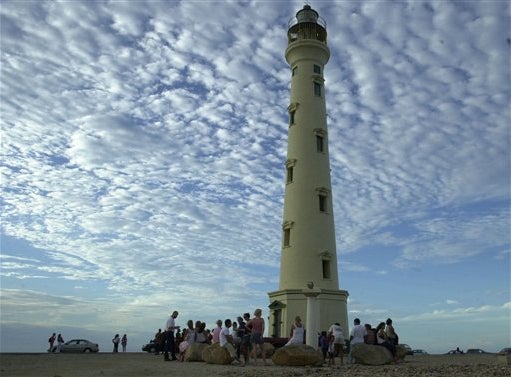
The search began almost immediately after Natalee failed to return to her hotel. Aruban police, Dutch military personnel, FBI agents, volunteers and local residents searched beaches, scrubland and surrounding waters. CBS/AP reported in June 2005 that about 700 volunteers joined the effort and that the government released thousands of civil servants early so they could help search.
Search teams examined multiple areas as accounts changed and new leads emerged. The early investigation was hampered by uncertainty about where Natalee had gone after leaving the nightclub, what happened on the beach and whether she had been moved. The lack of a body meant investigators could not use a recovery site to anchor the timeline or test a specific disposal theory.
Years later, a separate search effort was prompted by an underwater photograph taken by vacationers who thought it might show human remains. Aruban divers did not find the objects in the photograph, and the search was called off. That episode illustrates a recurring problem in this case: a possible lead can trigger a search, but an image or theory is not confirmation that Natalee’s remains have been located.

The false location claim in the 2010 extortion attempt
The family had already endured a damaging false lead years before the confession. In 2010, van der Sloot offered to tell Beth where Natalee’s remains were in exchange for money. Her attorney, John Q. Kelly, traveled to Aruba and met him. Van der Sloot directed Kelly to a location that did not contain Natalee’s remains and later acknowledged that the location story was false.
That history is important because it explains why the family and investigators could not treat every statement about a burial site or disposal location as reliable. The 2010 episode was an extortion scheme, not a successful recovery effort. The 2023 account was more detailed and was given in the context of a federal plea, but it still did not provide a confirmed recovery site.
For more on that episode, see our report on the 2010 hotel footage and the extortion attempt.

Could modern forensic technology still help?
Magni told A&E that environmental DNA can sometimes be considered in difficult investigations. The technique involves collecting environmental samples, such as water, and testing for traces of human DNA. She described it as a possible approach in extreme circumstances, not a proven method for locating Natalee’s remains in the open sea more than twenty years later.
That qualification is essential. Environmental DNA can be affected by dilution, movement, contamination and degradation. A positive trace, if one were ever found, would also need careful interpretation and independent confirmation. The A&E report did not announce a new Natalee-specific DNA discovery or a current search operation using this technique.
In other words, newer forensic tools may offer investigative possibilities, but they do not erase the physical challenges of a vast marine environment. No credible public announcement has established that a technology has identified Natalee’s remains or narrowed the search to a confirmed location.
What is the legal status now?
Natalee was declared legally dead in 2012, but that legal status did not mean her remains had been recovered. Van der Sloot was convicted in Peru for the 2010 murder of Stephany Flores and sentenced to 28 years. In 2023, he also pleaded guilty in the United States to extortion and wire fraud connected to his attempt to obtain money from Beth Holloway; his 20-year U.S. sentence was ordered to run concurrently with his Peruvian sentence.
As of Netflix Tudum’s November 4, 2026 interview with Beth Holloway, van der Sloot had not been charged in connection with Natalee’s death. Beth told Tudum that she was pursuing a further legal effort in the Netherlands, with a Dutch prosecutor obtaining documents and case files. That is a separate legal development from the U.S. plea and should not be described as a murder prosecution or conviction already underway.
We have also tracked the reported Dutch murder complaint and its status and the question of whether van der Sloot could face Dutch charges.
What the confession answered — and what it did not
For Beth Holloway, the 2023 admission answered the central question of who killed her daughter and provided an account of how it happened. It did not return Natalee’s body, establish a precise location for her remains or resolve every legal question. Those are separate outcomes, and the distinction matters to the family’s continuing search for accountability.
The most accurate answer to why Natalee Holloway’s body was never found is therefore not a single dramatic explanation. Van der Sloot said he put her body into the ocean. No confirmed location was established from that account. The sea is vast and dynamic; time can disperse and degrade remains; and earlier claims about where she could be found proved false. Experts say those factors make a recovery extraordinarily difficult, but the public evidence does not establish the exact path her remains took.
Natalee’s disappearance remains a case in which a confession brought long-awaited answers without producing the physical recovery that her family and investigators once hoped for. Reporting that distinction carefully is part of remembering both what is known and what remains unknown.
Frequently asked questions
Was Natalee Holloway’s body ever found?
No. As of November 10, 2026, Natalee’s remains have not been recovered. She was legally declared dead in 2012.
What did Joran van der Sloot say he did with Natalee’s body?
In a 2023 proffer statement connected to his U.S. plea, van der Sloot said he dragged Natalee into the ocean and pushed her out to sea after attacking her on an Aruba beach.
Did van der Sloot give investigators the exact location of Natalee’s remains?
The public account of his 2023 confession did not establish a verified recovery location. His separate 2010 claim about where her remains could be found was false.
Why is it so difficult to search for remains in the ocean?
Ocean currents, waves and tides can move remains over a large area. Decomposition can also cause remains to break apart, making a decades-later search much more difficult, according to experts interviewed by A&E.
Could DNA technology find Natalee Holloway now?
Forensic scientist Paola Magni told A&E that environmental DNA may be considered in extreme cases. That is a potential investigative technique, not evidence that Natalee’s remains have been located or that a successful search is underway.
Has Joran van der Sloot been convicted of Natalee Holloway’s murder?
No. He admitted killing Natalee in a 2023 proffer connected to his U.S. extortion and wire-fraud case, but as of November 10, 2026, he had not been charged or convicted for her murder.
Sources and further reading
- A&E Crime + Investigation: Could Natalee Holloway’s Remains Still Be Found More Than 20 Years Later?
- CBS News: What Joran van der Sloot’s confession reveals about Natalee Holloway’s death
- CBS News: The 2010 search prompted by an underwater photograph
- CBS/AP: The early search effort in Aruba
- Netflix Tudum: Beth Holloway’s November 2026 interview and legal update
- U.S. Department of Justice: 2010 indictment describing the false remains-location scheme
Editorial note: This report separates van der Sloot’s statements, court outcomes, expert assessments and facts independently confirmed by investigators. Photo credits are identified with each image. Displaying a third-party image does not itself establish a reuse license.