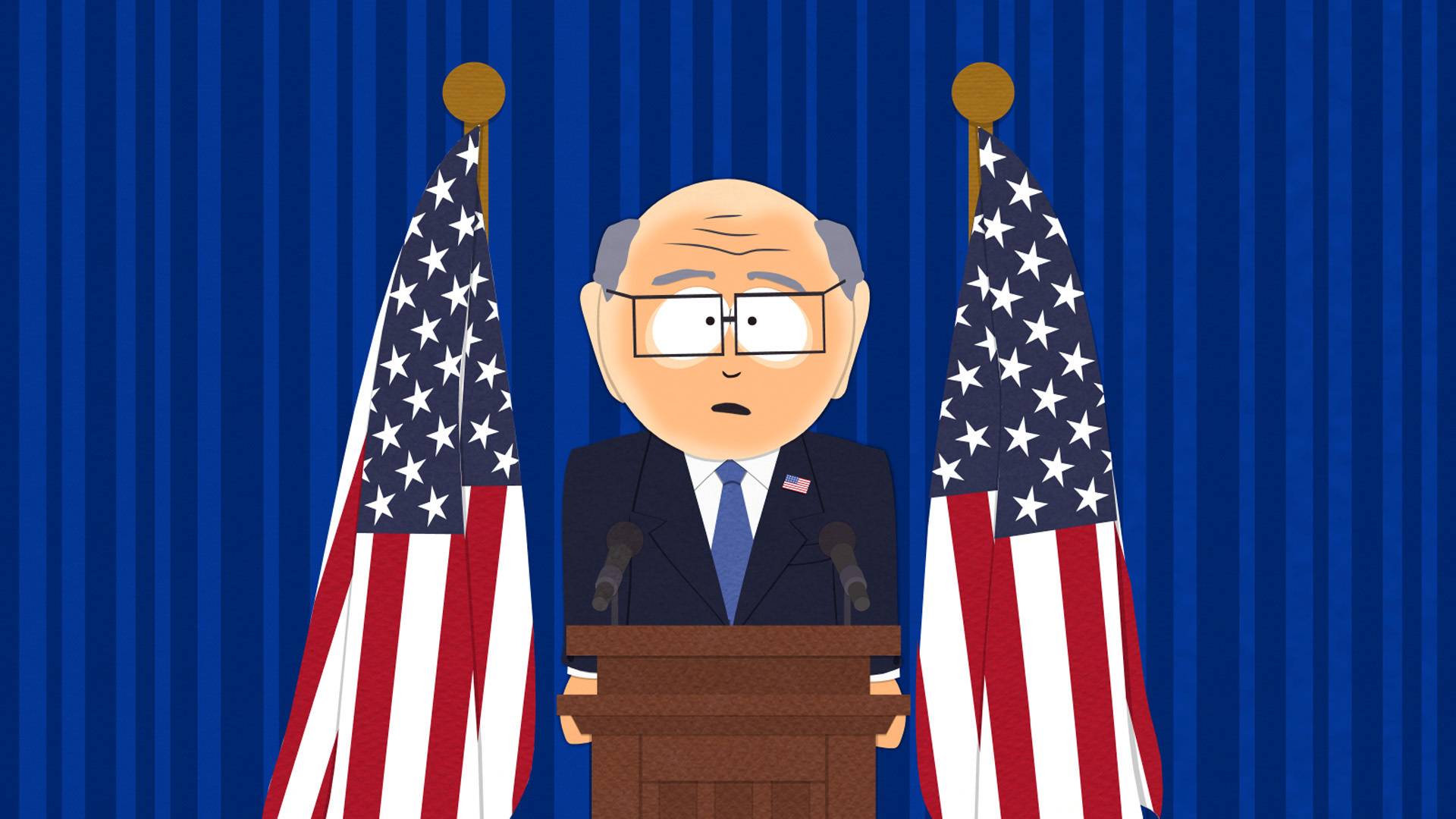
South Park’s “We Be Clubbin’” opens with an unusually direct reference to American midterm politics, but the most revealing part of the scene is how quickly that political setup becomes a story about students who have been overlooked. Mr. Garrison acknowledges the election result, then introduces a set of “liberal changes” at South America Elementary. When PC Principal says the school will no longer forget its minority and gay students, Cartman is prompted to remember that Tweek and Craig’s anniversary has been forgotten.
That small transition is the episode’s distinctive political callback. Rather than turning the entire installment into a campaign-season argument, the writers use the school assembly to connect a broad public mood to a specific relationship already present in the show. The scene is brief, but it changes what the audience is thinking about: from election-night scorekeeping to whether the school’s supposedly attentive community has actually noticed two of its own students.
The opening assembly is a political reset, not the whole episode
The episode begins by placing the school in the aftermath of the 2026 midterms. Mr. Garrison refers to the president’s poor result and jokes that continuing to make fun of him would amount to “punching down.” He then announces that the school will be making liberal changes and brings PC Principal back into the spotlight.
Variety’s episode coverage describes the opening as a blue-wave celebration at South America Elementary, with PC Principal returning to deliver an emphatic speech about tolerance and inclusion. The Guardian likewise notes that the election reference is concentrated near the start rather than becoming the episode’s continuing subject. That distinction matters: “We Be Clubbin’” uses current politics as its entry point, then moves into a character story about Craig, Tweek and the pressures of club sports. Variety’s episode report · The Guardian’s review.
Why the reference to gay students changes the scene
PC Principal’s declaration that the school will no longer forget minority and gay students is more than another exaggerated school-policy announcement. It gives Cartman a very particular reminder: Tweek and Craig are a couple, and their anniversary has slipped past the people around them. The line turns a general statement about recognition into an immediate plot trigger.
The joke depends on the gap between public language and everyday attention. A school can make a loud announcement about inclusion, but the episode’s next beat asks whether the people in that school remember the actual students and relationships the announcement is supposed to include. The forgotten anniversary makes that question concrete. Tweek and Craig are not an abstract talking point; they are classmates whose relationship matters to them, even when their friends are distracted.
It is important not to overstate what the episode does. The scene does not develop into a sustained policy debate about LGBTQ students, nor does the rest of the story stay focused on election politics. Instead, the political language functions as a quick narrative bridge to a personal detail. That restraint is part of why the callback stands out.
Cartman’s memory turns a political line into a character moment
Cartman’s reaction is the hinge between the assembly and the relationship plot. The announcement makes him remember the anniversary, and he tries to make Tweek feel better. The official South Park clip listing describes “Missed Anniversary” as the moment when the kids realise they forgot Tweek and Craig’s anniversary and Cartman attempts to help, only to make the situation worse.
That sequence gives the opening speech a consequence beyond topical commentary. The show does not simply mention a current political event and move on; it lets the language of inclusion expose a very ordinary failure of attention among friends. The scene is funny because the reminder arrives through an overblown school announcement, but the underlying feeling is recognisable: being accepted in principle is not quite the same as being remembered in practice.
The episode then leaves politics behind for the club-sports story
Once the anniversary has been brought into focus, the episode follows Tweek as he tries to spend more time with Craig by joining the club-sports world that has taken over Craig’s afternoons and weekends. The official synopsis confirms that premise, while the later story explores the schedule, travel and costs that quickly overwhelm the family.
The Guardian’s review observes that the midterm reference is not discussed much beyond the opening. It also notes that the main subject becomes the demanding pay-to-play structure surrounding youth club sports. This is useful context for reading the political callback accurately: the episode is not a full political allegory in which every sports joke maps onto an election issue. The opening gives the story a topical frame, but the emotional stakes remain with the boys.
Recognition is the bridge between the two storylines
The episode’s strongest connection between its political and personal material is the idea of being seen. The school assembly promises that students who have been overlooked will no longer be forgotten. The anniversary plot immediately tests that promise on a smaller scale. Tweek and Craig’s relationship is known, but their friends have failed to remember a meaningful date. That gap between saying the right thing and noticing the people around you gives the opening callback its bite.
There is also a useful contrast between the scale of the two storylines. The assembly speaks in sweeping terms about the school’s direction after an election. The anniversary is intimate and specific: two students, one missed date, and a friend trying to repair the moment. The shift keeps the episode from becoming a lecture. It brings the political reference down to the level where the characters actually live.
How this callback differs from a full political episode
“We Be Clubbin’” does not build its entire plot around the midterms. The political reference is concentrated in the opening assembly, and the episode soon turns toward the club-sports pressure affecting Craig and Tweek. That makes the callback more of a framing device than a sustained political argument.
For readers tracking the season’s political jokes, the distinction is worth keeping clear. The episode acknowledges the election and uses PC Principal’s return to establish a changed school atmosphere. But its main dramatic question is not who won the election; it is whether Craig and Tweek can recover ordinary time together after an activity takes over their lives. The political opening works because it points toward recognition, then lets the characters carry the story.
Official clips and further reading
South Park Studios lists the episode’s official “We Are Fucking BACK!” clip, in which Mr. Garrison and PC Principal announce changes at the school, alongside “Missed Anniversary,” which moves directly into the relationship storyline. Find the official Season 29 clips on South Park Studios. The full episode, “We Be Clubbin’,” is listed as Season 29, Episode 5 on Paramount+.
For related analysis on this blog, see how PC Principal’s blue-wave speech sets up the club-sports story and the school’s post-midterm changes in the episode’s opening.
Frequently asked questions
What political event does “We Be Clubbin’” mention?
The opening assembly refers to the 2026 U.S. midterm elections and uses the result as the reason for a new set of school changes.
Why does the gay-student reference matter to the plot?
PC Principal’s statement that the school will no longer forget gay students prompts Cartman to remember Tweek and Craig’s anniversary, connecting the political setup to the episode’s relationship story.
Is “We Be Clubbin’” mainly about politics?
No. The election reference is concentrated in the opening. The main story follows Tweek and Craig as club sports disrupt their time together and place new demands on their families.
Where can I watch the episode?
“We Be Clubbin’” is listed as Season 29, Episode 5 on Paramount+. Availability may vary by region.
Bottom line: The episode’s political callback is brief but purposeful. By moving from a school-wide promise not to overlook gay students to a forgotten anniversary, “We Be Clubbin’” turns a topical election joke into a small story about recognition, friendship and the difference between inclusion as a slogan and attention in everyday life.