

Warning: Spoilers for South Park Season 29, Episode 5, “We Be Clubbin’.”
The closing image of “We Be Clubbin’” is deliberately smaller than the chaos that comes before it: Tweek and Craig step away from the club-sports treadmill, sit together with Slurpees, and get a moment that belongs to them rather than to a team, a schedule, or an anxious adult selling them a future. Peter Gabriel’s “Love Can Heal” carries the scene through the credits. It is a gentle ending for an episode that has spent much of its time making youth athletics look like an expensive, exhausting business.
That contrast is what gives the Season 29 episode its emotional shape. The sports satire supplies the pressure; the relationship between Tweek and Craig gives that pressure a personal cost. By the time the boys choose an ordinary moment together over another obligation, the Slurpees feel less like a throwaway gag than a small declaration of priorities.
Why the Slurpee ending matters
Throughout the episode, Craig’s afternoons and weekends are swallowed by club sports. Tweek wants to spend time with him, so he joins too. The plan sounds simple: if they are on the same team, perhaps they can finally be together. Instead, the commitment expands until practices, travel, fees, and constant demands dictate the family’s calendar.
The final Slurpee scene reverses that pattern. There is no coach assigning the next task, no tier to climb, and no parent comparing schedules. The boys are simply together. The red-and-blue drinks also make a memorable visual pair, but the point is not a hidden code that needs decoding. The scene lands because it gives Tweek and Craig something the club has repeatedly taken away: unstructured time.
Variety’s episode coverage likewise identifies the Slurpees outside a 7-Eleven and the Peter Gabriel song over the credits as the final image and musical choice. The official episode listing confirms the episode title and its central setup: club sports take over Craig’s time, and Tweek signs up to spend more time with him. Variety’s report and Paramount+’s episode page provide useful context.
Peter Gabriel’s “Love Can Heal” gives the finale its tone
Using “Love Can Heal” over the credits makes the ending feel intentionally warmer than the episode’s relentless club-sports comedy. The song does not erase the conflict or pretend the boys have solved every worry about growing up. Instead, it underlines the choice they have just made: their relationship and their time together matter more than a system built around fear of falling behind.
The musical cue also keeps the finale from becoming a long explanation of the episode’s message. Tweek has already helped Craig recognize how much anxiety has been driving him. The boys’ decision to leave the club says the rest. The credits can let the moment breathe.
It is worth separating what is confirmed from what is interpretation. The episode’s closing use of Peter Gabriel’s track is reported in contemporary coverage; reading the song as an emotional counterweight to the sports satire is an interpretation of how the scene works, not a claim about the creators’ private intentions.
Craig’s anxiety changes the usual Tweek-and-Craig dynamic
One of the episode’s more revealing turns is that Craig, usually the more composed half of the pair, becomes the one overwhelmed by fear. The club’s sales pitch has convinced him that every practice and competition is an investment in his future. If he stops, he might fall behind; if he is not constantly improving, he might miss the opportunities that supposedly await successful athletes.
That pressure helps explain why Craig has been so unavailable. His distance is not presented simply as indifference to Tweek. He has absorbed the club’s message and is trying to meet expectations he does not fully understand. When the pressure finally breaks through, Tweek recognizes the panic and responds with reassurance rather than another demand.
The reversal gives the relationship a little more dimension. Tweek is often portrayed as the visibly anxious one, but here he becomes the calmer partner. Craig, meanwhile, has to admit that his apparent indifference has been covering genuine fear. Their reconciliation works because each boy finally understands something the other has been struggling to express.

The episode’s club-sports satire is about more than busy weekends
“We Be Clubbin’” exaggerates the familiar pressures of competitive youth sports: registration costs, extra fees, travel, hotel stays, early starts, and the feeling that a child’s future depends on never saying no. The joke grows through repetition. Each new demand makes the previous one seem almost reasonable, while the adults compete to prove that their family is sacrificing more than everyone else.
The Guardian’s review connects the episode’s premise to the real-world “pay-to-play” culture around youth club sports, where families can be asked to spend heavily for travel teams and the promise of better development or future opportunities. The review also notes that the episode’s sports jokes can feel repetitive, even as its depiction of parental anxiety is recognizable. Read the Guardian’s episode review.
The satire is not simply that organized sports cost money. It is that the club sells anxiety as motivation. Parents are encouraged to interpret every missed session as a lost opportunity, every fee as necessary, and every exhausting weekend as proof of good parenting. The children inherit that logic before they have the perspective to question it.
That is why Craig’s breakdown matters to the episode’s larger point. The club’s promise of a better future has made him afraid of the present. He is so busy trying not to be left behind that he has stopped enjoying the time he already has.
Tweek joins the team for connection, not a trophy
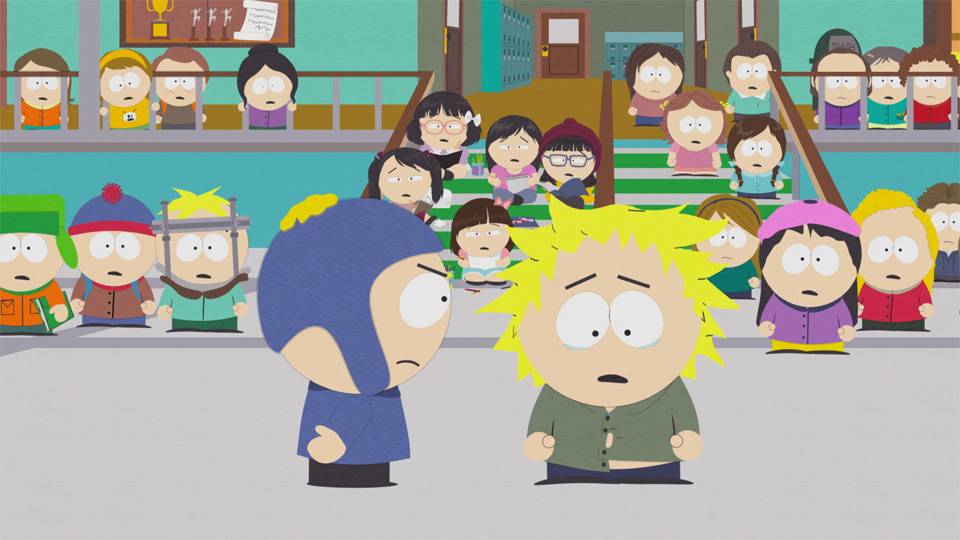
Tweek’s reason for joining is personal. He is not chasing a ranking or trying to build an athletic résumé; he wants time with Craig. That distinction is important because the club quickly turns his straightforward wish into another set of obligations. Being physically present at the same events does not automatically mean the boys are getting meaningful time together.
As the schedule tightens, the couple’s relationship becomes one more thing squeezed between practices and travel. The episode lets that frustration build until both boys have to say what they actually need. The resolution is not a better tier or a more efficient calendar. It is the decision to stop allowing the club to organize their lives.
A welcome return for two characters who have been away from the spotlight
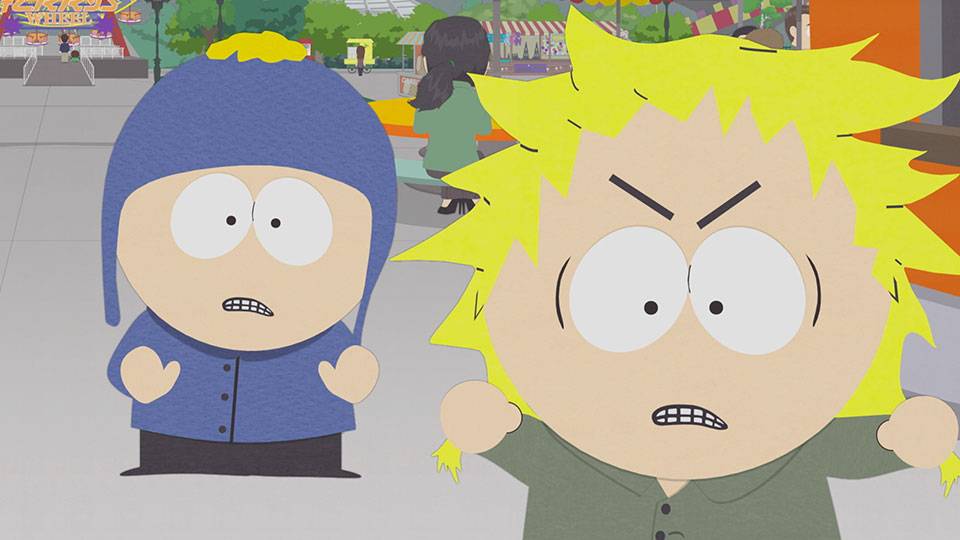
The episode also gives Tweek and Craig a substantial shared storyline after a long stretch without either character taking center stage. The Guardian describes Tweek as having gone several years without a major role and Craig as having been away even longer. Variety also highlights their return as a major part of the episode’s appeal. Their anniversary conflict gives the story an emotional through-line that connects the club-sports plot to the final scene.
Their history matters here, but “We Be Clubbin’” does not require viewers to remember every detail of earlier episodes. The immediate problem is easy to understand: one person wants time together, the other is overwhelmed by commitments, and neither initially knows how to bridge the gap. The show uses their established contrast—Tweek’s visible nerves and Craig’s reserved manner—to make the misunderstanding recognizable.

Why the final choice feels right
The Slurpees are an intentionally modest payoff. After an episode full of adults turning childhood into a logistical contest, Tweek and Craig choose something uncomplicated. The scene does not promise that their future will be effortless. It suggests that they do not have to surrender every present moment to an imagined future in order to be okay.
That is also why the song choice resonates. “Love Can Heal” accompanies a small act of reconnection rather than a grand victory. The boys are not celebrated for becoming the best athletes or for winning an elite place. They are allowed to leave the competition behind and enjoy being together.
There is a gentle point underneath the show’s harsher jokes: ambition can become another product when people are taught to fear that ordinary life is not enough. “We Be Clubbin’” sends Tweek and Craig out of that cycle with two drinks, a little quiet, and a more hopeful outlook.
What to know about “We Be Clubbin’”
- Series: South Park (branded as South America during Season 29)
- Episode: “We Be Clubbin’”
- Season: 29
- Episode focus: Tweek joins club sports to spend more time with Craig
- Final scene: Tweek and Craig share Slurpees after deciding to leave club sports
- Closing music: “Love Can Heal” by Peter Gabriel
Frequently asked questions
What song plays at the end of South Park’s “We Be Clubbin’”?
Peter Gabriel’s “Love Can Heal” plays over the closing credits, accompanying the episode’s final moment with Tweek and Craig.
Why are Tweek and Craig drinking Slurpees?
The Slurpees are part of the closing scene after the boys decide to leave the club-sports system. The quiet stop gives them time together without another practice, trip, or team obligation.
What is “We Be Clubbin’” satirizing?
The episode takes aim at the cost, travel demands, status competition, and anxiety-driven promises associated with youth club sports. It also explores how those pressures can affect family life and relationships.
Does the episode focus on Tweek and Craig’s relationship?
Yes. Their attempt to spend more time together drives the story, while the club-sports satire creates the conflict that pushes them apart and eventually brings them back together.
Sources and further viewing: Paramount+ episode listing · South Park Studios: “Watch ‘We Be Clubbin’’ now” · The Guardian’s review · Variety’s coverage.