

Beth Holloway’s appearance in Taken: Natalee Holloway is not simply another chapter in a long-running true-crime story. It is a decision that became possible, in her own account, after a central question that had shaped her life for 18 years finally had an answer. The timing matters because the documentary was made after Joran van der Sloot’s 2023 confession—not while Beth was still searching without knowing what had happened to her daughter.
That distinction helps explain the series’ point of view. Beth was not presenting a story with a neat ending or claiming that every legal question had been resolved. She was choosing to tell a more complete, chronological account after the confession changed what she could say about Natalee’s fate. Her participation also gave the filmmakers access to the person whose search had been at the center of the case for two decades.

The turning point was an answer, not a television opportunity
In October 2023, van der Sloot pleaded guilty in the United States to federal extortion and wire-fraud charges connected to his attempt to obtain money from Beth in exchange for information about Natalee. As part of the agreement, he gave investigators an account of Natalee’s death. Beth and Natalee’s father heard that account as part of the process. Beth later described the end of the uncertainty as more important than the word “closure.”
In a 2023 interview with CBS News and the Associated Press, Beth explained that hearing the details was painful, but that not knowing had been more torturous. That context is essential to understanding why a documentary invitation after the confession could carry a different meaning from one made during the years of unanswered questions.
The confession did not restore Natalee, recover her remains, or settle every possible legal issue. It did, however, change the factual foundation on which Beth could speak publicly. The documentary could move from a search for an answer to a retrospective account of the search, the people involved, the mistakes and delays, and what the answer meant to the family.
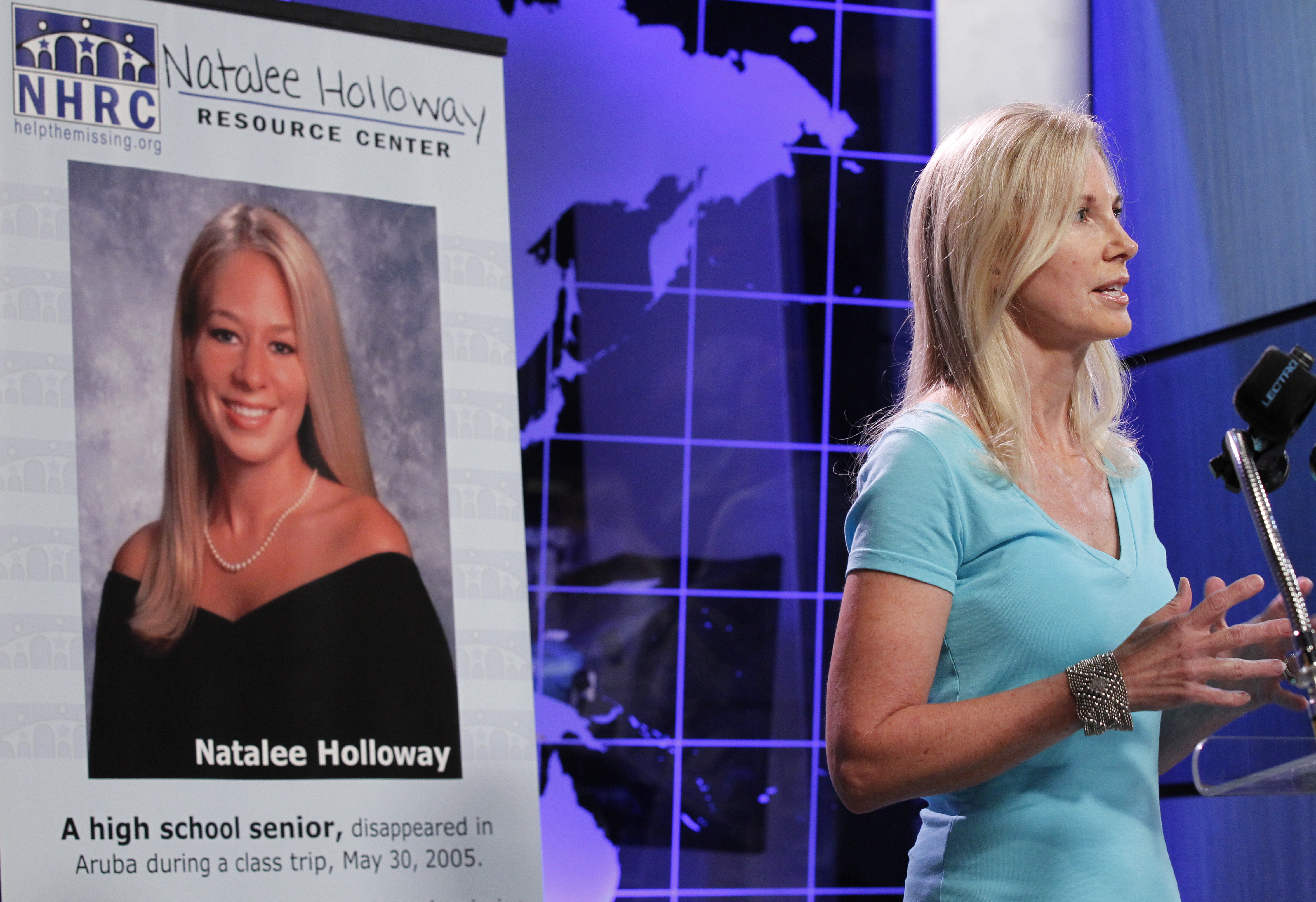
What Beth actually said about the timing
The clearest public explanation came from Beth herself in Netflix’s Tudum coverage around the series’ release. Asked about the decision to tell the story now, she said that the family finally had a conclusion and that she felt the time had come to tell the most comprehensive, chronological version of events. The point was not that every consequence had ended; it was that the central uncertainty about Natalee’s fate had changed.
That explanation is more precise than saying Beth simply wanted to revisit the case because a new series was being made. The order matters: the confession came first, the public announcement of the docuseries followed later, and Beth’s explanation of why the timing felt right was published as the series arrived. Netflix’s October 2026 preview described the project as the first full account told by Beth from the disappearance through the confession. In its November 4 interview, Tudum also reported on the work she says she continued after the confession.
There is an important limit to what the public record tells us. Netflix announced the three-part series in December 2025, but the announcement does not disclose the date Beth first agreed to participate, when filming began, or the details of private discussions between her and the producers. It would be inaccurate to invent a precise signing date or claim that the confession automatically led to a deal. What can be said responsibly is that Beth publicly connected the timing of telling the story to the conclusion she received in 2023.

Why a chronological account mattered
For years, Natalee’s disappearance was retold through breaking-news fragments, competing theories, interviews, investigations, and public speculation. A viewer could know the most familiar headlines and still miss how the family experienced the case as a sequence of events: the first hours in Aruba, the early searches, the changing accounts, the long stretches without reliable answers, the 2010 extortion attempt, and the 2023 plea agreement.
A chronological account offers something different from another recap of the most sensational details. It can show how one event led to another, where the family’s understanding changed, and why certain claims that circulated publicly did not amount to established fact. That approach also makes room for Natalee as a person rather than reducing her life to the circumstances of her disappearance.
The series’ production announcement said the filmmakers had access to Beth, people who were with Natalee, investigators, archival material, and previously unseen footage. That access helps explain the project’s scope, but it should not be confused with independent proof of every claim made by any participant. A documentary is a constructed account; viewers should still distinguish direct records, attributed recollections, and editorial interpretation.

Participation did not mean the story was legally finished
One possible misunderstanding is that Beth’s willingness to participate meant she believed every avenue for accountability had closed. Her own later comments make the opposite distinction. She has described the nightmare of not knowing as over while continuing to pursue legal steps. In the November 2026 Tudum interview, she said she had worked with attorneys in the Netherlands on a murder complaint against van der Sloot and that the matter was being handled by Dutch authorities.
That is why “closure” is not quite the right shorthand for her decision. Beth has said she does not use the word in the conventional way. The end of uncertainty about what happened to Natalee is one thing; the separate question of what justice can still look like is another. The documentary could therefore look back without suggesting that all consequences or legal questions had disappeared.
There is also a human distinction between speaking publicly while still trying to establish what happened and speaking after receiving an account that she accepts as the answer. The first situation is dominated by uncertainty. The second allows a person to explain the years of searching, the cost of not knowing, and what they want audiences to understand about the person they lost.

What viewers should take from her choice
Beth’s participation is best understood as a decision about when and how to tell a family’s history—not as proof that the documentary answers every question or replaces the work of investigators and courts. The 2023 confession gave her a basis to describe the end of the search for answers. The later series gave her a platform to put the years in order, revisit the people and decisions that shaped the case, and explain what the answer changed for her.
It is also worth resisting the temptation to turn her choice into a simple inspirational slogan. The timing was personal and specific. She had spent years dealing with uncertainty, public scrutiny, false leads, and the pain of hearing the account of her daughter’s death. Her explanation was that the time felt right because the central question finally had an answer and the story could be told comprehensively.
For readers who want to understand the series beyond its most dramatic scenes, that context is more revealing than speculation about a secret production timetable. Our related coverage looks at how the documentary presents Beth’s role as a mother and how the series handles the 2005 media frenzy.
Frequently asked questions
Why did Beth Holloway participate in the Netflix documentary after 2023?
In Netflix’s Tudum interview, Beth said the family finally had a conclusion and she felt it was time to tell a comprehensive, chronological account. She connected the timing to receiving answers about Natalee’s fate.
Did Beth reveal the exact date she agreed to appear?
The public sources cited here do not identify the date she signed on or the start of filming. Netflix announced the project in December 2025, but that announcement is not the same as a confirmed participation date.
Did the 2023 confession end every legal issue?
No. The confession provided an account of Natalee’s death as part of a U.S. federal plea agreement. Beth later said she was pursuing a complaint with Dutch authorities. A confession and a separate murder prosecution are not the same legal event.
Does Beth describe the outcome as closure?
She has said she prefers to describe the end of not knowing rather than use the word “closure.” She has also distinguished having answers from the continuing pursuit of justice.