

Updated November 11, 2026
The 2005 disappearance of Natalee Holloway became more than a missing-person investigation. It became a television event, with daily updates, competing accounts, live reports from Aruba and a level of attention that continued even when there was little verified news to add. Netflix’s three-part documentary Taken: Natalee Holloway returns to that period, but its task is different from the task facing a newsroom in 2005: it can look back, hear from people who lived through the case and place later developments beside the uncertainty of the first weeks.
This article looks at that storytelling choice—not as a full retelling of the case, and not as a claim that the series is a complete archive. The central question is how a documentary can acknowledge the media storm without turning the old coverage into another round of spectacle. The answer lies in perspective, chronology, selection and the distinction between a recorded statement and an established fact.
It begins with a retrospective point of view, not a live-news clock
In 2005, reporters were working while the search and investigation were unfolding. They had to report what was known at that moment, correct earlier information when it changed and decide how much airtime to give a lead that might soon prove unreliable. A documentary made more than two decades later has a different responsibility. It can explain how separate events connect, show what became known later and let people describe the long consequences of the case.
Netflix’s official description presents Taken: Natalee Holloway as a three-part account built around Beth Holloway and people who were with Natalee when she vanished. The service describes the production as having exclusive access to Beth and those connected to the trip. That framing matters: rather than promising a minute-by-minute replay of every television report, the official description emphasizes the family’s experience and the wider investigation.
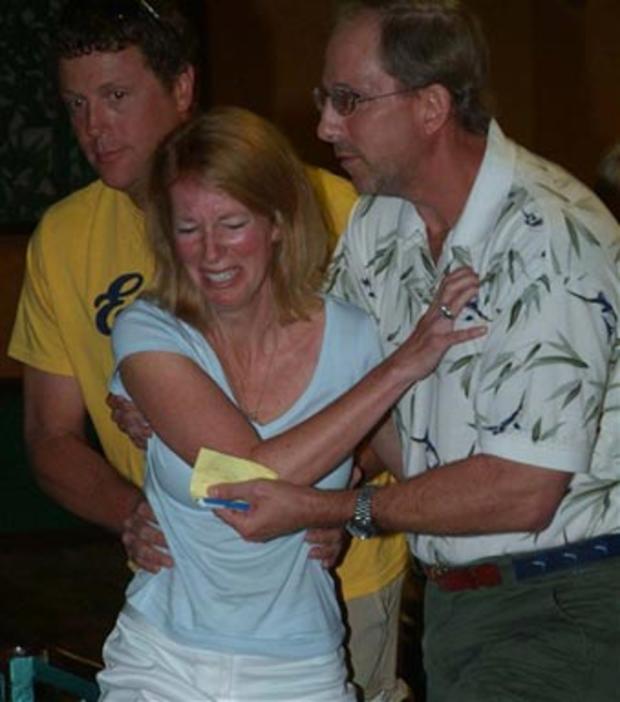
That shift from live reporting to retrospective testimony is the first important framing decision. It allows the series to ask what the experience meant to the people involved, not only what the next day’s headline said. It also makes the documentary accountable for explaining the limits of hindsight: people interviewed years later can remember events, but memory is not identical to a contemporaneous record.
The old coverage is context, not the main character
The phrase “media circus” can make the coverage itself sound like the central drama. That risks pushing Natalee—the young woman whose disappearance started the story—into the background. A more responsible documentary approach is to use the old attention as context: it helps explain the pressure on the family, the investigation and Aruba, but it should not replace the person at the center of the case.
Contemporary criticism shows why this distinction matters. In an August/September 2005 article titled “A Media Circus in Paradise,” American Journalism Review described the intense presence of American television crews in Aruba. The title captured how a local search had become a major U.S. news spectacle. The article is useful as a record of the reporting environment, but it is not a substitute for the testimony of the family, local journalists or investigators.
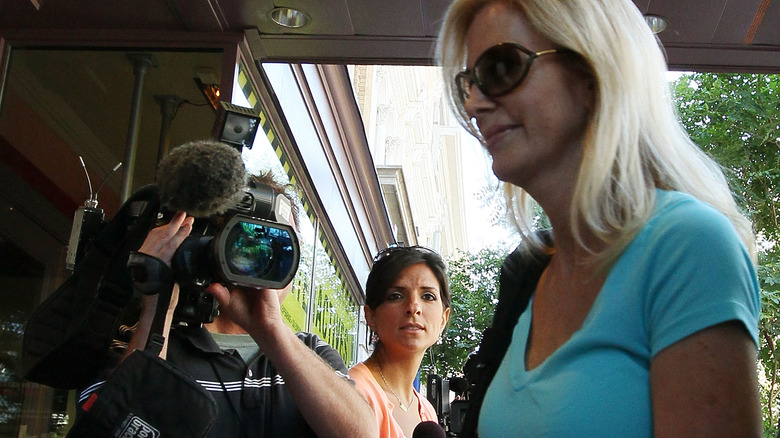
The documentary’s framing is most useful when it keeps the cameras in the background and the human consequences in the foreground. That does not mean the media should be ignored or excused. It means the coverage should be examined for what it did: amplify a family’s appeal, draw attention to unanswered questions, sometimes repeat uncertain claims and shape how viewers understood a small island and its institutions.
Chronology can replace the pressure to manufacture a new development
One of the hardest problems in rolling coverage is the gap between the public’s demand for updates and the pace at which reliable information becomes available. CNN’s June 3, 2005 transcript, for example, records an early report about the search and Beth’s appeal for Natalee to come home. It is a snapshot of what viewers were told at that point—not a complete account of what later investigations established.
A retrospective can put that snapshot in its proper place. It can show that a statement was made, identify who made it and explain what was or was not known at the time. That is different from repeating the statement as if it were a fresh revelation. It also helps prevent an old rumor from acquiring new authority simply because it appears again in a modern documentary.

The distinction is especially important in this case because the public record changed over time. Early accounts, arrests, releases and later statements did not all carry the same evidentiary weight. In 2023, Joran van der Sloot pleaded guilty in the United States to extortion and wire fraud and gave an account of killing Natalee. That federal conviction was for the financial crimes, not a separate murder conviction in Aruba. Natalee’s remains have never been recovered. A documentary can place the later admission in the chronology without suggesting that every question has been settled.
First-person voices can restore the people behind the headlines
News coverage often relies on short interviews and brief statements because it is designed for a fast-moving broadcast. A three-part documentary has more room to let a person finish a thought, explain a memory or describe the years that followed. Netflix identifies Beth Holloway, Natalee’s friends, journalists, investigators and retired FBI agents among the people connected to the series. Their presence offers more than a list of names: it gives the story several points of view rather than asking one headline to carry the whole experience.
That choice also creates a responsibility. A participant’s recollection should be presented as a recollection; an allegation should remain an allegation unless it is independently established; and an official finding should be described precisely. The documentary format can make a complicated story easier to follow, but a smooth narrative is not proof that every disputed detail has been resolved.

Giving space to Natalee’s friends and to people who helped search also helps resist the flattening effect of a famous case. Natalee should not be remembered only as a photograph shown during breaking news. A careful account makes room for the young woman’s life, relationships and plans, while treating the investigation and media response as parts of a much larger story.
What the series can frame—and what it cannot prove by itself
Every documentary is selective. Three episodes cannot reproduce every broadcast, interview, police statement, newspaper story and private conversation from more than twenty years. The selection is not automatically misleading; it is a basic feature of documentary storytelling. The question is whether the series makes its scope clear and whether viewers can compare its presentation with primary records and independent reporting.
A useful example is the way the case’s media legacy has been discussed beyond the documentary. A 2023 Washington Post analysis connected the intense attention given to Natalee’s disappearance with the broader debate over unequal coverage of missing people, often described as “missing White woman syndrome.” That is a separate media-analysis question. It should not be reduced to a claim that Natalee’s family did not deserve attention; rather, it asks why similar attention is not consistently given to other missing people.
The series can invite viewers to reconsider how the story was told, but it cannot replace the full public record. It cannot make every old report accurate, turn every memory into proof or answer the unresolved question of Natalee’s remains. Those limits should be part of the viewing experience, not hidden by a tidy ending.
Why not replaying the spectacle is an editorial strength
There is a temptation in true-crime storytelling to reproduce the loudest moments: dramatic headlines, confrontational interviews, repeated clips and unresolved questions presented as cliffhangers. Those devices can generate attention, but they can also recreate the very pressures that made the original coverage difficult for the family and the community.
A more measured approach treats archival material as evidence of how the story was covered, not as decoration. It distinguishes the event from the reaction to the event. It lets people speak without turning every pause or expression into a clue. And it returns to Natalee’s life and Beth’s experience rather than asking the audience to relive every cycle of speculation.
For a wider comparison of the 2005 news cycle and the 2026 documentary format, see our separate article, The Media Circus of 2005 vs the Controlled Narrative in 2026. For the institutional context behind some of the coverage, read our analysis of Aruba’s handling of the case and American expectations.
Questions viewers should ask while watching
- Who is speaking? Is this a participant’s memory, a journalist’s contemporaneous report or an official record?
- When did the information become known? A fact established years later should not be presented as if reporters knew it in June 2005.
- What is the source? Archival footage can verify that a statement was made, but not necessarily that the statement was true.
- Whose perspective is missing? A family-centered documentary has a clear point of view and cannot represent every person who followed or investigated the case.
- What remains unresolved? A compelling narrative should still acknowledge gaps in the evidence and the fact that Natalee’s remains have not been found.
Frequently asked questions
What does “media circus” mean in the Natalee Holloway case?
It refers to the intense and sustained news attention that followed Natalee’s disappearance in Aruba in 2005, including the large presence of U.S. television crews and repeated coverage during periods with few confirmed developments.
How does the Netflix series approach the 2005 coverage?
Netflix describes the three-part series as a retrospective centered on Beth Holloway and people connected to Natalee, with access to investigators and previously unseen material. The format allows the story to be placed in context rather than reported as a live sequence of daily updates.
Does the documentary include every report from 2005?
No. A three-part documentary is a selected account, not a complete archive of every broadcast, article or statement. Viewers can compare its presentation with contemporaneous reporting and official records.
Does the 2023 guilty plea mean van der Sloot was convicted of Natalee’s murder?
No. He pleaded guilty in the United States to extortion and wire fraud. He gave an account of killing Natalee during that process, but the federal conviction was for those financial crimes, not a separate murder conviction for her death.
Why is it important to distinguish a statement from a verified fact?
Because an interview, allegation or archival clip shows what someone said at a particular time. It does not automatically establish that the claim was true. Clear sourcing helps viewers understand what is documented and what remains disputed.
Sources and further reading
- Netflix Media Center: Taken: Natalee Holloway — official synopsis and production information.
- Netflix Tudum: A new documentary about Natalee Holloway — official series background and interview details.
- American Journalism Review: “A Media Circus in Paradise” (2005) — contemporaneous reporting on the press presence in Aruba.
- CNN transcript, June 3, 2005 — an example of early broadcast coverage and Beth Holloway’s appeal.
- The Washington Post (2023): How the case put a spotlight on missing-person coverage — broader media context.
- U.S. Department of Justice (2023) — the federal charges and sentence.
Editorial note: This article analyzes documentary framing and the historical media environment. Image captions identify the original archive or publisher; the photographs are historical context, not claimed to be footage from the Netflix series.
Author: Shivam Das