

Natalee Holloway’s disappearance in Aruba became one of the most recognizable cases involving a young American traveling abroad. She was 18, had just graduated from high school, and was on a senior class trip when she failed to return to her hotel on May 30, 2005. The story is often discussed alongside other disappearances involving students, vacations, beaches and trips away from home. Those comparisons can be useful—but only when the differences are kept clear.
There is no single category of “graduation-trip tragedy,” and not every case commonly mentioned beside Natalee’s involved a graduation, a student group or even a holiday. The cases below are better understood as distinct events that raise overlapping questions about last-known movements, travel arrangements, local investigations, cross-border cooperation and the way public attention can shape a family’s search for answers.
This comparison is not an attempt to suggest that the cases share a perpetrator, motive or proven cause. It is a careful look at what the public record does—and does not—allow us to compare.
Natalee Holloway: the graduation trip that became an international case
Natalee traveled to Aruba with classmates from Mountain Brook High School in Alabama to celebrate graduation. On the final night of the trip, she went out with friends in Oranjestad. She was last seen leaving a nightlife venue in a car with Joran van der Sloot and two brothers. She did not return to the Holiday Inn where the group was staying, and she missed the flight home.
Aruban police, Dutch authorities, the FBI and volunteers took part in searches and investigative work. Van der Sloot and the two brothers were arrested in June 2005 on suspicion of kidnapping and murder, then released without charges. The case remained unresolved for years. In 2023, van der Sloot pleaded guilty in a U.S. federal case to extortion and wire fraud connected to his attempt to obtain money from Natalee’s mother, Beth Holloway. During the plea proceedings, he admitted killing Natalee. Her remains have never been recovered.

The Netflix series Taken: Natalee Holloway revisits the case through Beth’s long search for answers and the people who were close to Natalee. For a broader timeline, see ABC News’ chronology of the disappearance and Netflix Tudum’s guide to the documentary.
Sudiksha Konanki: a spring-break disappearance, not a graduation-trip case
In March 2025, 20-year-old University of Pittsburgh student Sudiksha Konanki disappeared during a spring-break trip to Punta Cana in the Dominican Republic. Surveillance footage showed her walking toward a beach with friends and two men in the early morning. The others later returned; Konanki did not. The search involved Dominican authorities and U.S. agencies, and investigators reviewed surveillance footage and interviewed people who had been with her.
The distinction between this case and Natalee’s is essential. Konanki’s disappearance was investigated as a missing-person case, not as a proven homicide. The man last seen with her, Joshua Riibe, was treated as a witness and was not charged with a crime. He told investigators that strong waves and a current pulled them into the water and that he helped her back toward shore before losing sight of her. Her parents later said they believed she had drowned and asked authorities to declare her legally dead. In November 2026, her father again spoke publicly about the family coming to terms with that belief.
Those facts do not establish every detail of what happened at the beach. They do, however, show why early comparisons must not turn uncertainty into accusation. A missing-person investigation, a family’s belief about the likely outcome and a criminal finding are three different things. CBS News’ reporting on the family’s request and the Associated Press account document the position of the family and authorities at the time.

Claudia Kirschhoch: a work trip in Jamaica that ended in an unresolved disappearance
Claudia Kirschhoch was 29 and worked as an editor for Frommer’s travel guides. In May 2000, she traveled with other journalists on a work assignment that was supposed to include Cuba. When the Cuba portion was canceled, she remained in Negril, Jamaica. She was last reliably seen near the beach on May 27. She did not check out as expected, and her passport and other belongings were reportedly left behind. Her disappearance has never been solved.
Kirschhoch was not a student on a graduation trip, and the available record does not make her case a direct match for Natalee’s. The useful parallel is narrower: both cases involved an American woman away from home, a last-known location in a tourist setting, questions about the timeline and an investigation that crossed national boundaries. Those similarities help explain why the cases are sometimes discussed together; they do not establish that the circumstances were the same.
It is also important not to repeat unverified allegations about people who were questioned or associated with Kirschhoch. The contemporaneous Travel Weekly report records the work-trip background and the initial search. The U.S. congressional report also urged cooperation in locating the missing American travel writer. Neither source supplies a proven explanation for her disappearance.

Trenny Gibson: a school field trip with a different set of unanswered questions
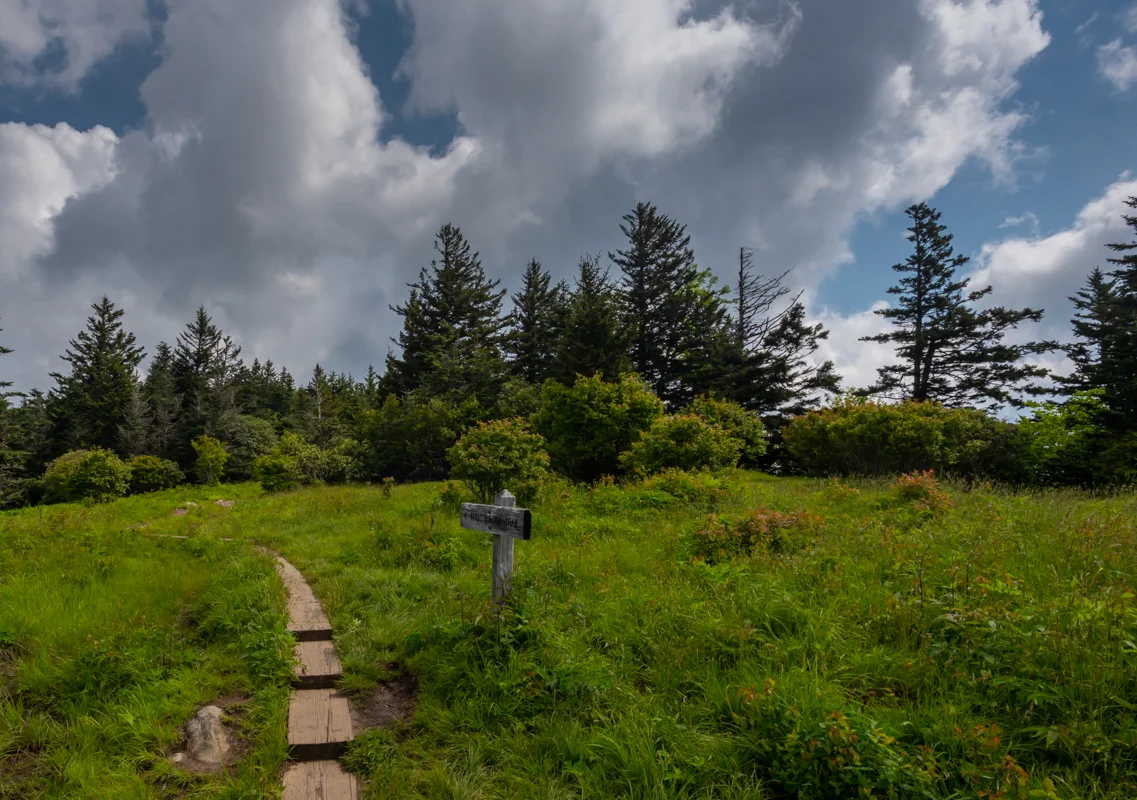
Trenny Gibson was 16 when she disappeared during a school field trip to Great Smoky Mountains National Park in Tennessee on October 8, 1976. She was traveling with classmates from a horticulture class. During the outing, the group realized she was missing, and a search began. She has never been found.
Gibson’s case is not a vacation, spring-break or graduation-trip disappearance. It belongs in a wider discussion of young people who vanished while traveling with an organized group. That distinction matters because a supervised school outing has a different structure from an independently planned holiday: the group has an itinerary, adults have responsibilities, and the last confirmed sighting may depend on recollections gathered after the fact.
Some later accounts have advanced theories about what happened to Gibson, but no suspect has been officially established as responsible. The responsible approach is to distinguish the documented disappearance and search from allegations or reconstructions that have not been proven. A&E’s 2026 retrospective reviews the known timeline and the continuing uncertainty.

What the cases share—and where the comparison stops
These stories are not interchangeable. Natalee’s disappearance happened during a high-school graduation trip and was later addressed in a guilty plea by van der Sloot. Konanki disappeared during spring break, with her family believing she drowned and authorities distinguishing the case from a criminal prosecution. Kirschhoch vanished during a professional travel assignment and remains missing. Gibson disappeared during a school field trip decades earlier, and her fate remains unknown.
There are still several careful points of comparison:
- The last confirmed movements matter. In each case, investigators and families needed to establish where the person was last reliably seen, who was present and what happened next. A reported sighting is not automatically a verified one.
- Travel creates jurisdictional complexity. When a person disappears outside their home state or country, local police generally lead the investigation, while family members may seek help from national agencies, consular officials or other authorities. The legal powers and evidence rules differ by jurisdiction.
- Surveillance and records can become central. Hotel footage, transport records, witness accounts, room access logs and phone data can help reconstruct a timeline. Their availability and reliability vary from case to case.
- Public attention can help and harm. Media coverage can generate leads and keep a case visible, but speculation can also attach suspicion to people without evidence and make it harder for families to control how their loved one is remembered.
- Uncertainty should be described honestly. A confession, a court judgment, a family’s belief, an official investigative theory and an unresolved lead are not equivalent forms of proof.
Why “graduation-trip tragedy” should not become a catch-all label
The phrase is emotionally powerful because graduation trips mark a transition: students have finished one stage of life and are celebrating with friends before the next begins. But using it as a label for every high-profile disappearance involving a young traveler risks distorting the facts. Konanki was on spring break; Kirschhoch was on a work assignment; Gibson was on a school field trip. Each context shaped the people responsible for the itinerary, the records available and the way the search unfolded.
That precision also protects the victims’ identities. Natalee should not be reduced to a warning about nightlife. Konanki should not be treated as a homicide victim when the public record has not established that. Kirschhoch should not be assigned a motive or a culprit based on online theories. Gibson should not be presented as the subject of a solved case when she has never been found. The most useful comparison is one that preserves those distinctions.
Practical lessons for group travel without blaming the traveler
These cases do not prove that a particular kind of trip is inherently unsafe, and they should not be used to suggest that a victim caused what happened. Practical planning can nevertheless reduce confusion when someone cannot be located. Groups traveling together can agree on a simple check-in plan, share accommodation details with a trusted contact, know the local emergency number, and decide in advance who will contact hotel staff or authorities if someone misses an agreed return time.
For organized school trips, written headcounts, buddy systems, clear meeting points and documented handoffs between chaperones are sensible safeguards. For independent or college travel, friends can agree not to leave a venue without checking that everyone has a safe way back. These are basic coordination measures—not guarantees, and not a substitute for local emergency services.
Families facing a disappearance abroad should preserve messages, itineraries, booking confirmations and names of people who last saw the traveler, then contact local authorities and their country’s consular services. They should avoid publicly accusing individuals or spreading unverified claims. Accurate information is more useful to investigators than viral speculation.
How the Netflix documentary fits into the wider conversation
Taken: Natalee Holloway focuses on one family’s experience and the long path toward answers. Its story can prompt viewers to think about other travel-related disappearances, but it does not turn those cases into a single pattern or prove that the same failures occurred in each one. The documentary’s most responsible contribution is to keep Natalee’s individual story in view while encouraging viewers to distinguish evidence from assumption.
For additional context, read our reporting on the cultural and investigative gap between Aruba and American expectations and the legal limits surrounding the U.S. case. The separate Stephany Flores report explains another documented chapter in van der Sloot’s criminal history without confusing it with the circumstances of the other travelers discussed here.
Frequently asked questions
Was Natalee Holloway on a graduation trip when she disappeared?
Yes. She was 18 and traveling with classmates from Mountain Brook High School in Alabama to celebrate graduation in Aruba. She disappeared on May 30, 2005, the day the group was due to return home.
Was Sudiksha Konanki’s disappearance a graduation-trip case?
No. Konanki was a 20-year-old University of Pittsburgh student on a spring-break trip to Punta Cana in March 2025. Her parents said they believed she drowned; authorities had not established a criminal cause in the reporting cited here.
Was Claudia Kirschhoch a student traveling with classmates?
No. Kirschhoch was a 29-year-old travel-guide editor on a professional assignment. She disappeared in Negril, Jamaica, in May 2000, and her case remains unresolved.
What happened to Trenny Gibson?
Gibson disappeared at age 16 during a school field trip to Great Smoky Mountains National Park in 1976. She has never been found, and no suspect has been officially established as responsible.
Are these cases believed to be connected?
No evidence presented in the cited reporting establishes a connection among these cases. They are compared because they involve travel away from home and unresolved or widely discussed circumstances, not because investigators have linked them.
Did Joran van der Sloot confess to killing Natalee Holloway?
Yes. During his 2023 U.S. federal proceedings, van der Sloot admitted killing Natalee as part of the case in which he pleaded guilty to extortion and wire fraud. Her remains have not been recovered.
Sources and image credits
- ABC News: Natalee Holloway’s disappearance timeline.
- Associated Press: van der Sloot’s 2023 confession and guilty plea.
- CBS News: Sudiksha Konanki’s family asks authorities to declare her dead.
- Associated Press: Konanki family statement and investigation.
- Antena 7: Konanki family’s November 2026 public comments.
- Travel Weekly: Claudia Kirschhoch missing in Jamaica, June 2000.
- U.S. House report: request for cooperation in the Kirschhoch case.
- A&E: Trenny Gibson’s 1976 field-trip disappearance.
- Punta Cana beach photograph: Ryancoke2020, CC BY-SA 4.0.
- Negril coastline photograph: Cocoloco, CC BY-SA 3.0.
Editorial standard: This article separates verified facts, family statements, investigative status and unresolved questions. It does not imply that the cases are linked or that any person is responsible without a substantiated finding.