

Content note: This article discusses a violent crime but deliberately avoids graphic reenactment. Its focus is how the most disturbing parts of the 2023 confession should be understood, reported and presented to viewers.
When a long-running missing-person case reaches a moment of confession, the temptation is to make the most shocking detail the headline and the center of every retelling. In Natalee Holloway’s case, the cinder-block and ocean-disposal account is undeniably significant. But the responsible way to cover it is not to embellish the violence. It is to explain where the account came from, why the details matter, and where the public record stops.
Why the confession became a defining moment
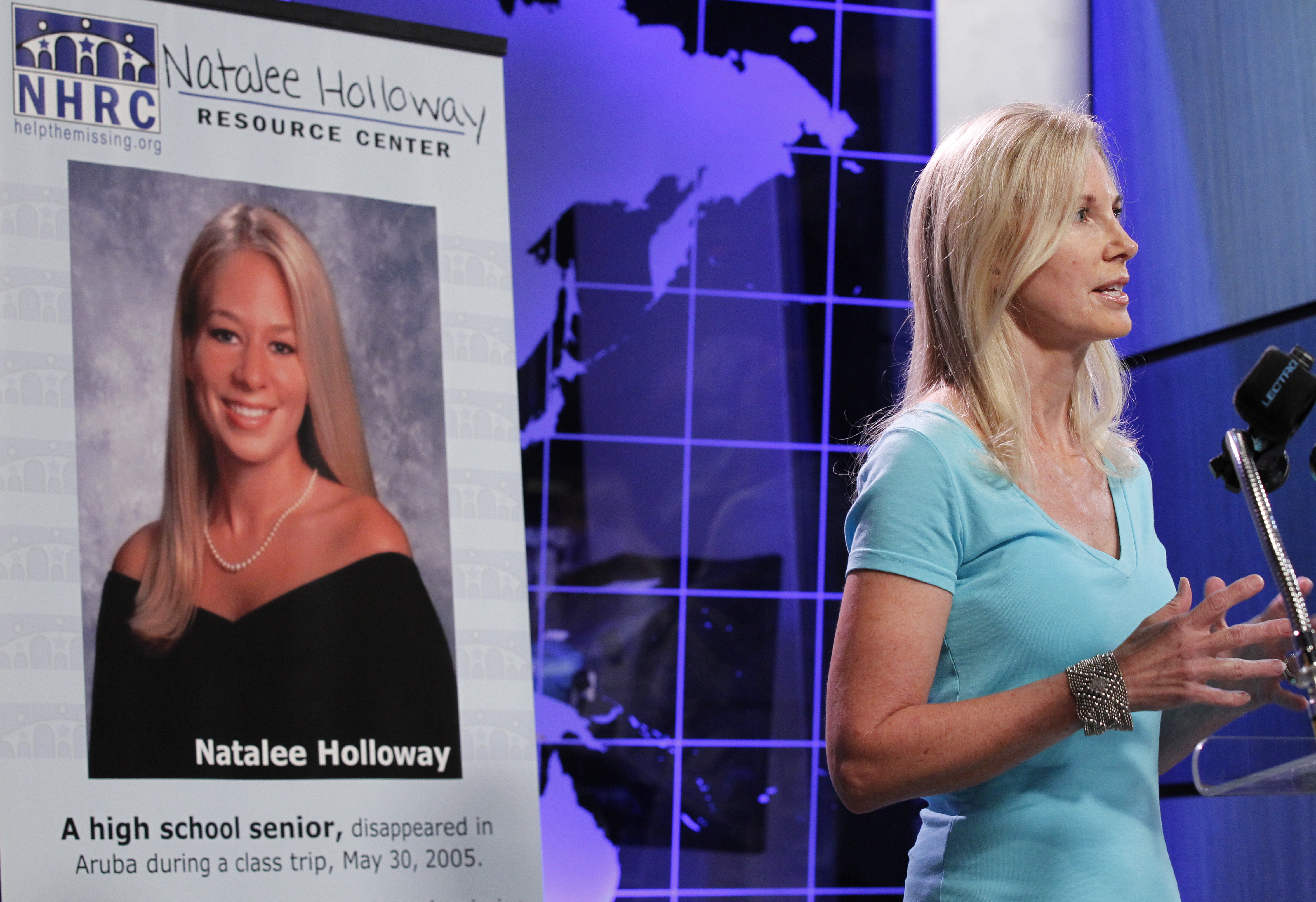
Natalee was 18 when she disappeared during a high-school graduation trip to Aruba in May 2005. For years, her family faced uncertainty and a succession of conflicting accounts. In October 2023, Joran van der Sloot pleaded guilty in Alabama to federal extortion and wire-fraud charges. As part of the plea agreement, he gave information about Natalee’s disappearance in a recorded proffer interview conducted on October 3, 2023.
In that account, van der Sloot described an attack on a beach, said he used a cinder block, and claimed he pushed Natalee’s body into the sea. Those are the central details relevant to this article. The account was given in a legal process, but it is still important to attribute the specific sequence to his statement rather than present every element as a separately established forensic fact.

What makes a moment “graphic” in a true-crime documentary?
A detail can be disturbing without requiring a visual recreation. In this case, the cinder block is a concrete object described by van der Sloot; the ocean-disposal claim is his account of what happened after the attack. Repeating those details in increasingly vivid language does not make the reporting more accurate. It can instead make an article feel more sensational while adding no new evidence.
For viewers, the distinction is between understanding the gravity of the confession and being shown or told more than is necessary. A restrained description can preserve the substance of the public record without turning Natalee’s final moments into spectacle. That approach also respects readers who may be directly affected by violence or by the long history of this case.

The evidence boundary: a statement is not a recovered object
The cinder block is part of van der Sloot’s account. The public record does not establish that investigators recovered the specific block he described or subjected it to forensic testing. Natalee’s remains have not been found, so the public has no post-mortem examination that could independently confirm the precise injuries or cause of death.
That limitation does not make the confession meaningless. It means the details should be described with the right level of certainty. The interview transcript documents what van der Sloot said. The plea and sentencing documents establish the federal charges and the terms of his agreement. Those sources do not transform every detail into a physical finding.
The same care applies to the ocean-disposal claim. Van der Sloot said he pushed Natalee’s body into the sea. That statement does not identify a verified disposal coordinate, a current path, a depth, or a final location. Any map, diagram or theory that claims to show exactly where the body went would need evidence beyond the public account.
Why the legal context matters as much as the detail
The 2023 Alabama case was a prosecution for extortion and wire fraud—not a U.S. murder trial for Natalee’s death. The U.S. Department of Justice said van der Sloot received a 20-year sentence after pleading guilty to those federal offenses. The agreement required him to provide information about Natalee’s disappearance, and the family was able to hear his account.
The earlier 2010 episode is also relevant to how readers assess claims about the case. Van der Sloot had previously sought money in exchange for information about Natalee’s remains; the Justice Department said he received $25,100 before the information he supplied was later described as worthless. That history is a reason to examine the source and context of each statement carefully, not to assume that every claim made over the years was reliable.
For the distinction between the federal financial-crime conviction and a murder prosecution, see our separate legal explainer. For the broader timeline of the plea agreement and the interview, see our report on the proffer agreement.

How to cover painful details without exploiting them
There are practical standards that help keep true-crime coverage informative rather than exploitative:
- Attribute every disputed detail. Say “van der Sloot said” when describing the cinder block or the ocean, rather than implying that a recovered object or body independently confirms the sequence.
- Do not invent visuals. Avoid fabricated crime-scene photographs, speculative maps, staged reenactments presented as documentary evidence, or images of unrelated objects labeled as the actual cinder block.
- Keep the victim’s life in view. Natalee was more than the circumstances of her disappearance. Images and reporting should not reduce her identity to a crime scene.
- Separate legal outcomes. The federal conviction was for extortion and wire fraud. It should not be described as a U.S. murder conviction.
- Explain what remains unknown. Natalee’s remains have not been recovered, and the public record does not establish a precise final location in the sea.
The documentary Taken: Natalee Holloway places the confession within the longer story of Beth Holloway’s search for answers. Viewers can consider the impact of that account without needing graphic embellishment. Our related coverage of the series’ emotional effect on audiences looks at that wider response.
What readers should take away
The cinder-block and ocean-disposal details matter because they were part of the account van der Sloot gave under the 2023 plea agreement after years of uncertainty. They should be reported clearly, but not exaggerated. The transcript tells readers what he said; the federal case tells them what he pleaded guilty to; and the absence of Natalee’s remains leaves important forensic questions unanswered.
That is the line responsible coverage should hold: neither minimizing the seriousness of the confession nor presenting unverified details as settled physical evidence. Natalee’s story deserves accuracy, context and dignity—not a contest to make the most graphic retelling.
Sources and further reading
- U.S. Department of Justice: 2023 guilty plea and sentencing
- CBS News: The confession and federal plea
- ABC News: Court reporting on the proffer account
- Associated Press: The confession and the family’s response
By Shivam Das